A stainless steel container made and sold for food storage is generally suitable for pantry, refrigerator, or freezer use when you follow its instructions. The answer applies to the exact product, not to every unidentified metal box. Its lid, gasket, coating, condition, temperature rating, and the way the food is handled all matter. Compare the body and lid construction in our stainless steel versus glass food-storage guide.
Stainless steel does not make food last indefinitely or correct unsafe cooling. The container stores the food; it does not reset the food-safety clock.
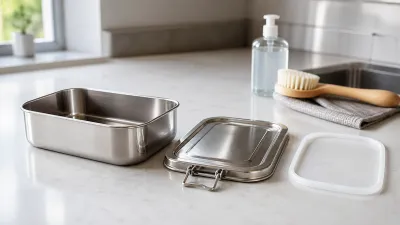
If you are choosing a container, start with the food you pack: a divided lunch box and a gasketed container for wet leftovers solve different problems. Our stainless steel food storage container guide compares those lid and compartment choices before you buy.
Check the whole container, not only the steel body
| Part or condition | What to verify | Why it matters |
|---|---|---|
| Steel body | Sold for food contact; clean and intact | An unknown decorative or industrial vessel has no established food-use instructions |
| Lid | Fits the exact body and closes as designed | A metal bowl alone does not create a covered, leak-resistant container |
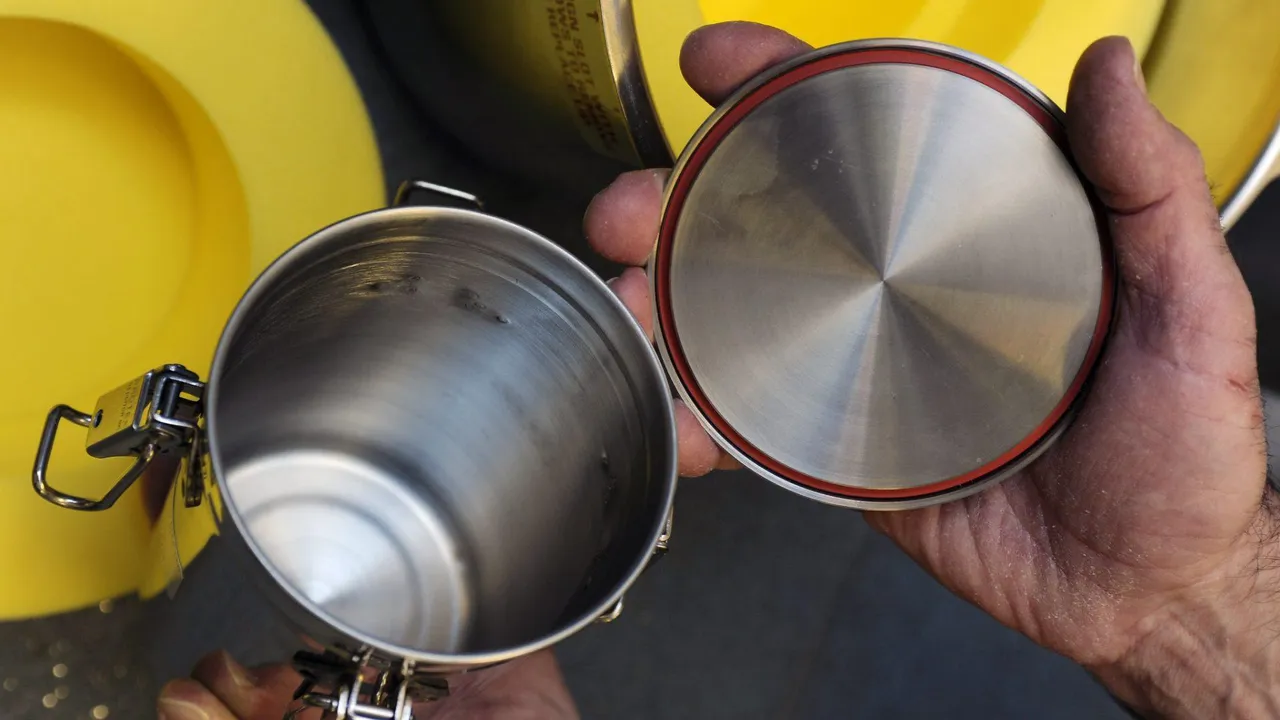
| Gasket or valve | Clean, seated, undamaged, and removable if the maker says so | Residue and damage can prevent sealing and complicate cleaning |
| Plastic, paint, or coating | Approved for the intended food, temperature, and appliance | The non-steel component may set the lowest limit |
| Seams and surface | No deep pitting, flaking, sharp damage, or failed joint | Damage can make cleaning difficult and signals that the product needs maker review or replacement |
| Manufacturer instructions | Current freezer, oven, microwave, and dishwasher ratings | Two similar-looking products can have opposite permissions |
Health Canada describes stainless cookware as strong, long-lasting, and resistant to rust and staining. It also says to use cookware according to the manufacturer’s intended use and instructions. That product-specific rule is the safest way to evaluate a storage container too.
The steel body itself contains no BPA, but a lid, gasket, liner, or coating may use another material. See our explanation of BPA and stainless steel products for the component-by-component distinction.
Food storage times still control
| Step | Current household guidance | Container action |
|---|---|---|
| Put away perishables | Within 2 hours, or 1 hour when air temperature is above 90°F | Portion promptly instead of leaving a full pot on the counter |
| Cool a large batch | Divide into shallow containers | More surface area helps the center cool faster |
| Refrigerator | Keep at or below 40°F | Do not crowd shelves so tightly that cold air cannot circulate |
| Cooked leftovers | Use within 3 to 4 days | Label the storage date; the vessel does not add safe days |
| Freezer | Keep at 0°F | Leave expansion room and use a freezer-approved lid |
The FDA gives the two-hour rule and 40°F refrigerator limit. USDA guidance says most refrigerated leftovers should be used within three to four days. A label for a longer-lasting container seal is not a food-safety extension.
Different foods can have stricter handling or storage limits. Follow applicable package, public-health, and recipe guidance. When time or temperature history is uncertain, do not rely on smell, appearance, or the container material to prove safety.
How to choose a stainless food container
Choose a product identified by its manufacturer for food storage. Look for a model number or instructions you can match to the actual body and lid. Avoid decorative tins, shop containers, or unlabeled vessels whose composition and prior use are unknown.
A practical container should have:
- smooth, accessible surfaces you can wash and inspect
- an intact rim without sharp deformation
- a lid designed for that body
- a removable gasket when the care instructions call for removal
- enough capacity for the food to fit without forcing the closure
- documented ratings for every temperature and appliance you intend to use
The FDA recommends storing refrigerated food in covered containers or sealed storage bags. “Airtight” and “leakproof” are separate manufacturer claims; neither should be inferred from a shiny steel body.
Pantry storage
Stainless containers are useful for dry foods such as rice, flour, coffee, tea, and sugar. The opaque body blocks light, but it also hides the contents. Label the food and date, and inspect it when opening.
Wash and fully dry the body, lid, and gasket before filling. Trapped moisture can cause clumping or spoilage regardless of the container material. Use the closure the maker specifies for foods that can go stale or attract pests, and keep the container in a cool, dry place away from household chemicals.
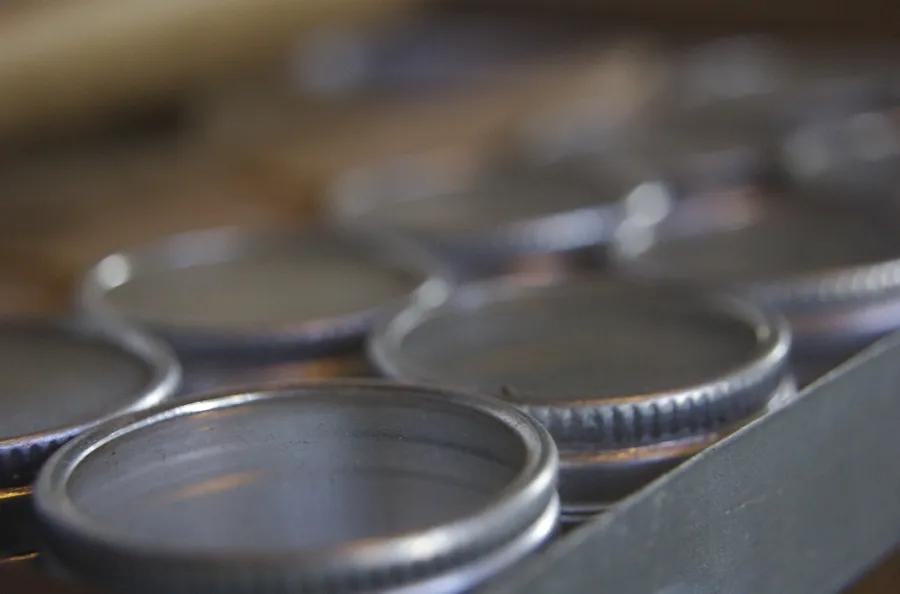
Do not use a pantry tin that previously held nonfood chemicals. Stainless steel is durable, but cleaning cannot establish the history or suitability of an unidentified vessel.
Refrigerator storage
Stainless containers work well for leftovers when their lids fit and the food is cooled promptly. Divide soup, stew, rice, meat, or another large batch into shallow containers rather than placing one deep, tightly packed mass in the refrigerator. USDA specifically recommends shallow containers for faster cooling.
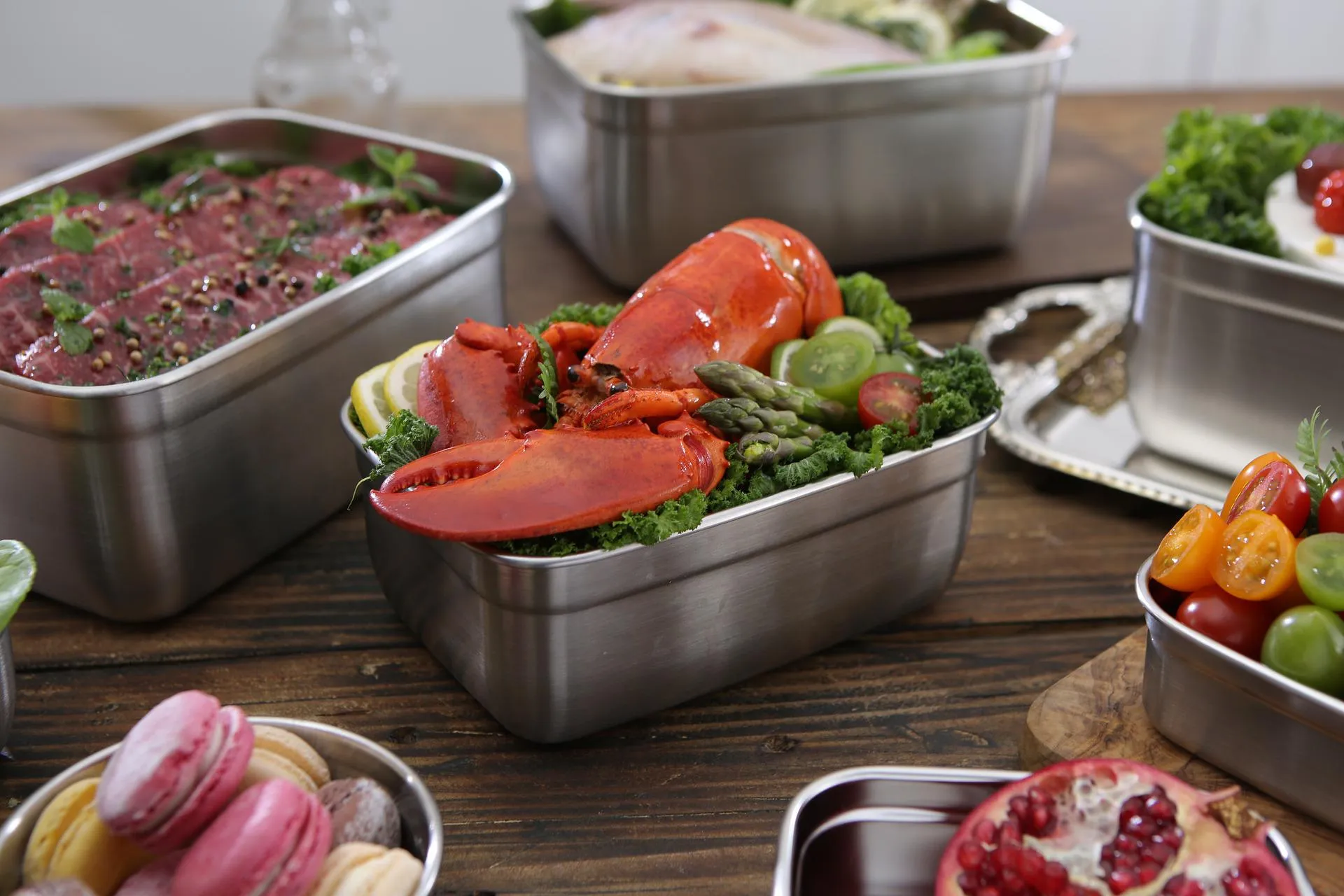
Keep raw meat, poultry, and seafood covered and positioned so drips cannot reach ready-to-eat food. Label leftovers with the date. Check your refrigerator with an appliance thermometer rather than assuming its dial number equals 40°F.
Do not seal very hot food in a vacuum-style container unless the maker directs it. Pressure, lid deformation, leakage, and gasket temperature limits are product issues. Food-safety guidance permits rapid refrigeration; the container instructions determine how that particular closure should be handled.
Freezer storage
Use the container in a freezer only when both body and lid are approved for it. Water-rich food expands as it freezes, so leave the headspace specified by the maker. A rigid container packed to the rim can lift the lid or distort a seal.
Freezing at 0°F stops bacterial growth but does not destroy every organism, and storage time recommendations often protect quality. Freeze leftovers within their safe refrigerated period. Label contents and date because an opaque container makes identification difficult.
Use a safe thawing method. USDA recognizes thawing in the refrigerator, in cold water with a leak-proof package, or in a microwave followed by prompt cooking. Do not thaw perishable food on the counter. Follow the detailed USDA freezing and thawing guidance for the food involved.
Can stainless containers go in a microwave?
Do not assume that a stainless container is microwave-safe. Most metal containers should stay out unless the exact container manufacturer and microwave manufacturer allow that use and their conditions are met.
Product design changes the answer. Black+Blum states that one conventional stainless lunch box cannot be microwaved, while it markets a specifically shaped 18/8 stainless meal-prep line as microwave-safe under its instructions. The contrast within one brand shows why a generic material rule is inadequate.
If the exact model lacks written microwave directions, transfer food to an appliance-safe vessel. If it is explicitly approved, follow every limitation involving microwave type, power, time, lid position, spacing, and food. Stop if you see arcing or the appliance manual prohibits metal.
Can stainless containers go in an oven?
Only when the exact body is labeled oven-safe. Remove the lid, gasket, valve, sleeve, divider, or handle unless its instructions expressly permit the planned temperature. Use the lowest temperature limit among all parts that remain attached.
Do not put an insulated vacuum container on a burner or in an oven. A double wall, sealed cavity, plastic component, coating, or adhesive can make a storage vessel unsuitable for cooking even when the visible shell is stainless. Our guide to stainless steel in the oven explains how construction sets the limit.
An oven rating does not imply broiler, stovetop, air-fryer, or microwave approval. Each exposes the product differently. Follow the container and appliance manuals together.
Acidic and salty foods
Stainless steels are widely used for food contact, including with acidic foods, but there is no useful guarantee based only on the phrase “food-grade.” Exact alloy, surface finish, condition, temperature, food chemistry, and contact time affect performance.
Testing commissioned under the Council of Europe protocol found metal release from seven stainless grades below the protocol’s specific release limits in a citric-acid test, with release declining during repeated exposure. That evidence supports specified, tested stainless articles; it does not identify an unknown container or approve every coating, lid, or damaged surface.
World Stainless explains that the passive chromium-rich surface gives stainless its corrosion resistance while chlorides and acidic conditions can contribute to pitting and crevice corrosion in some circumstances. Follow the maker’s restrictions for long storage of salty brines or strongly acidic food. Inspect crevices and seams when washing.
Health Canada advises people with a nickel allergy to avoid cookware containing nickel. A magnet cannot confirm nickel content or food-contact suitability. If allergy avoidance matters, obtain reliable material documentation from the manufacturer rather than guessing from appearance or attraction.
When to stop using a container
Pause use and consult the manufacturer or replace the affected part when you find:
- deep pitting or recurring rust at a seam
- flaking paint, liner, or coating
- a sharp or badly deformed rim
- a lid that no longer closes as designed
- a cracked, swollen, sticky, or permanently contaminated gasket
- a loose joint or failed weld
- an odor or residue that remains after cleaning as directed
- damage after an unintended oven, burner, microwave, or dishwasher cycle
Ordinary scratches on an uncoated stainless interior are not the same as exposed core metal, flaking material, or a failed seal. Use the maker’s care guidance to distinguish cosmetic wear from a condition that requires service.
Cleaning and preventing cross-contamination
Wash the body and lid after each use according to their instructions. Remove gaskets and valves only when designed for removal, clean their grooves, rinse away detergent, and dry parts fully before reassembly or storage.
“Dishwasher-safe” may apply to the body but not a bamboo lid, painted exterior, valve, or gasket. Place parts where the maker directs. Do not use steel wool, bleach, or abrasive cleaner unless the care guide permits it.
Use separate clean utensils and surfaces for ready-to-eat food after handling raw meat, poultry, seafood, or eggs. A smooth container helps cleaning, but it does not disinfect hands, cutting boards, or refrigerator shelves.
Frequently asked questions
Is 304 or 18/8 stainless suitable for food storage?
It is common in food-contact products, but a grade label alone is not a complete product approval. Confirm that the finished container, including its lid and coating, is sold for the food, temperature, and appliance you intend to use.
Is stainless steel better than glass for storage?
Stainless is lighter and resistant to breakage; glass lets you see the food and many models support reheating. Either can be suitable when the exact product is intact and used as directed. Compare the lid, weight, transparency, and appliance ratings.
Can tomato sauce stay in stainless steel overnight?
An intact container approved for refrigerated food may allow it, but check the maker’s instructions and the food’s safe timeline. Do not extend storage because the body is stainless, and stop using a deeply pitted or damaged vessel.
Are stainless containers automatically leakproof?
No. Leak resistance comes from the complete closure design and its condition. Match the lid and gasket to the body and test it as the maker directs before carrying liquid.
Bottom line
Stainless steel can be an excellent food-storage material, but safe use belongs to a specific, intact product. Verify the body, lid, gasket, coating, temperature, appliance, and care instructions. Then apply current cooling and storage rules to the food itself. No steel grade, seal claim, or container material replaces prompt refrigeration, temperature control, and a known storage date.