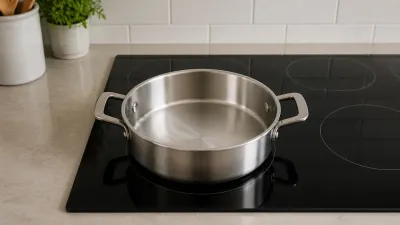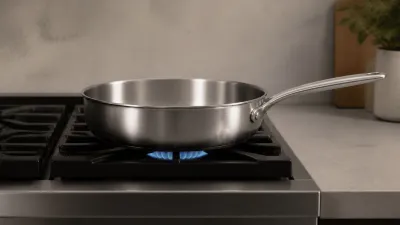
To keep food from sticking to a stainless steel pan, preheat the pan over medium heat, add enough oil to coat the cooking surface, let the oil warm, then add dry food and leave it alone until it releases. The useful signals are a shimmering oil surface, a steady sizzle, and a browned crust that lifts without force.
The four-step method is simple:
- Preheat the empty pan over medium heat.
- Add a thin, even layer of cooking oil.
- Let the oil warm until it flows easily and begins to shimmer.
- Add dry food, then wait before trying to turn it.
Temperature and timing matter more than chasing one exact number. Burner strength, pan construction, food thickness, and the oil all change how quickly the pan heats.
Why does food stick to stainless steel?
Food sticks when it makes close contact with the bare cooking surface and its proteins and sugars have not yet formed a browned exterior. Moisture, a pan that is too cool, too little fat, crowding, and trying to move food too soon can all make that contact harder to break.
Stainless steel is not a nonstick coating. That is part of its appeal for browning, but it means the cook has to manage heat and fat. You do not need to imagine microscopic pores opening and closing. Focus on the cues you can see and hear.
Proteins such as chicken, steak, fish, and eggs are especially sensitive to timing. As meat or fish browns, it often releases more readily. If it still resists a gentle lift, wait a little longer instead of scraping it loose.
Step 1: How should you preheat the pan?
Preheat over medium heat and give the pan time to warm evenly. High heat is not a shortcut. It can scorch oil and burn the outside of food before the center cooks.
All-Clad identifies insufficient preheating, too little oil, and turning food too soon as common causes of sticking in its current cookware guidance. Exact preheat time is not universal, so use the behavior of the pan rather than a stopwatch.
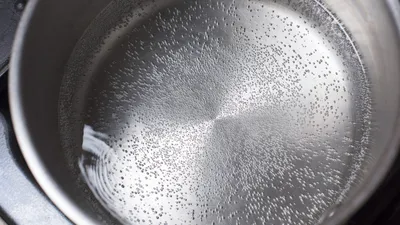
A few drops of water can help you read the surface, but they are not a required ritual. Our guide to knowing when a stainless steel pan is ready explains the water-drop test and its limits. Always let test water evaporate before adding oil.
Step 2: How much oil should you add?
Add enough oil to make a thin, continuous film across the cooking area. Tilt the pan to spread it. Bare patches make sticking more likely, while a deep pool of oil is unnecessary for ordinary sautéing or searing.
Choose an oil that suits the recipe and cooking temperature. Refined avocado, canola, grapeseed, and other neutral cooking oils work for many higher-heat jobs. Butter adds flavor but its milk solids can brown quickly, so moderate the heat or combine it with another cooking fat when the recipe calls for it.
Stainless steel does not need a permanent baked-on coating. The separate guide on whether stainless steel pans need seasoning explains why a fresh layer of fat during cooking is usually the more predictable approach.
Step 3: When is the oil ready?
The oil is ready when it moves freely across the pan and begins to shimmer. Do not wait for it to smoke. Smoking is a sign to take the pan off the heat, let it cool, and start again with fresh oil if the oil has scorched.
Adding cold oil to a warm pan makes these cues easier to read. It also gives you a moment to coat the surface before the food goes in. The goal is warm, fluid oil between the food and steel, not the hottest pan possible.
Step 4: When should you turn the food?
Turn food when it has formed a browned surface and releases with gentle pressure. After placing it in the pan, leave it in one position long enough to sear. Repeatedly lifting an unbrowned piece tears the surface and leaves residue behind.
Pat meat, fish, or vegetables dry when the recipe permits because surface water cools the pan and creates steam. Do not crowd the pan. A packed pan loses heat quickly and traps moisture, which works against browning.
Food safety still comes first. Keep raw meat, poultry, seafood, and other perishables refrigerated until preparation, and use a food thermometer for safe doneness rather than judging only by color. If a recipe finishes in the oven, check the manufacturer oven and broiler limits for the exact pan and lid.
What should you do when eggs or fish still stick?
Use a little more fat, lower the heat, and accept that very delicate foods are the hardest cases for uncoated stainless steel. Let fish develop a crust before lifting it with a thin spatula. For eggs, moderate heat and a fully coated surface are more forgiving than a very hot pan.
If effortless release with very little fat is the priority, a sound nonstick pan may be the better tool for that specific job. Stainless steel remains a strong choice for searing, pan sauces, and other tasks where browned residue is useful. Our stainless steel frying-pan guide compares uncoated options for those jobs.
Can dirty or damaged cookware cause sticking?
Burnt residue can create an uneven cooking surface and make the next meal harder to release. Let the pan cool, soak stuck food in warm soapy water, and use a non-scratch sponge. Follow the maker’s directions before using a powdered cleanser or abrasive tool.
Light cosmetic scratches do not automatically ruin stainless cookware, but deep warping changes how the base contacts the burner and can produce hot spots. Replace a pan if it is unstable on the cooktop, cracked, or otherwise unsafe.
A quick sticking checklist
Before adding food, check that:
- The pan warmed gradually over medium heat.
- Test water, if used, has completely evaporated.
- Oil forms a thin film and shimmers without smoking.
- The food surface is reasonably dry.
- There is open space between pieces.
- You can wait for browning before trying to turn the food.
The method takes practice, but it does not require permanent seasoning or extreme heat. Preheat with control, add the cooking fat at the right time, and let browning do the release work. For a broader look at where this technique pays off, see the pros and cons of stainless steel cookware.
Covered, low-water methods solve a different problem than surface release; the vapor-seal cooking guide explains the required vessel and lid fit.