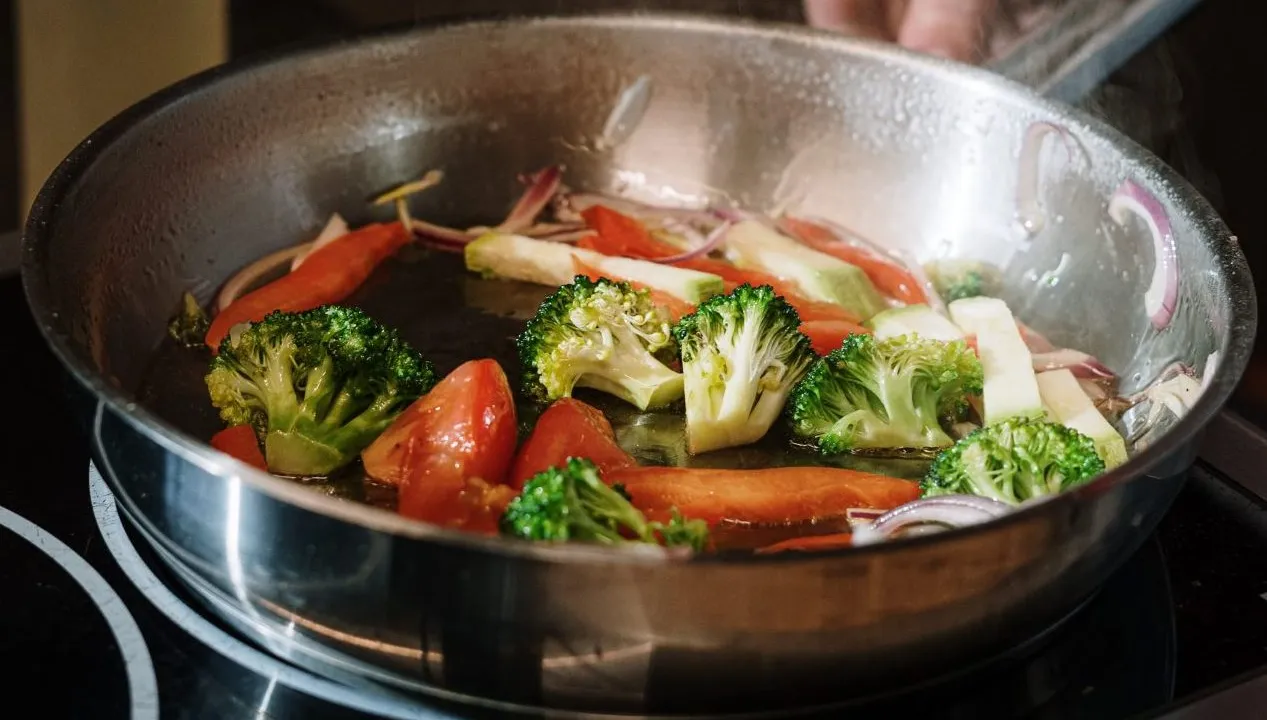
No, stainless steel pans do not need to be seasoned. Wash a new pan, dry it, and cook on the bare stainless steel surface using appropriate heat and oil.
Seasoning is essential care for bare cast iron and carbon steel because a polymerized oil layer helps protect those reactive metals. Stainless steel is designed to resist corrosion without that layer. Both All-Clad and Made In state that their stainless steel cookware does not require seasoning.
What does seasoning a pan mean?
Seasoning is a thin film of oil that has been heated until it polymerizes and bonds to a cooking surface. It is useful on cookware designed to maintain that film, especially bare cast iron and carbon steel.
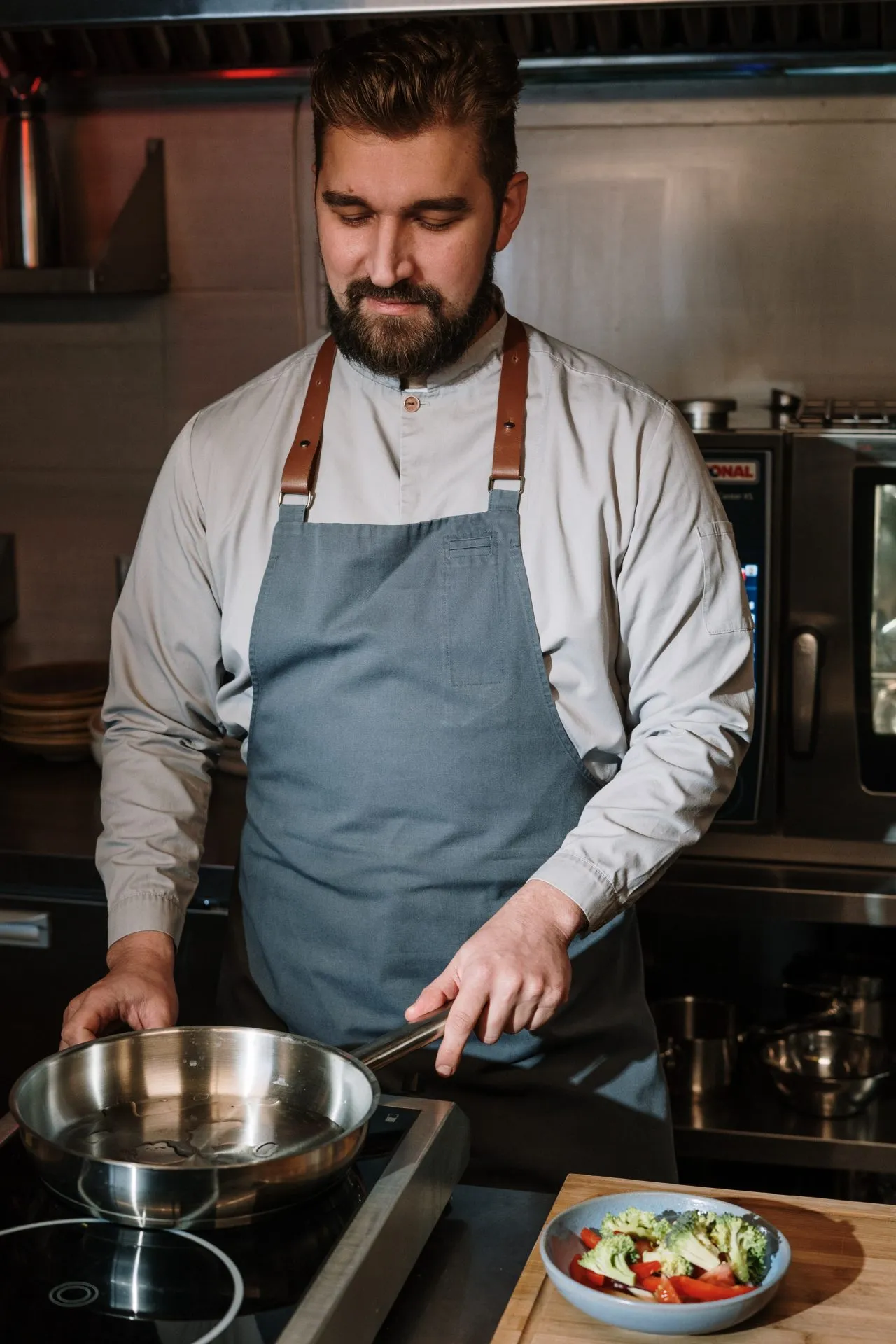
Oil can also polymerize on stainless steel, but that does not make a permanent seasoning layer necessary. An uneven film may become sticky, discolored, or difficult to clean. It can also hide the clean stainless surface that makes the pan useful for browning and deglazing.
Adding fresh oil for a cooking session is not the same as seasoning. The oil provides fat for heat transfer and helps reduce direct contact between the food and pan during that meal. Wash away the cooking residue afterward according to the manufacturer’s care guide.
Why stainless steel does not need seasoning
The chromium in stainless steel forms a thin, protective surface layer. That built-in corrosion resistance is one of the major advantages of stainless steel cookware.
Seasoning does not need to be added to “fill pores” or stop pores from opening and closing. A stainless cooking surface has microscopic texture, but normal thermal expansion is not a switch that traps food. Sticking depends on several interacting factors, including food chemistry, surface moisture, pan temperature, fat, and when the food is moved.
It also is not necessary to season stainless steel before storage to prevent rust. Wash the pan, rinse it, and dry it thoroughly. Follow the maker’s care instructions if you see pitting, rust-colored marks, or damage around a seam or handle.
What prevents food from sticking instead?
Preheat over moderate heat
Start with low or medium heat unless the cookware maker or recipe directs otherwise. All-Clad recommends preheating stainless steel on low or medium for one to two minutes, then adding enough oil to cover the cooking surface.
High heat is not a shortcut. It can burn oil, scorch food, discolor the pan, and make temperature control harder. Different foods also need different heat, so a pan prepared for steak is not automatically ready for eggs.
Add an appropriate cooking fat
After the pan has warmed, add the oil or fat called for by the recipe. Tramontina advises heating its stainless cookware over medium heat, then adding oil and watching for it to shimmer and move fluidly across the surface.
Choose a fat that suits the cooking temperature and flavor. If the oil smokes before the food goes in, the pan is too hot for that oil. Take it off the heat and let it cool rather than trying to cook through heavy smoke.
Dry the food’s surface
Pat excess surface moisture from meat, fish, or vegetables with a clean paper towel when the recipe calls for browning. Water has to evaporate before the surface can brown, and splattering increases when water meets hot oil.
Do not wash raw meat or poultry to prepare it for the pan. The USDA says rinsing can spread bacteria around the kitchen and that cooking to a safe internal temperature is what destroys harmful germs.
Let browned food release
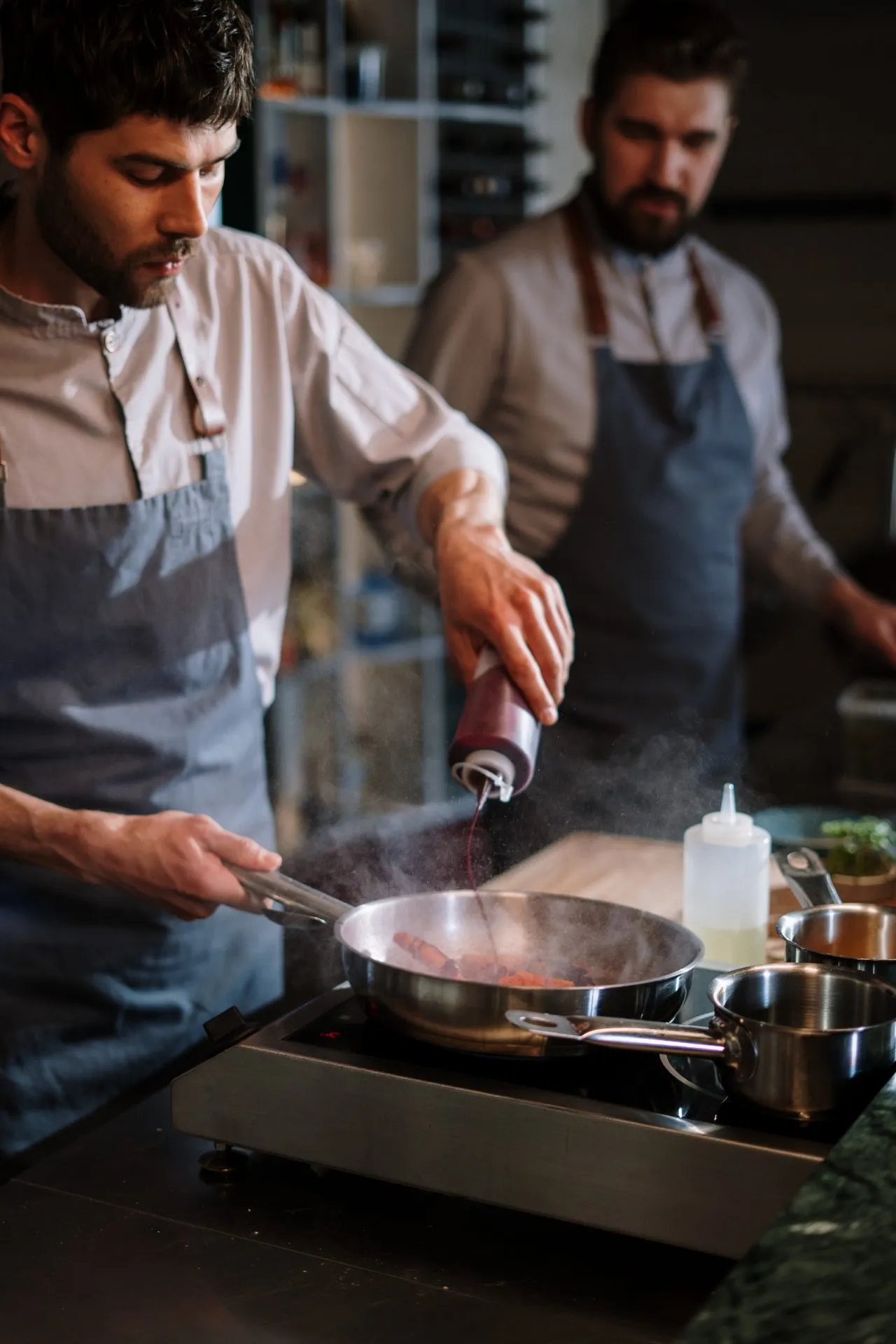
Protein can grip stainless steel at first and release more easily after a browned crust forms. Do not force it up as soon as it touches the pan. Test an edge with a spatula and turn the food when it lifts without tearing.
All-Clad lists turning food too early, insufficient preheating, and too little oil among common reasons food sticks to stainless steel. Our guide to keeping stainless steel pans from sticking covers the full technique.
How to prepare a new stainless steel pan
- Read the model-specific use and care instructions.
- Wash the pan with warm water, mild dish soap, and a soft sponge or cloth.
- Rinse and dry it thoroughly.
- Preheat it gradually for the first recipe and add the cooking fat at the time the recipe directs.
No oven seasoning or stovetop oil-curing cycle is required. Whether the pan can go in the oven is a separate question governed by its handle, lid, coating, and published limit. Check our guide to using stainless steel in the oven before moving a pan from the burner to the oven.
What if a stainless steel pan was already seasoned?
You do not need to strip a clean, smooth pan merely because oil was heated on it once. If the surface is tacky, uneven, or covered in baked-on residue, use the cleaning method approved by the manufacturer.
Start with warm water, dish soap, and a non-abrasive sponge. Move to a product-specific stainless cleaner only when the care guide permits it. Avoid steel wool and aggressive abrasives unless the manufacturer explicitly approves them for that exact finish.
Frequently asked questions
Should you season stainless steel before the first use?
No. Wash, rinse, and dry the new pan. Follow its use instructions for preheating and cooking fat.
How often should you season stainless steel?
There is no seasoning schedule because seasoning is not required. Clean the pan after use and adjust heat, oil, food dryness, and release timing if sticking occurs.
Does seasoning stop stainless steel from rusting?
Stainless steel relies on its alloy and passive surface layer for corrosion resistance. Keeping it clean and dry and avoiding prolonged contact with salt or harsh cleaners matters more than maintaining an oil film.
Can you cook eggs without seasoning the pan?
Yes. Eggs need careful temperature control and enough butter or oil, but the pan does not need a permanent coating. Start lower than you would for a hard sear and adjust based on the recipe and pan.
How do you know when the pan is hot enough?
Use moderate heat and cues that fit the food, such as fluid movement in the oil. The optional water-bead test has limits. Our guide to knowing when a stainless steel pan is ready explains how to use it without overheating the pan.
The bottom line
Stainless steel pans do not require seasoning. Good results come from a clean pan, gradual preheating, suitable oil, a dry food surface, and patience while the food browns and releases.