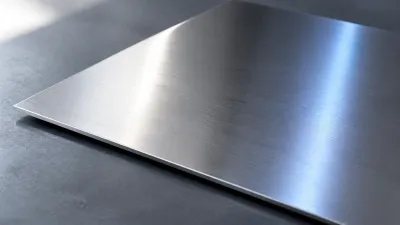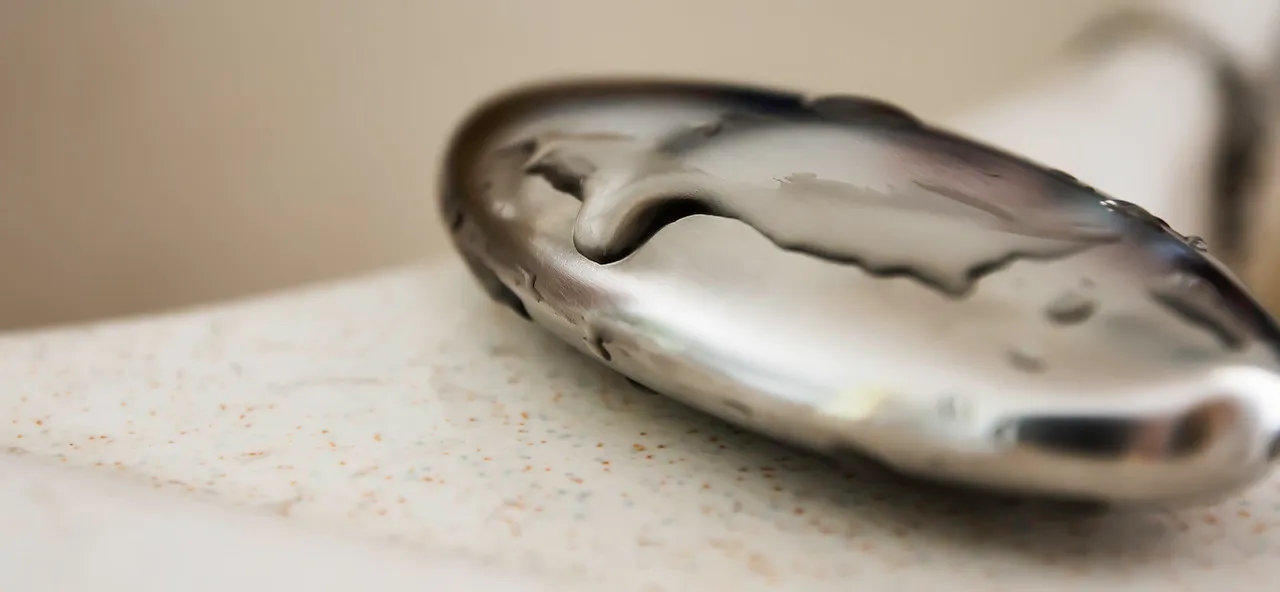
Stainless steel soap may reduce garlic, onion, or fish odor while you rub it under water, but no strong controlled evidence proves either its effectiveness or the usual sulfur-binding story. It is reasonable to try as an odor experiment. It is not soap, a disinfectant, or a substitute for proper handwashing.
A metal soap bar is simply a smooth piece of stainless steel shaped for gripping. It has no detergent, makes no lather, and does not supply the cleaning action of ordinary soap. That simple distinction matters more than any proposed odor mechanism.
What is established, and what is only proposed?
| Question | Evidence status | Safe conclusion |
|---|---|---|
| Do cut garlic and onions release sulfur compounds? | Supported by food chemistry | Sulfur-containing volatiles help explain the smell |
| Can sulfur compounds interact with some metal surfaces? | Plausible in particular chemical systems | Plausibility does not prove a sink-side result |
| Does a steel bar outperform water and rubbing? | Not established by a strong controlled comparison | Results remain uncertain and subjective |
| Does a steel bar clean hands like soap? | No | Use real soap and running water for hygiene |
The evidence supports the source of the odor much better than it supports the product claim. Search results often collapse those two questions and present a proposed surface interaction as a demonstrated household mechanism.
How might stainless steel soap affect food odors?
The common proposal is that odor-producing sulfur compounds interact with the stainless surface, leaving less odor-causing material on skin. Water and rubbing occur at the same time, however, so an informal kitchen test cannot show how much change came from the metal.
Crushing garlic lets the enzyme alliinase act on alliin and form allicin. Allicin then changes into other sulfur-containing compounds. A review of allicin chemistry explains that reaction chain and the characteristic odor, but it does not test stainless steel soap.
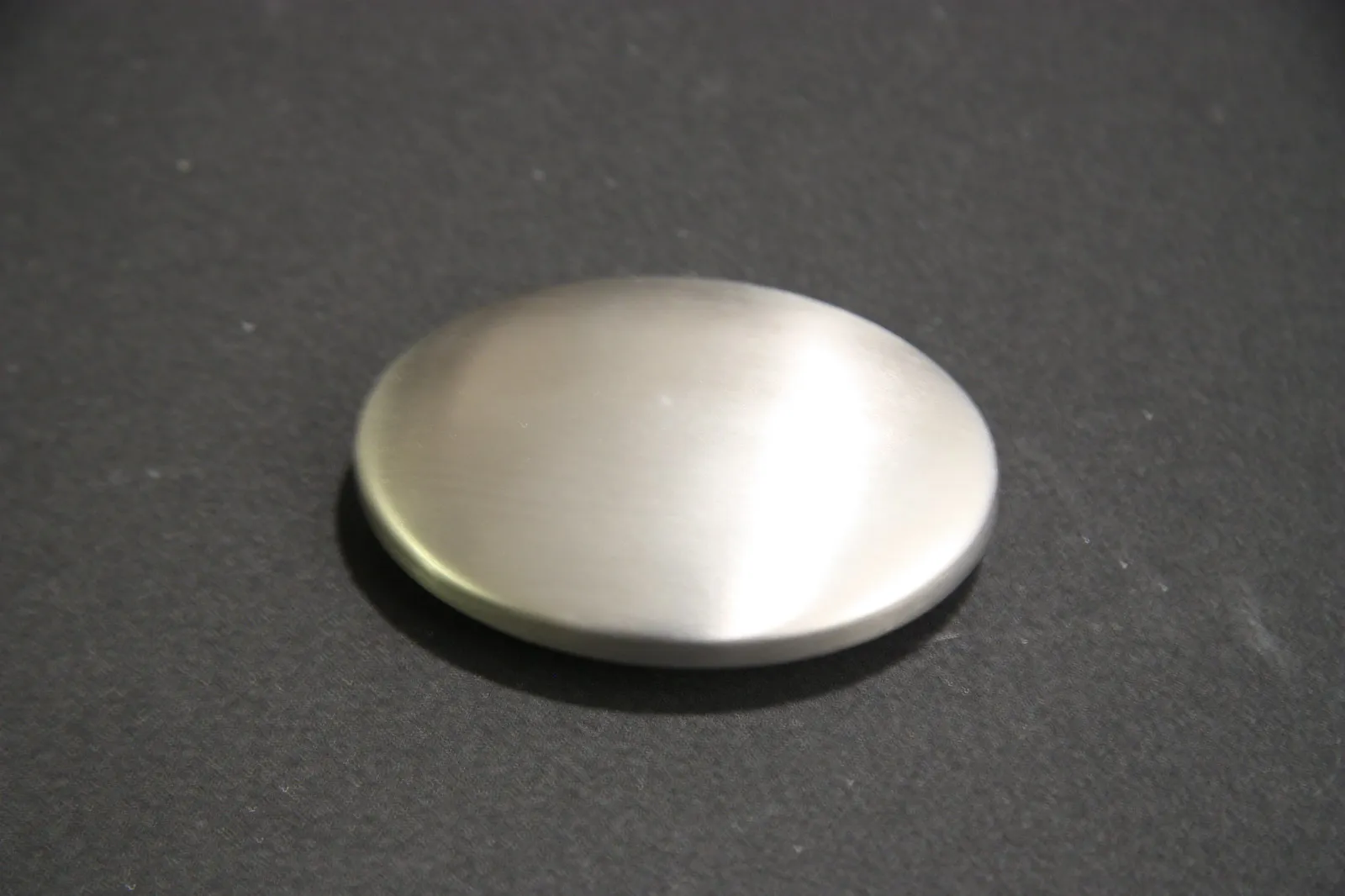
Stainless steel also has a thin chromium-rich passive surface rather than a bare, uniform sheet of elemental metal. A proposed reaction has to account for that real surface, the food residue, water chemistry, contact time, rubbing, and the specific alloy. A neat molecular explanation is not the same thing as measured efficacy.
The honest answer is that the familiar mechanism remains a hypothesis for this use. It should not be described as absorption, neutralization, or chemical binding proven to occur on a person’s hands.
Does stainless steel soap actually work?
There is not enough controlled evidence to promise a reliable amount of odor reduction. Individual reports range from a clear improvement to no noticeable difference, and smell judgments are easily influenced by expectation and adaptation.
A useful experiment would compare the same odor source across water alone, water plus rubbing, stainless steel plus water, and ordinary handwashing. It would also blind the people judging the odor and repeat the test across participants. The current public evidence does not provide that level of support.
This uncertainty does not mean nobody can notice a difference. It means the result cannot be generalized, quantified, or promoted as a proven treatment. The most defensible expectation is modest: you may notice less lingering kitchen odor, or you may not.
Why does garlic odor linger on skin?
Garlic odor is not one fixed substance waiting for a metal bar to capture. Tissue damage begins a changing series of reactions that produces allicin and other volatile organosulfur compounds. A recent review of garlic sulfur chemistry describes this sequence and why garlic develops its distinctive aroma.
Skin oils, food residue, contact time, and the person’s sense of smell can all affect what remains noticeable. Onion and fish odors involve their own mixtures. Evidence about garlic chemistry therefore cannot prove that one metal object removes every strong kitchen smell.
How can you try a stainless steel soap bar safely?
If you are curious, use a smooth, clean purpose-made bar or a smooth stainless spoon under running water. Avoid blades, sharp cookware edges, damaged utensils, and surfaces that may carry raw-food residue.
- Rinse away visible food residue.
- Rub the smooth metal over the affected areas under running water.
- Set the metal aside and wash your hands with ordinary soap.
- Rinse and dry your hands, then clean and dry the metal item.
This sequence does not treat the steel step as hygiene. It keeps the experiment separate from the step that removes grease, soil, and microbes.
Why stainless steel soap cannot replace real soap
Ordinary soap contains surfactants that help loosen oils and soil so water can carry them away. A solid steel bar has no surfactant. It cannot lather, and a change in smell does not show that contamination has been removed.
The CDC explains that lathering with soap and water helps trap and remove germs and chemicals. Its kitchen handwashing guidance calls for soap after handling uncooked meat, poultry, seafood, flour, or eggs. Stainless steel does not replace those instructions.
Odor is also a poor cleanliness test. Hands can smell neutral while still carrying soil or microbes, and they can retain a food smell after otherwise adequate washing. Do not use scent as a pass-or-fail hygiene signal.
Is a dedicated metal soap bar worth buying?
A dedicated bar may be comfortable to hold and has no sharp edge, but there is no good evidence that the soap shape makes odor reduction more effective. A clean stainless spoon provides a low-cost way to test whether you perceive a difference.
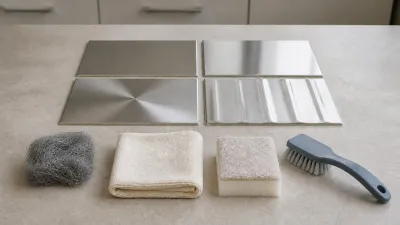
Inspect any object first. Do not use a deeply pitted, cracked, rusty, or hard-to-clean item. Wash it after use, especially if it was near raw ingredients. Our guide to cleaning stainless without damaging its finish explains why mild tools are safer than steel wool or harsh abrasives.
Frequently asked questions
Does stainless steel neutralize garlic odor?
That is a popular explanation, not a proven sink-side mechanism. Garlic odor comes from several changing sulfur compounds. Water, rubbing, expectation, and sensory variation all complicate an informal test.
Can stainless steel soap kill bacteria?
Do not treat it as antibacterial or disinfecting. A bare metal bar contains no cleaning surfactant and carries no established pathogen-removal benefit. Use ordinary soap and follow public-health handwashing guidance.
Can a stainless steel sink do the same thing?
A sink gives you a stainless surface, but it is not automatically clean enough to rub with your hands. A smooth, clean spoon or purpose-made bar is easier to inspect and handle. Learn how deposits and water chemistry affect a stainless steel sink or fixture before using the sink itself.
Does metal soap wear out?
It is not consumed like detergent, but it still needs cleaning and inspection. Stop using a bar if it develops sharp damage, deep pits, or a surface you cannot clean.
The bottom line
Stainless steel soap is an unproven odor-removal aid, not a cleaning product. The sulfur-interaction idea is plausible but unconfirmed for normal hand use. Try it only with modest expectations, then use actual soap for hygiene.
Related material questions include which stainless grades are magnetic and why clean stainless drinkware usually does not create a metallic coffee taste.