Stainless steel is the stronger default for commuting, backpacks, and temperature control. Glass is the better fit when seeing the fill level and drinking from a glass opening matter more than lower weight, insulation, and impact tolerance.
This is a material decision, not another broad bottle roundup. For more product options, see the best stainless steel water bottles and the best stainless steel coffee and travel mugs. If you need longer hot or cold holding, compare the best stainless steel thermoses. For taste context, our guide to whether stainless steel affects coffee taste separates the vessel wall from lids, gaskets, residue, and serving temperature.
Quick comparison
| Decision | Stainless steel | Glass | Better starting point |
|---|---|---|---|
| Portability | The representative bottle’s maker page lists 0.75 lb; steel can dent rather than shatter | The representative bottle’s exact Amazon record lists 1.3 lb; the maker warns that glass may break on impact | Stainless steel for bags and active carry |
| Insulation and condensation | Hydro Flask documents TempShield double-wall vacuum insulation | Ello’s current page does not describe the bottle as insulated | Stainless steel for cold or hot holding |
| Visibility and rim feel | Opaque vessel; the cap and gasket materials are not individually named | Clear glass body and direct-from-glass drinking; sleeve, lid, and gasket remain separate parts | Glass when visual checks and a glass opening matter |
| Cleaning | Maker page says dishwasher safe, while the exact Amazon care field says hand wash only | All parts are listed as top-rack dishwasher safe, with the sleeve left on | Glass for the documented dishwasher routine, pending exact instructions |
| Impact and breakage | The body may dent or finish may mark; no maker claim says it is unbreakable | Maker says glass is fragile and may break on impact; a sleeve is not a shatterproof guarantee | Stainless steel when drops are likely |
| Lids and use limits | Flex Cap is leakproof when closed; the exact cap and gasket materials are not disclosed | One-touch flip lid, silicone sleeve, and glass mouth; no hot, carbonated, microwave, or freezer use | Depends on the drink and closure you actually use |
The table describes two representative products, not every bottle sold under either material label. The complete design matters. A rim, cap, gasket, straw, sleeve, coating, or replacement lid can change the practical result.
Stainless steel for carrying and temperature control
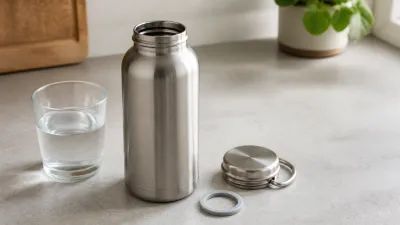
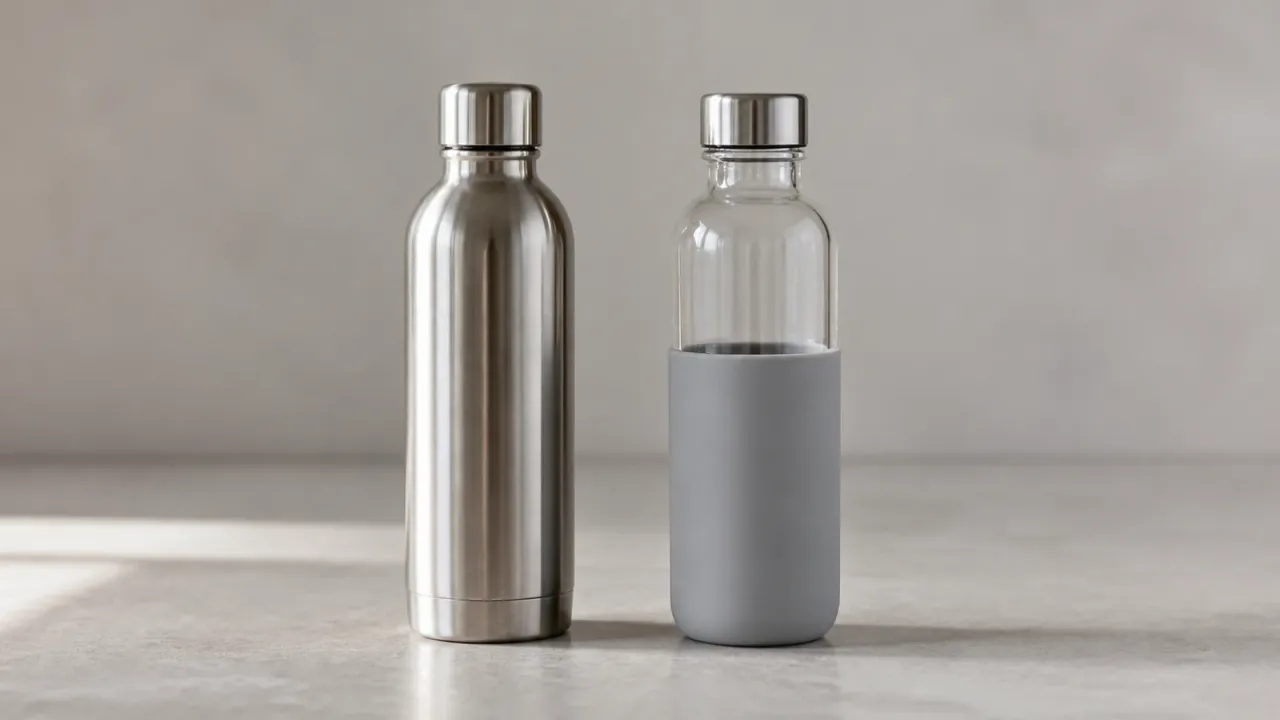
Stainless steel earns the first recommendation because the matched example is lighter and insulated. Hydro Flask’s current 21 oz Standard Mouth page identifies a stainless steel bottle with TempShield double-wall vacuum insulation. It lists a 21 oz capacity, 2.85-inch diameter, 11.15-inch height, and 0.75 lb product weight. The same page says the bottle is leakproof when closed, fits most cupholders, and is dishwasher safe.
Those details answer a common comparison mistake: a stainless wall is not automatically an insulated wall. The temperature benefit comes from the double-wall vacuum construction in this particular model. A single-wall stainless bottle can be lighter, but it will not have the same stated temperature performance or condensation control. Read the maker’s construction and care page for the exact bottle instead of transferring a feature from one product family to another.
The exact Amazon record for the selected Hydro Flask variant identifies the marketplace model as “Standard Mouth Flex Cap Bottle,” with an 11.84 oz item-weight field and a 5.75-inch-wide by 9-inch-high dimension field. Those marketplace fields do not match the current maker page’s dimensions and weight. I use the maker’s measurements as the model reference, preserve the exact Amazon snapshot separately, and recommend checking the selected color and size before ordering.
Steel is also the more forgiving choice around a commuter bag or a car cupholder. That does not mean it cannot be damaged. A dent can affect the base or mouth, and a damaged rim can interfere with a seal. A scratched finish is cosmetic unless the maker says otherwise, while a damaged cap or gasket can affect leaks even when the vessel wall is sound.
Glass for visibility and a glass opening
Glass makes the liquid and residue easier to see. That can be useful when you switch between plain water, flavored drinks, and powdered mixes and want to inspect the bottle rather than guess whether the last drink left a film. It is a preference and cleaning aid, not proof that glass is universally cleaner, safer, or taste-neutral.
The current Ello Syndicate product page describes a 20 oz glass bottle with a one-touch flip lid that lets you drink directly from glass. Ello identifies the surrounding sleeve as FDA food-grade silicone and describes it as a no-slip grip that protects the glass. It does not name every material in the flip lid or gasket, so the direct-glass claim belongs to the drinking opening, not to every part of the lid assembly.
The exact Amazon record for the Grey 20-ounce model lists a 1.3 lb item weight and 2.75-inch-wide by 10.75-inch-high dimensions. That is about 9 ounces heavier than the Hydro Flask Amazon weight field before adding any water. The weight difference is small at a desk and obvious in a backpack, especially with a laptop, food, and a charger already inside.
The silicone sleeve changes grip and may reduce some scuffs or contact damage, but it does not make the glass shatterproof. Ello’s own care language says glass is fragile and may break upon impact. If the bottle is cracked or broken, the maker says to dispose of it immediately. Do not keep using a bottle because the sleeve still looks intact.
Insulation, condensation, and temperature limits
The Hydro Flask example is the clear winner for temperature management because its maker documents double-wall vacuum insulation and states cold and hot holding times on the product page. The vacuum space separates the liquid from the outside wall, but Hydro Flask does not publish a separate no-condensation guarantee for this bottle.
Ello’s current Syndicate page does not describe an insulated wall or a temperature-retention claim. That does not prove the bottle always sweats or that drinks warm at a particular rate. It means there is no maker evidence here to treat it like a vacuum bottle. If a cold bottle will sit beside papers, electronics, or a fabric bag, use the maker’s instructions and a separate sleeve or bag designed for that job.
The Ello page also rules out hot and carbonated beverages, as well as microwave and freezer use. Those limits apply to the complete bottle design, not just the glass wall. A glass vessel can tolerate heat in some other product, but that does not transfer permission to this bottle’s lid, seal, sleeve, or construction. The Hydro Flask US page lists hot and cold performance, but also says not to use the bottle on a stove, in a microwave, or in a freezer. Neither page makes the material name a universal permission slip.
Taste, visibility, and the parts around the vessel
Both makers use taste language, but it should be read as product copy rather than an independent sensory result. Hydro Flask says its stainless bottle offers pure taste and no flavor transfer. Ello says its glass is clean-tasting and will not leach, stain, or smell. Those statements describe the makers’ intended product experience. They do not prove that every stainless assembly or every glass bottle is taste-neutral in every drink.
The parts around the vessel often explain a perceived taste difference. A lid, gasket, straw, coating, sleeve, cleaner residue, or retained beverage film can contact the drink or change how aroma reaches your nose. A glass drinking opening may feel different from a steel body, while a narrow cap may direct the drink over a different part of your tongue. Our coffee taste guide covers those variables in more detail.
For either material, wash before first use and follow the exact care instructions. If a drink tastes odd after washing, remove and clean only the parts the maker says are removable, let them dry fully, and inspect the rim and seal. Replace a cracked, swollen, or persistently odorous gasket. Taste alone is not a chemical test, and neither material label is a universal health ranking.
Breakage, chips, and impact
Glass has the sharper downside when the bottle is dropped. Ello explicitly warns that glass is fragile and may break on impact, then directs owners to dispose of a cracked or broken bottle. A silicone sleeve can help with grip and may reduce some chips or scratches, but the maker’s warning still applies. Do not describe a sleeved glass bottle as shatterproof.
Stainless steel avoids that particular glass-breakage mode, but it is not unbreakable. A steel bottle can dent, a coated finish can show damage, and a dent or impact at the mouth can affect the cap or gasket. The Hydro Flask page calls the steel durable, not indestructible. Keep the conclusion narrow: steel is the more practical choice when ordinary drops are part of the use case, while glass asks for more care around hard surfaces.
Neither product’s maker page is a drop-test report. I did not drop, carry, fill, chill, heat, or side-by-side test these bottles. The breakage guidance above comes from the current Ello warning and the construction differences documented by the two makers.
Cleaning, lids, rims, and daily care
Cleaning is a whole-assembly question. The body can be easy to rinse while a gasket groove, lid channel, straw, or threaded rim holds residue. A clear bottle makes that residue easier to spot, but visibility does not replace disassembly and drying.
Ello says all parts are top-rack dishwasher safe and that the silicone sleeve does not need to be removed for cleaning. Its page says to store the bottle with the lid removed and to avoid bleach, chlorine, abrasives, and other harsh chemicals. The page also repeats the no-hot, no-carbonation, no-microwave, and no-freezer limits. Those are useful, specific instructions for the complete Syndicate assembly.
Hydro Flask’s current US product page says dishwasher safe. The exact Amazon record for the selected ASIN lists “Hand Wash Only” in its care field, which is a material source conflict. Treat the instructions supplied with the exact purchased variant as controlling, and do not assume that a dishwasher claim on a family page overrides a variant-specific label. The maker page does not individually identify the Flex Cap gasket or any interior lining or coating, so I do not assign those parts a material here.
Rims and lids deserve a close look before each use. A chipped glass mouth, a dented steel opening, a cracked sleeve, a loose flip-lid hinge, or a swollen gasket is a reason to stop and check the manufacturer’s replacement-part and warranty guidance. A leakproof or leak-resistant phrase applies to a closed, correctly assembled product, not to a damaged closure or a bottle filled beyond its instructions.
Food-contact materials
The food-contact surface is the vessel wall and drinking opening, not the marketing name of the bottle. Caps, gaskets, sleeves, straws, coatings, and adhesives can be separate material questions.
| Surface | Verified material or limitation | Source |
|---|---|---|
| Hydro Flask vessel wall | Hydro Flask identifies the body as stainless steel. The page does not name a specific grade, interior lining, or coating for this model. | Hydro Flask 21 oz Standard Mouth |
| Hydro Flask Flex Cap, gasket, and rim | The page identifies a Flex Cap and says it is leakproof when closed, but does not name each cap, gasket, or rim material. | Hydro Flask 21 oz Standard Mouth |
| Ello vessel and drinking opening | Ello describes a glass bottle and says the one-touch lid lets the user drink directly from glass. | Ello Syndicate 20 oz Glass Water Bottle |
| Ello sleeve | Ello identifies the sleeve as FDA food-grade silicone and describes its grip and protective role. | Ello Syndicate 20 oz Glass Water Bottle |
| Ello flip lid and gasket | The one-touch flip lid and leakproof seal are described, but the page does not identify every lid or gasket material. | Ello Syndicate 20 oz Glass Water Bottle |
This table is deliberately narrower than a whole-product safety verdict. Stainless steel does not prove that every attached part is steel, and glass does not make every lid or gasket chemical-free or inert in every assembly. “Food-grade,” “BPA-free,” “stainless,” “silicone,” and “glass” are product descriptions, not universal proof that one material is healthier or safer for every person and drink.
Representative products
These cards are evidence examples, not hands-on test winners. The Amazon records were retrieved on August 21, 2026. Ratings, review counts, seller, and availability are dated snapshots. Current maker pages provide the construction, care, use limits, and warranty context.
Stainless steel example

Hydro Flask 21 oz Standard Mouth Water Bottle with Flex Cap
4.8 out of 5 (606 ratings, as of August 21, 2026)
A 21 oz stainless steel bottle with TempShield double-wall vacuum insulation and a Standard Mouth Flex Cap.
- Maker lists 21 oz capacity, 2.85-inch diameter, 11.15-inch height, and 0.75 lb weight
- TempShield double-wall vacuum insulation with stated cold and hot holding performance
- Flex Cap is leakproof when closed; cap and gasket materials are not individually named
Pros
- Lighter matched example for backpacks and commuting
- Documented insulation for drinks that need temperature control
- Steel body avoids the glass-vessel shatter mode
Cons
- The body can dent and a damaged rim can affect sealing
- Current maker page and exact Amazon care fields disagree on dishwasher versus hand washing
- The maker page does not identify the lining, coating, cap, or gasket materials
Considerations
Best fit when portability, temperature control, and ordinary impact tolerance matter more than seeing the liquid or drinking from a glass opening.
Glass example

Ello Syndicate Glass Water Bottle with One-Touch Flip Lid, 20 oz
4.4 out of 5 (9,256 ratings, as of August 21, 2026)
A 20 oz glass bottle with a one-touch flip lid, direct glass drinking opening, and FDA food-grade silicone sleeve.
- Exact Amazon record lists 20 oz capacity, 2.75-inch width, 10.75-inch height, and 1.3 lb weight
- Maker identifies a glass vessel, direct-from-glass drinking, and an FDA food-grade silicone sleeve
- All parts are listed as top-rack dishwasher safe; no hot, carbonated, microwave, or freezer use
Pros
- Clear body makes the fill level and residue easier to inspect
- Direct glass opening may suit people who prefer that rim feel
- Maker documents a top-rack dishwasher routine and limited lifetime warranty
Cons
- Heavier matched example and explicitly fragile glass body
- A sleeve can reduce some contact damage but does not make the bottle shatterproof
- The maker does not identify every flip-lid or gasket material
Considerations
Best fit for a desk, home, or careful commute when visibility and a glass opening matter more than insulation, light carry, and drop tolerance.
The exact Hydro Flask Amazon record listed Amazon.com as the seller, an in-stock snapshot, and a 4.8 rating from 606 reviews. The exact Ello Grey record listed Amazon.com as the seller, an in-stock snapshot, and a 4.4 rating from 9,256 reviews. The separate maker pages are the source for construction, care, use limits, and warranty claims. During capture, the Hydro Flask maker page’s default color selector showed out of stock even though the exact Amazon ASIN was in stock, so the two availability records should not be merged.
How we compared
This is a research-based comparison, not a hands-on or side-by-side test. I used Bright Data Amazon discovery and exact-ASIN product records retrieved on August 21, 2026, then checked the current Hydro Flask and Ello manufacturer pages for vessel material, insulation, capacity, dimensions, weight, mouth and lid construction, care, temperature limits, breakage warnings, warranty, and availability. I did not fill, drop, carry, chill, heat, dishwasher-test, or taste either bottle.
The Amazon and maker records remain separate evidence sources. Amazon supplies the exact ASIN, marketplace model, dated rating, review count, seller, availability, and product image. The maker pages supply product-family construction and use guidance. For Ello, the discovery result showed 92 ratings while the exact-ASIN record returned 9,256, so only the exact-ASIN record is used in the product card. The Hydro Flask discovery and exact record matched at 606 reviews. No prices are included.
I rejected marketplace-only candidates when the listing did not have a current maker page that scoped the vessel, closure, care limits, and food-contact parts well enough for this comparison. I also rejected the newer Ello Cashmere ASIN B0D6PDC99J because its marketplace model and current maker-page variant SKU did not align cleanly. Preserving an ambiguous pair would have made the comparison look more precise than the evidence allowed.
Which bottle should you choose?
Choose stainless steel when the bottle will spend most of its life in a backpack, car, gym bag, or outdoor kit. The matched Hydro Flask example is lighter in the available records, and its maker documents double-wall vacuum insulation. Accept that steel can dent, check the exact care label because the maker and Amazon fields conflict, and treat the cap and gasket as separate material and maintenance questions.
Choose glass when the bottle will live at a desk, in a kitchen, or on a careful commute and you value a visible fill level and a glass drinking opening. The Ello example is heavier, not documented as insulated, and explicitly subject to impact-breakage warnings. Its sleeve helps grip and may reduce some surface damage, but it does not remove the need to handle glass carefully.
If insulation, portability, and impact tolerance are the deciding factors, stainless steel wins this pair. If visibility, a glass rim, and the maker’s documented dishwasher routine matter more, glass can be the better personal fit. Neither material is a universal taste, health, or safety winner. Choose the complete bottle whose vessel, lid, gasket, sleeve, care rules, and drink limits match how you will actually use it.