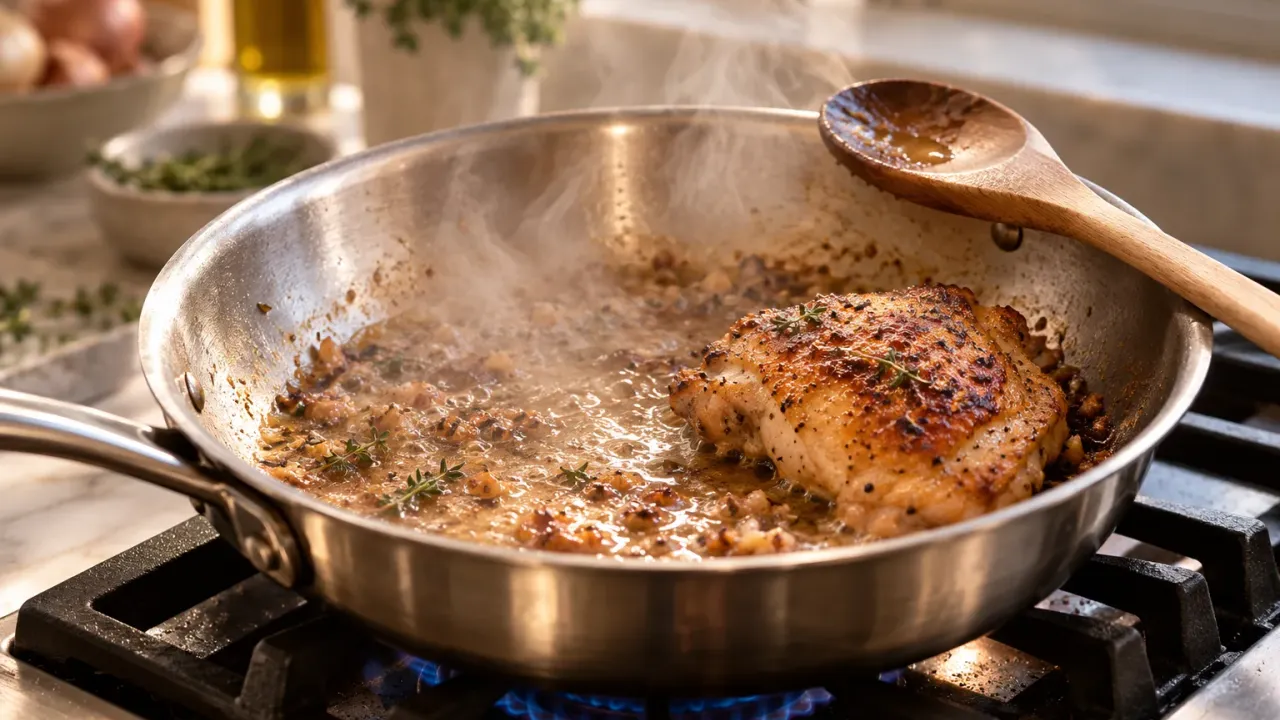
To deglaze a stainless steel pan, take the food out, pour off most of the fat, add a splash of wine, stock or water to the hot pan, and scrape up the browned bits as the liquid bubbles. Reduce the liquid by about half and you have the base of a pan sauce. The browned bits, called fond, are one good reason to cook in stainless steel, because they release into the liquid instead of sticking for good.
The short version has five steps.
- Remove the meat or vegetables and pour off most of the fat.
- Keep the pan hot and add the liquid.
- Scrape the bottom with a wooden spoon.
- Reduce the liquid by about half.
- Taste, then finish with butter or herbs.
What does deglazing mean, and what is the fond?
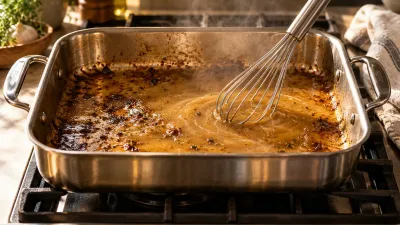
Deglazing means adding liquid to a hot pan to dissolve the browned layer left after searing or roasting. That layer is the fond. It forms when meat juices and sugars brown on the metal, and it carries a lot of flavor that you would otherwise scrub down the drain.
How do you deglaze a stainless steel pan, step by step?
Start right after you take the food out, while the pan is still hot and the fond is dark brown.
- Move the food to a plate. Pour off most of the fat and leave about a tablespoon in the pan.
- Keep the heat at medium-high and pour in the liquid. A splash is enough to loosen the fond. For a sauce, use about half a cup.
- Scrape the bottom with a wooden spoon or a flat spatula. The fond lifts within seconds.
- Reduce the liquid by about half over medium heat. This usually takes a few minutes.
- Taste it, adjust the salt, and stir in butter or fresh herbs if you want a richer finish.
These steps follow All-Clad’s guide on how to deglaze a pan, which suggests half a cup to a cup of liquid for a full sauce. The same method works for a roast. Our post on making gravy in a stainless steel roasting pan deglazes the roasting pan with a splash of broth, scrapes up the fond, and builds the gravy from there.
Stand back a little when the liquid hits, because it steams hard.
What liquid should you use?
Use wine, stock or broth, or plain water, and match it to the food. All-Clad suggests red wine for beef and white wine for poultry and seafood, with stock as an alcohol-free choice and citrus juice for lighter dishes. Vermouth and beer also work. Water is fine when you only want to lift the fond.
Stainless steel handles acidic liquids well. All-Clad says its surface “works beautifully with acidic deglazing liquids,” so wine, vinegar and citrus are safe choices here. Skip dairy for the first pour and add cream or butter after the liquid has reduced.
How hot should the pan be?
The pan should be hot but not smoking, and the fond should be brown, not black. Deglaze at medium-high heat, then drop to medium to reduce. If you are unsure about the heat, read when the pan is hot enough before you start.
Use hot or room-temperature liquid. All-Clad warns that cold water added to a hot pan can cause warping.
How do you turn the deglazed liquid into a pan sauce?
Reduce it, then finish it. Once the liquid has cooked down by about half, a line drawn through it with a spoon should slowly flow back together. Take the pan off the heat and whisk in a few small pieces of cold butter, one at a time, for a glossy sauce. If you used wine or another alcohol, simmer a couple of extra minutes so the raw alcohol taste cooks off.
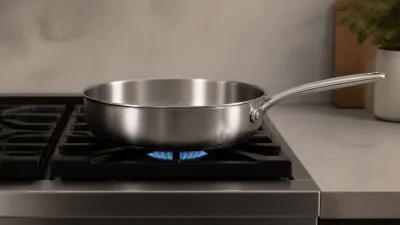
This is the natural next step after searing steak first. If you cook pan sauces often, a wide, straight-sided pan makes it easier, and our guide to sauté pans for pan sauces covers good options.
Can you deglaze a nonstick pan?
You can, but you will get little to deglaze. All-Clad advises against it because the nonstick coating prevents proper fond from forming, so there is nothing to lift. Stainless steel is the better pan for this technique.
What if the pan is burnt rather than browned?
Burnt, black residue tastes bitter, and it will spoil a sauce. Brown fond is what you want, and black crust is what you do not. If the layer is black, skip the sauce, add water to the pan and simmer to loosen it, then follow the steps for cleaning burnt-on residue.
How do you clean the pan after deglazing?
Deglazing already does most of the cleaning, since the liquid lifts the fond from the metal. Pour out the sauce, let the pan cool a little, and wash it with warm soapy water. A pan that still has stuck spots will usually release them after a short soak.
Frequently asked questions
Can you deglaze with water?
Yes. Water lifts the fond and works well when you want a clean, simple pan sauce. Use hot or room-temperature water, and add herbs, garlic or a little salt to give the sauce more flavor.
Can you deglaze a cold pan?
Not well. The fond loosens best while the pan is hot, and fond on a cold pan is harder to lift. If the pan has cooled, reheat it over medium heat for a minute before you add liquid.
Does deglazing damage stainless steel?
No, not when you scrape with a wooden spoon and add a hot or room-temperature liquid. That is gentle on stainless steel. All-Clad says the surface works well with acidic liquids. Avoid pouring cold water into a very hot pan.
How much liquid do you need?
A splash loosens the fond, and about half a cup makes a small sauce. All-Clad’s guide suggests half a cup to a cup for a full pan sauce.