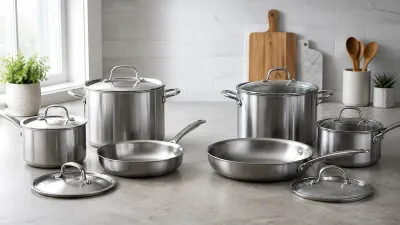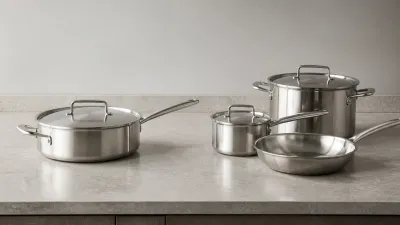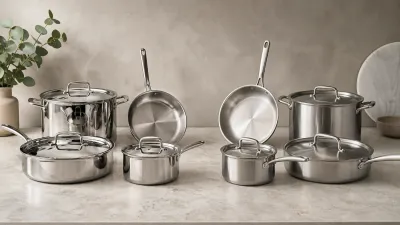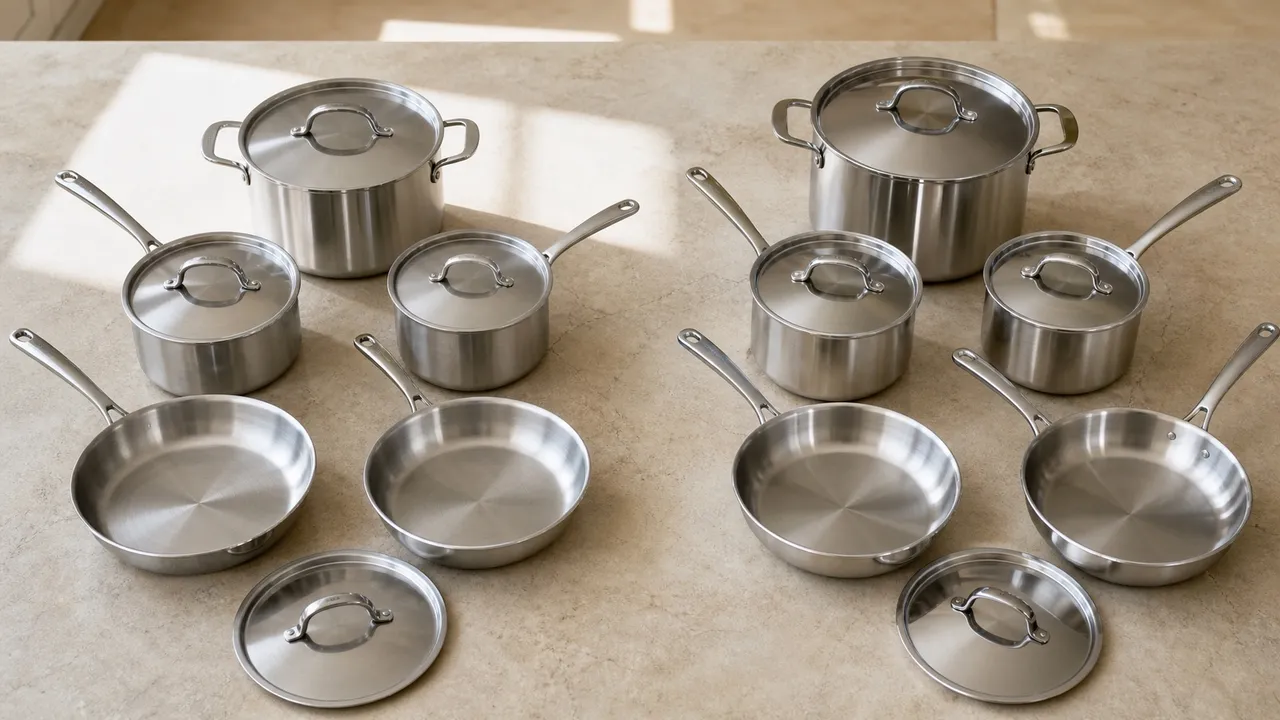
Tramontina Tri-Ply Clad is the value pick when its current offer costs less and its vessels and glass lids fit your kitchen. All-Clad D3 is worth more when you value its Pennsylvania bonded-cookware manufacturing, stainless lids, higher covered-oven limit, or exact handle and pan geometry.
Quick verdict
| Decision | Tramontina Tri-Ply Clad | All-Clad D3 | Winner |
|---|---|---|---|
| Construction | Fully clad stainless/aluminum/stainless | Fully clad stainless/aluminum/stainless | Tie on specification |
| Induction | Yes on current clad line | Yes | Tie |
| Value | Value-focused position; compare the exact offer | Premium position | Depends on the current offer |
| Lids | Often glass, exact set varies | Often stainless, exact piece varies | Preference |
| Origin | Varies by exact product and listing | Bonded cookware made in Pennsylvania | All-Clad |
| Covered oven limit | 350°F | 600°F | All-Clad |
The exact sets we compared
This page matches Tramontina model 80116/1011DS with the current All-Clad D3 10-piece set represented by Amazon ASIN B005H8KD3E. Both provide six cooking vessels and four lids, but the assortments and lid materials differ.

Tramontina Tri-Ply Clad 10-Piece Cookware Set
4.5 out of 5 (770 ratings, as of August 1, 2026)
A fully clad tri-ply set with six cooking vessels and four tempered-glass lids.
- 8- and 10-inch fry pans
- 1.5- and 3-quart saucepans, 3-quart sauté pan, and 8-quart stockpot
- Induction compatible; complete covered set rated to 350°F
Pros
- Two conventional saucepans in useful small and medium sizes
- Glass lids allow covered-food monitoring
- Fully clad construction at a value-focused position
Cons
- Glass lids lower the covered oven ceiling
- Similar Tramontina names also appear on different constructions and assortments
Considerations
The stronger value when the exact model, glass lids, and included vessels match your kitchen.
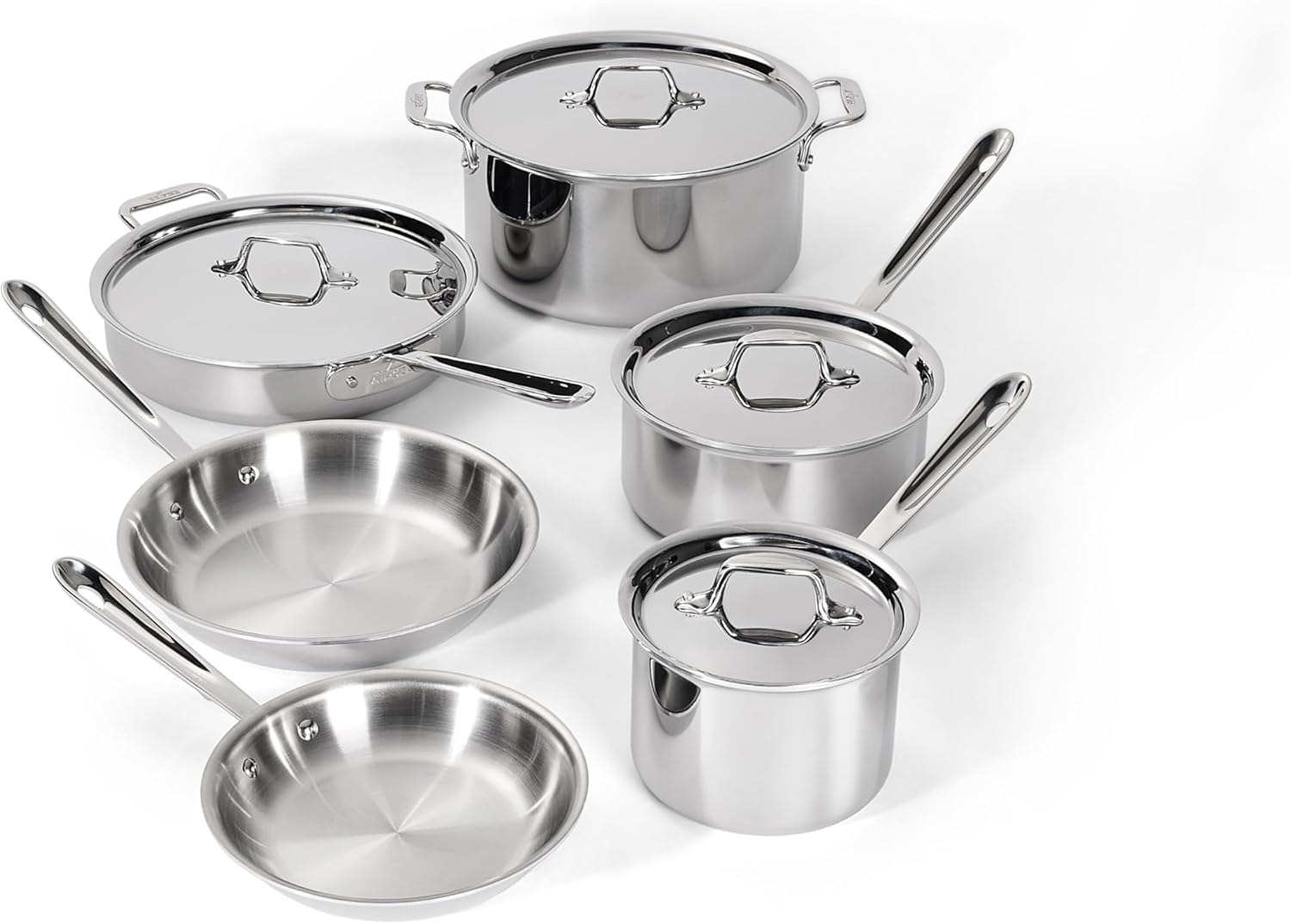
All-Clad D3 Stainless 10-Piece Cookware Set
4.5 out of 5 (1,227 ratings, as of August 1, 2026)
All-Clad's fully clad tri-ply set with six cooking vessels and four stainless steel lids.
- 8- and 10-inch fry pans
- 2-quart saucepan, 3-quart casserole, 3-quart sauté pan, and 8-quart stockpot
- Induction compatible and oven and broiler safe to 600°F
Pros
- Stainless lids avoid the lower glass-lid temperature limit
- Bonded cookware is documented as made in Pennsylvania with global components
- Exact D3 set has current first-party documentation
Cons
- Premium cost
- The 3-quart casserole uses two short handles rather than a saucepan handle
Considerations
Worth the premium when lid material, oven range, origin, and exact D3 handling matter enough to use them.
How we compared
This is a research-based editorial comparison, not a hands-on or side-by-side test. We did not map temperatures, weigh the sets, or cook identical recipes. We compared exact listings and excluded Tramontina’s disc-bottom “tri-ply base” lines. The exact Tramontina 80116/1011DS Home Depot record supplied the model and assortment. The exact-model retailer record for ASIN B096N2RCKC also states its 350°F oven limit. Tramontina’s current related glass-lid set is SKU 80116/054DS, so it supports line-level construction but is not exact-model evidence. All-Clad’s current D3 set page supplied the exact D3 construction, vessels, lids, induction, care, and oven information.
Exact Amazon availability, ratings, and review counts came from Bright Data snapshot sd_msb0qds92lo5k1x9vs captured August 1, 2026. Country of origin and lid material must still be verified on the exact Tramontina offer because the brand catalog is not one uniform product.
Does All-Clad cook better?
Both specifications describe the architecture buyers should seek: an aluminum core extending through the sidewalls between stainless layers. That should distribute heat better up the wall than a thin steel sidewall above a bonded base disc.
Specifications alone do not establish that one set cooks more evenly. Total thickness, aluminum mass, shape, burner size, and manufacturing consistency matter, and we did not run a side-by-side cooking test.
Winner: No documented cooking-performance winner.
Handling, lids, and sets
All-Clad’s grooved D3 handle gives a secure underhand grip but can feel narrow. Tramontina handles vary and may feel rounder. Try the largest filled pan you plan to use, not an empty eight-inch skillet.
Many Tramontina sets use glass lids; All-Clad D3 commonly uses stainless. Glass permits viewing but can have a lower heat limit. Stainless is opaque but simpler for high-heat oven and broiler use when the exact instructions permit it.
Count actual pans. A ten-piece set can mean five vessels plus five lids, and two brands may package different sizes under the same piece count.
In this exact match, each set has six vessels and four lids. Tramontina gives you 1.5- and 3-quart conventional saucepans. D3 instead pairs one 2-quart saucepan with a 3-quart casserole that has two short handles. The Tramontina assortment favors everyday small-pot work; the D3 casserole is easier to center in an oven and store without a long handle. Neither arrangement wins for every kitchen.
Manufacturing and warranty
All-Clad says its bonded cookware is made in Canonsburg, Pennsylvania, from U.S. and imported materials. Tramontina origin varies by model and sales channel, so use the box and exact product record rather than a broad country claim.
Both warranties are limited to defects under their terms. Keep proof of purchase and follow heat and cleaning directions.
Which should you buy?
Choose Tramontina if the exact fully clad set has the vessels you need, you prefer glass lids, and the value difference is meaningful. Choose All-Clad if manufacturing location, stainless lids, higher covered-oven headroom, or D3’s exact geometry justify the premium.
Our best stainless steel cookware sets page compares current sets. Read what fully clad means before shopping, compare D3 with D5 if the premium brand is your preference, then follow the stainless pan cleaning guide whichever set you choose.
Related guides
Continue with Cuisinart vs Calphalon Stainless Cookware.