All-Clad D3 is the better long-term pan for most cooks who are shopping for stainless steel. Its cooking surface is uncoated stainless steel, so normal utensil wear cannot exhaust a nonstick layer. Choose HexClad if easier release is the priority and you accept the care and lifespan questions of a hybrid coated surface.
Quick comparison
| Decision | HexClad 12-inch hybrid pan | All-Clad D3 12-inch fry pan with lid |
|---|---|---|
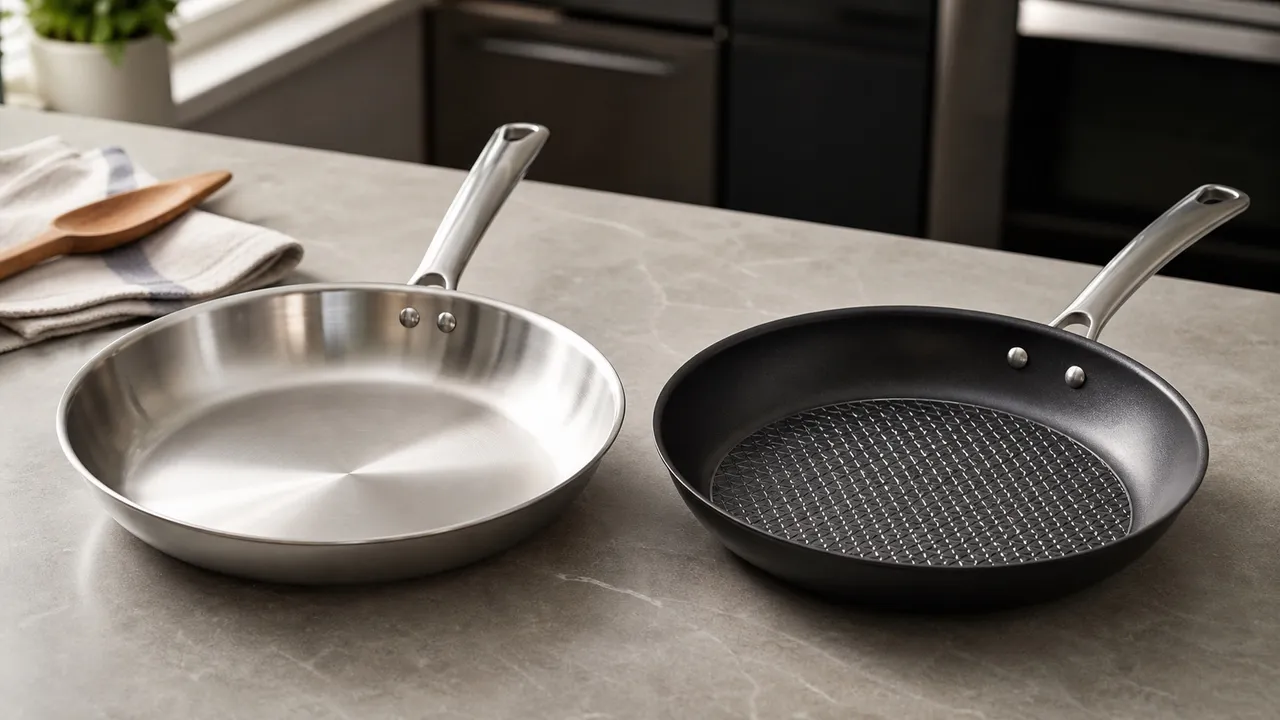
| Cooking surface | Raised stainless pattern over ceramic nonstick valleys | Bare stainless steel |
| Core | Aluminum in tri-ply body | Aluminum in tri-ply body |
| Induction | Yes | Yes |
| High-heat claim | Maker lists up to 900°F for current pan | Maker lists up to 600°F for current uncoated D3 |
| Food release | Easier for delicate food when coating is sound | Technique-dependent |
| Long-term surface | Coating condition matters | No nonstick coating to wear out |
| Best fit | Buyer prioritizing release and convenience | Buyer prioritizing durability and browning |
The exact pans we compared
This page matches HexClad model HEX12PAN with the current lidded All-Clad D3 12-inch fry pan. The D3 includes a stainless lid; the exact HexClad ASIN does not. HexClad also sells a separate lidded ASIN, so check the included-components line rather than relying on a similar image or title.

All-Clad D3 12-Inch Fry Pan with Lid
4.6 out of 5 (6,550 ratings, as of August 1, 2026)
A fully clad tri-ply skillet with an uncoated stainless steel cooking surface and matching lid.
- 12-inch fully clad tri-ply body
- Bare stainless steel cooking surface
- Induction compatible and oven and broiler safe to 600°F
Pros
- No nonstick coating determines the pan's service life
- Strong for searing, fond development, and deglazing
- Includes a stainless steel lid
Cons
- Delicate foods demand heat and fat control
- Grooved handle and lidded weight will not suit every cook
Considerations
The better one-pan investment for cooks willing to learn stainless technique and clean browned residue.

HexClad 12-Inch Hybrid Fry Pan
4 out of 5 (10,872 ratings, as of August 1, 2026)
A 12-inch tri-ply pan with raised stainless steel peaks above TerraBond ceramic nonstick valleys.
- 12-inch hybrid surface; exact ASIN does not include a lid
- Aluminum-core tri-ply body with magnetic steel base
- Manufacturer lists induction, dishwasher, and oven compatibility
Pros
- Easier initial release than bare stainless for many foods
- Large flat bottom and stay-cool handle
- Current coating is documented as ceramic and PFAS-free by HexClad
Cons
- The cooking surface still contains a nonstick coating
- Coating condition and warranty exclusions matter over time
Considerations
Choose it only if easier release is worth owning a coated pan; hybrid does not mean coating-free.
How we compared
This is research-based analysis, not a hands-on or side-by-side cooking test. We matched current 12-inch exact products and checked construction, coating, published dimensions, included pieces, induction and oven claims, care, and warranty information on August 1, 2026. We did not cook eggs, map surface temperatures, abrade either pan, or test coating chemistry ourselves.
HexClad’s current 12-inch product page describes laser-etched stainless peaks above TerraBond ceramic nonstick valleys, with an aluminum core and magnetic stainless base. All-Clad’s current 12-inch D3 page documents fully bonded tri-ply construction, a bare stainless cooking surface, and the included lid. Exact Amazon availability, ratings, and review counts came from Bright Data snapshot sd_msb0qds92lo5k1x9vs.
The URL is new, and the July 2–29 Search Console brief has no page-level record for it. July 25 DataForSEO research estimates 1,900 monthly US searches for “hexclad vs all clad.” We use that research to understand the query’s decision intent, not as product-quality evidence.
The decisive difference is the surface
HexClad is not an uncoated stainless pan. Food and utensils contact a patterned combination of steel peaks and coated valleys. HexClad says its current TerraBond coating is made without PFAS or PTFE and publishes third-party non-detect results for named compounds; those are manufacturer-presented results for current products, not a statement about every older HexClad pan or every possible substance.
All-Clad D3 exposes stainless steel across the cooking surface. It needs preheating and fat for many foods, but it is well suited to browning, fond development, and deglazing. There is no nonstick layer whose condition decides when the pan is finished.
Winner: All-Clad for durability; HexClad for initial release.
Heat and cooking technique
Both work on induction. HexClad’s current direct page publishes an unusually high 900°F oven limit, while All-Clad lists 600°F for the uncoated D3 pan and broiler use. Retailer metadata and lids can carry different limits, so follow the lowest instruction attached to the exact configuration you own. A high maximum does not make routine high burner heat desirable; it can burn fat and food and stress any pan.
Eggs are easier on a sound hybrid surface. Stainless steel is more forgiving of vigorous deglazing and repeated browning. Learn how to keep food from sticking in stainless steel before deciding that bare steel cannot handle delicate food.
Cleaning and lifespan
HexClad permits dishwasher and metal-utensil use for current cookware, but its warranty excludes damage from improper use, excessive heat, sharp-utensil misuse, improper cleaning, and normal cosmetic wear. Gentle utensils and hand-washing are still sensible ways to reduce avoidable abrasion. Stop using a coated pan if the surface peels, flakes, blisters, or is deeply damaged, and follow the maker’s warranty process.
All-Clad can develop brown residue or rainbow heat tint without becoming structurally damaged. Our stainless steel cleaning guide covers those issues.
Which should you buy?
Buy All-Clad if you want one pan for searing, sauce building, oven finishing, and decades of uncoated use. Buy HexClad if you understand that “hybrid” still includes a coating and value easier release enough to accept that tradeoff.
For alternatives, compare All-Clad D3 and D5, read stainless steel versus nonstick cookware, or start with the best stainless steel frying pans. Our cookware safety guide explains why surface condition and complete-product construction matter more than a material word in the title.