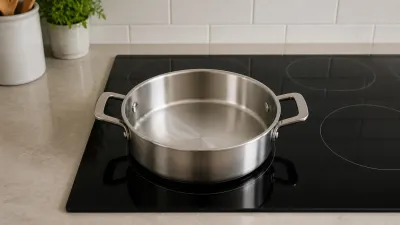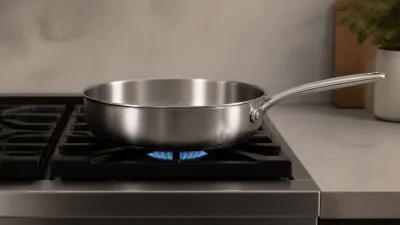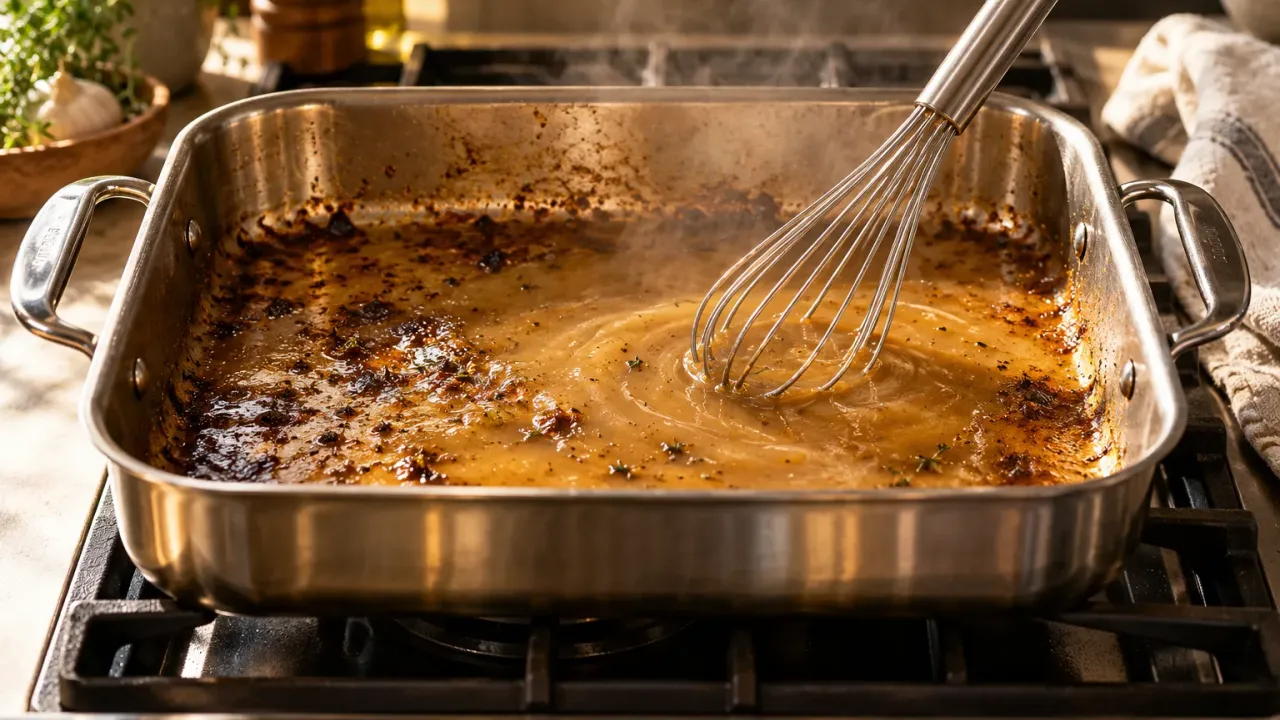
Pour off most of the fat, set the empty roasting pan over medium heat, and scrape up the browned bits with a little broth. Make a roux in the pan with some of the fat and flour, whisk the deglazing liquid and more broth back in, and simmer until the gravy coats a spoon. Stainless steel suits this job because the browned bits left by the roast, called fond, release into the liquid when you add broth, and metal tools can scrape the pan without harming a coating.
A common starting ratio is 2 tablespoons of fat, 2 tablespoons of flour and 1 cup of liquid for a medium-thick gravy. Use that as a starting point and adjust for the thickness you like.
What you need
Gather these before the roast comes out of the oven, because gravy moves quickly once the pan is on the burner.
- A stainless steel roasting pan with the drippings still in it
- A flat-bottomed whisk or a flat wooden spoon
- A fat separator or a large spoon
- Broth, warm if you can
- All-purpose flour
- A fine strainer, if you want a smooth gravy
A flat-edged tool reaches the corners of a rectangular pan better than a round whisk. Metal tools are fine on stainless steel, so you can scrape without worrying about a coating.
How do you make gravy step by step in the pan?
Move the roast to a cutting board and cover it to rest. Then work in this order.
- Tilt the pan and pour the drippings into a fat separator or a bowl. Leave the dark browned bits in the pan.
- Set the pan over medium heat, add a splash of broth, scrape up the fond, and pour the liquid into a bowl. Cooks call this deglazing.
- Return about 2 tablespoons of the separated fat to the pan and whisk in 2 tablespoons of flour. Cook the paste for a minute or two so the raw flour taste fades.
- Add the deglazing liquid, the rest of the drippings and about 1 cup of broth a little at a time, whisking as you pour.
- Simmer, stirring, until the gravy coats the back of a spoon.
- Taste, then add salt and pepper at the end.
If you prefer a slurry, stir a spoonful of flour or cornstarch into a few spoonfuls of cold broth until smooth, then whisk it into the simmering liquid. Add the slurry gradually, because the gravy keeps thickening for a minute after it boils.
Drippings can carry raw poultry juices, so bring the gravy to a full boil before you serve it. For the bird itself, the USDA says a whole turkey is safe at 165°F, measured with a food thermometer in the innermost thigh, the wing and the thickest part of the breast.
What if your roasting pan does not fit on the burner?
Pour the drippings and the browned bits into a saucepan and make the gravy there. Some roasting pans are too large for a burner, and some are not rated for the stovetop at all, so check the maker’s care guide before you set one over heat.
Even a pan that fits can overhang a small element and heat unevenly. Our stainless steel roasting pan comparison notes which models are induction compatible and which are not, which matters if your range is induction.
To move the fond to a saucepan, add a little hot broth to the roasting pan, scrape it loose with a spoon, and pour everything into the saucepan. Rinse the pan with a little more broth to catch what is left.
How do you fix lumpy, thin or salty gravy?
Strain lumps through a fine strainer or blend the gravy briefly with an immersion blender. Thin gravy needs a few more minutes of simmering or a small slurry. Salty gravy needs more unsalted liquid, and a splash of unsalted broth or water usually rescues it.
- Lumps form when flour meets liquid too fast. Add broth slowly and keep whisking.
- Thin gravy usually needs more time on the heat, not more flour.
- Pan drippings are salty after a brined bird, so taste before you add any salt.
- A pasty or raw flour taste means the roux needed another minute of cooking.
When the gravy is done, pour it into a warm serving vessel. Our guide to stainless steel gravy boats compares options that keep gravy warm at the table.
How do you clean the pan after making gravy?
Soak the pan in hot water with dish soap for 15 to 20 minutes, then wipe the softened residue away. Stainless steel handles this well, and baked-on bits lift more easily if you do not scrub the dry pan.
For stubborn spots, follow the steps in our guide to how to clean stainless steel pans. Check the roasting pan’s manual before you use harsher methods, since some roasting pans are labeled for hand washing only.
If you are still choosing a pan, our roasting pan size chart by turkey weight shows what fits.
Frequently asked questions
Can you make gravy in a stainless steel roasting pan?
Yes. Stainless steel is a good surface for gravy because the browned bits release into the liquid when you deglaze, which gives the sauce its flavor.
Can a roasting pan go on the stovetop?
Many can, but not all. Check the manufacturer’s instructions for stovetop and induction use, and move the drippings to a saucepan if the pan is too large for your burner.
How do you stop gravy from sticking to the pan?
Keep the heat at medium, keep liquid in the pan, and stir the bottom as the gravy thickens. If the browned layer is already dark and dry, add broth first and let it soften before you scrape.
How much flour per cup of drippings?
Start with 2 tablespoons of flour and 2 tablespoons of fat for each cup of liquid. Use less flour for a thinner gravy and more for a thicker one.