To remove coffee stains from stainless steel, wash the cool vessel with warm water, mild dish soap, and a soft brush, then rinse and dry it completely. If a brown film remains, identify whether it is coffee oil, tannin residue, mineral scale, heat discoloration, or damage before using anything stronger. The exact maker’s rules control the lid, gasket, coating, dishwasher, and any chemical treatment.
Coffee deposits are often oily, and a neglected drink path can hold residue even when the main steel body looks clean. The British Stainless Steel Association’s cleaning guide treats coffee deposits and tannin stains as different problems. That distinction matters for mugs, travel mugs, carafes, bottle bodies, lids, seals, and narrow seams.
What kind of coffee stain is on the stainless steel?
The appearance and feel of the mark give you a useful starting diagnosis, but they do not identify an unknown coating or prove the depth of damage.
| What you see | More likely explanation | Start here |
|---|---|---|
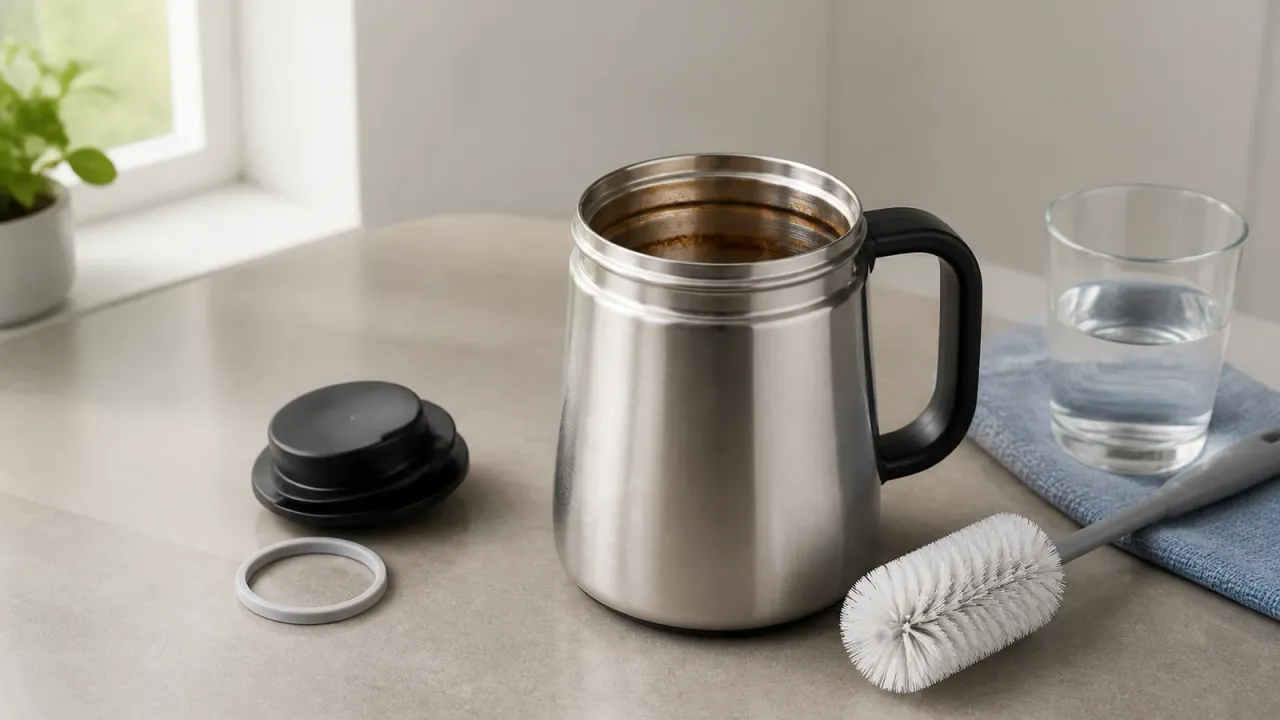
| Brown or amber film that feels slick, sticky, or greasy | Coffee oil and residue | Mild dish soap, warm water, and a soft brush |
| Brown film in a lid channel, valve, gasket groove, or spout | Coffee trapped in a component or narrow seam | Follow the maker’s disassembly and brush instructions |
| Pale, chalky haze or hard rings | Mineral scale from water, not coffee film | Follow the exact maker’s scale method, if one is provided |
| Blue, gold, purple, or rainbow color with no raised residue | Heat tint or surface discoloration | Do not treat it as a coffee stain; check the maker’s finish guidance |
| Orange roughness, pinholes, flaking, or a mark that catches a fingernail | Rust, pitting, or damaged material | Stop escalating cleaning and contact the maker |
| Odor remains after the visible film is gone | Residue in plastic, silicone, a valve, or an inaccessible path | Inspect replaceable components and the exact care manual |
Do not keep scrubbing because a mark is brown. Coffee residue, mineral scale, heat tint, rust, scratches, pitting, and coating failure need different decisions. The site’s guide to cleaning stainless steel pans gives a broader residue diagnosis, but this page focuses on coffee drinkware and carafes.
What is the safest first cleaning method?
For a cool, intact vessel, use the least aggressive method that reaches every coffee-contact surface.
- Empty the mug, bottle, or carafe and let it cool enough to handle safely.
- Read the exact care instructions for the body, lid, gasket, valve, straw, and interior finish.
- Disassemble only the components the maker says are removable.
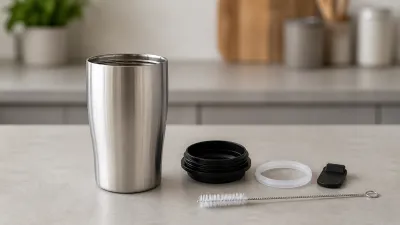
- Wash the steel body with warm water, mild dish soap, and a soft cloth or soft brush that fits the opening.
- Wash the approved removable parts separately, paying attention to threads, channels, sliders, valves, and gasket grooves.
- Rinse every surface with clean water until no soap or cleaner remains.
- Dry the body and every component fully before reassembling or storing the vessel.
This routine does not assume that every lid is dishwasher safe, every gasket can be removed, or every stainless interior is uncoated. A vacuum-insulated body, ceramic lining, nonstick coating, painted exterior, or silicone seal may have different limits from bare stainless steel. The coffee and travel mug guide covers those construction differences when you are choosing a vessel.
How do you clean the stainless steel body?
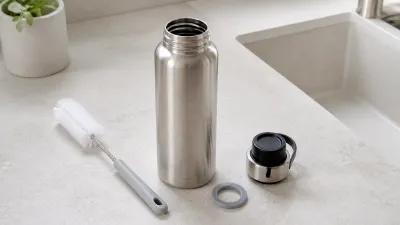
Start by rinsing loose coffee out of the body, then use warm water, mild dish soap, and a soft brush or cloth. Choose a brush long enough to reach the bottom without forcing it against the seam or coating. Work gently around the mouth and shoulder where a film can dry above the usual liquid line.
Do not use a metal scraper or steel wool to chase a brown mark. A carbon-steel pad can scratch stainless steel and leave iron contamination that later appears as rust. The BSSA cleaning guidance recommends soft tools for routine care, clean-water rinsing, and complete drying, while warning about chloride cleaners and contaminated scouring materials.
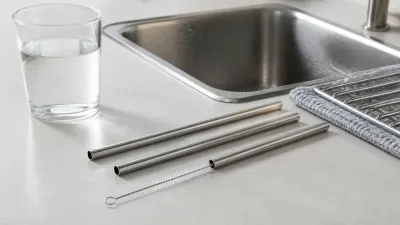
For a narrow bottle or travel mug, inspect the inside with a light after washing. A clean-looking opening does not prove that the base, shoulder, or seam is clean. Repeat the mild wash if residue remains. If the brush cannot reach a sealed or sharply recessed path, ask the maker whether the component is serviceable or replaceable instead of improvising a tool or chemical soak.
How should you clean the lid, gasket, and narrow drinking path?
Clean the lid and seal as separate parts only when the exact maker permits removal. Coffee can collect under a gasket, around a slider, inside a valve, or where a lid meets the drinking opening. Rinsing the body alone will not reach those places.
YETI’s Rambler lid and cap cleaning instructions are a product-specific example. The instructions show how to remove certain MagSlider gaskets and magnets, wash the parts, and ensure that they are dry before reassembly. YETI also says not to use its cleaning tablets on Rambler caps or lids. Those directions apply to the named Rambler components, not to every travel mug.
Zojirushi’s coffee-carafe manual gives another exact-product example. It says to remove the carafe-lid packing, wash the lid and packing with diluted mild kitchen detergent and a soft sponge, rinse, dry, and clean the coffee-flow passage with water. The manual also describes periodic removal of the carafe-lid valve, spring, and brew-valve gasket when the valve sticks or the passage is clogged. Do not copy that disassembly sequence to a different lid.
If a gasket is cracked, torn, swollen, persistently discolored, or still smells after the maker-approved cleaning routine, check for a replacement part. Zojirushi’s manual specifically directs owners to replace a carafe-lid packing that is damaged, discolored, or turns white. A component that cannot be cleaned or reassembled correctly is a reason to contact the maker, not to force it apart.
Which maker-specific deep-clean methods can remove stubborn coffee film?
Escalate only to a method the exact maker gives for the exact product. A cleaning tablet, dishwasher cycle, hot-water soak, baking soda, vinegar, citric acid, peroxide, or abrasive is not a universal stainless-steel permission.
YETI’s current Rambler cleaning instructions list a tablet method for coffee or tea stains that remain after ordinary cleaning. The page says to use one YETI Cleaning Tablet, let the solution sit for five minutes, pour it out, rinse thoroughly, and run the drinkware through the dishwasher before use. It also says not to shake the solution in the drinkware and recommends two tablets for drinkware over 30 ounces. Follow the current YETI instructions and tablet label for the exact Rambler model; do not use that contact time or dishwasher step as a general recipe.
OXO gives a different, carafe-specific instruction in its 12-Cup Coffee Maker care guide. OXO says the carafe and lid should be hand washed with mild detergent and are not dishwasher safe. If coffee oil stains remain in that carafe, OXO says to leave a solution of dishwasher detergent and water in the carafe overnight, then rinse thoroughly and dry before use. That overnight method belongs to the named OXO coffee maker and its care guidance, not to an unidentified mug, coated vessel, gasket, or vacuum bottle.
The BSSA guide lists baking soda for coffee deposits in coffee urns, but a coffee urn is not the same product as a sealed travel mug with plastic or silicone parts. Unless your maker gives a baking-soda method for your exact vessel, stop at the mild wash or use the maker’s named cleaner and label directions. The same boundary applies to vinegar and citric acid, even when either is useful for a different problem such as mineral scale.
How can you tell coffee film from mineral scale or damage?
Coffee film is usually brown, amber, or greasy and may leave a coffee odor. Mineral scale is more often pale, chalky, or crusty and may follow the water line. A stainless interior with rainbow color may have heat tint rather than residue. An orange rough mark, cavity, flake, or exposed layer is not a cleaning challenge to solve with more pressure.
Do not apply an acid because a mark is persistent. If the exact maker permits vinegar or citric acid for scale, use only that maker’s dilution, contact time, surface limits, and rinse instructions. If the maker does not provide permission, use the mild routine and ask for guidance. Acid can also damage a coating, a decorative finish, or a component that is not stainless steel.
Coffee taste and coffee residue are related but not identical. The site’s guide to whether stainless steel affects coffee taste explains why an old film, lid, gasket, coating, temperature, or rim can affect the drinking experience without proving that the steel itself changed the coffee.
Which cleaners and tools should you avoid?
Avoid any method that is not approved for the exact product, especially when the vessel has a coating, a gasket, a valve, or a finish other than bare stainless steel.
- Do not use steel wool, wire brushes, knives, or metal scrapers on a food-contact surface unless the exact maker explicitly permits a particular tool.
- Do not use chlorine bleach, hypochlorite, or an abrasive cleaner as a default coffee-stain treatment. The BSSA’s stainless-steel cleaning guidance warns about chloride damage, and its cautions do not override a product’s own care manual.
- Do not mix cleaners. Poison Control explains that mixing vinegar with chlorine bleach can release irritating chlorine gas. Rinse the vessel fully before changing products, and follow the label’s ventilation and protective-equipment directions.
- Do not boil a closed mug, heat a vacuum bottle, or pour boiling water into a vessel unless the exact maker says that use is safe. Heat can create burn and pressure risks even when the stainless body itself tolerates high temperatures.
- Do not leave a cleaner, acid, tablet solution, or soapy water in contact longer than the exact product instructions allow.
The stainless steel cleaner guide can help identify cleaner categories, but a product listed there is not automatically suitable for a drinkware interior, lid, gasket, coating, or carafe. The item’s care manual and the cleaner label come first.
When should you replace a gasket or stop using the vessel?
Replace a gasket, valve, straw, or lid component when the maker lists it as a service part and it is cracked, swollen, discolored, misshapen, persistently odorous, or impossible to clean and reassemble correctly. Do not treat a short rinse as proof that residue has left an inaccessible drink path.
Stop using the vessel and contact the maker when the stainless interior is pitted, flaking, deeply gouged, or exposing an unknown layer. A peeling coating, damaged vacuum body, persistent leak, loose part, or damaged drinking opening also needs a product-specific assessment. Cleaning may remove a film, but it cannot repair metal loss, a failing seal, or a damaged coating.
Rinse away every cleaner before the next use. This article does not certify a vessel as sterile or make a universal microbial-safety claim. It gives a conservative cleaning path for an intact product used according to its own instructions. When the drink path remains inaccessible or the maker cannot confirm a safe replacement, retiring the affected component or vessel is the safer boundary.
How do you keep coffee stains from returning?
Empty old coffee promptly, rinse the body after use, and clean the lid and seal on the schedule the maker recommends. Open or separate parts for drying when the manual allows it. Do not store a closed mug or carafe wet just because the outside looks dry.
After cleaning, inspect the underside of the lid, gasket groove, threads, valve, straw, and seam. A small amount of residue left in one component can make the next batch smell stale even when the stainless body is bright. If the mark returns quickly, change the diagnosis before escalating the cleaner. Recurrent scale, heat tint, rust, pitting, or coating failure needs a different response.
Frequently asked questions
Can you use vinegar to remove coffee stains from stainless steel?
Not as a universal rule. Vinegar is more often used for mineral scale, and some makers allow it for particular products while others restrict acids on coatings or components. Use vinegar only when the exact maker and product label give a compatible method, then follow its contact time and rinse directions. Never mix vinegar with bleach.
Is baking soda safe for a stainless steel coffee mug?
That depends on the exact mug, finish, lid, and maker instructions. The BSSA mentions baking soda for coffee deposits in coffee urns, but that does not establish permission for every travel mug or gasket. Use the mild soap routine unless your product’s care guide names baking soda and gives the needed directions.
Why does my stainless steel mug still smell like coffee after washing?
The residue may be in the lid, gasket, valve, straw, coating, or another narrow path rather than on the visible steel. Follow the exact disassembly instructions, wash approved parts separately, dry them fully, and replace a component that remains damaged or odorous after the maker-approved routine.
Can a dishwasher remove coffee stains from stainless steel?
Only when the exact maker says the whole product or the named component is dishwasher safe. YETI gives dishwasher directions for its Rambler drinkware and parts, while OXO says its named carafe and lid are not dishwasher safe. Do not infer permission from the stainless-steel body alone.