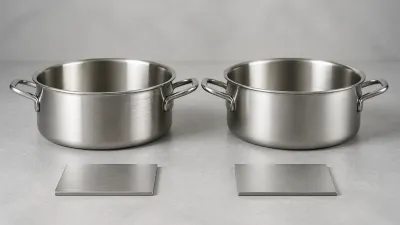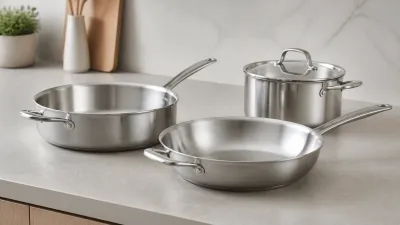
Choose well-made cookware over an 18/10 label. In practical terms, 18/10 and 18/8 usually describe closely related austenitic stainless steels, and the pan’s conductive core, thickness, shape, and magnetic exterior matter more to cooking performance.
An 18/10 cooking surface can still be a sound choice. It just is not proof that one pan will heat more evenly, respond faster, or last longer than a well-built 18/8 pan.
The short comparison
| Decision point | 18/10 stainless steel | 18/8 stainless steel | What matters for cookware |
|---|---|---|---|
| Label meaning | Nominally 18% chromium and 10% nickel | Nominally 18% chromium and 8% nickel | Both labels describe the surface alloy, not the whole pan |
| Common grade relationship | Often marketed within the 304 family | Common name for 304 stainless | The labels can overlap in real alloy composition |
| Corrosion resistance | Strong for normal kitchen use | Strong for normal kitchen use | Care, salt exposure, surface condition, and exact grade also matter |
| Magnetism | Usually weakly magnetic or nonmagnetic | Usually weakly magnetic or nonmagnetic | Induction depends on a separate magnetic exterior or base |
| Heat distribution | Not predicted by the label | Not predicted by the label | Core material and construction control most heat spreading |
| Best buying rule | Fine when the rest of the pan is well specified | Fine when the rest of the pan is well specified | Compare the complete construction |
Verdict: neither label wins on cooking performance. Give 18/10 a slight preference only when two otherwise equivalent pans disclose comparable construction and cost.
What 18/10 and 18/8 mean
The two numbers refer to nominal chromium and nickel content. The British Stainless Steel Association explains that 18/8 means about 18% chromium and 8% nickel. It also cautions that 18/10 is commonly used as an alternate label for essentially the same 304 stainless steel and does not necessarily prove a higher measured nickel content.
That overlap is possible because steel grades are defined by composition ranges, not one exact recipe. A BSSA composition table lists grade 1.4301, an EN counterpart to AISI 304, with 17.0%–19.5% chromium and 8.0%–10.5% nickel. A product marketed as 18/8 and one marketed as 18/10 can therefore sit within the same grade range.
The useful conclusion is simple: treat 18/10 and 18/8 as broad material descriptions. Do not read the extra two in the label as a performance score.
Winner: Tie.
Corrosion resistance and appearance
Chromium is central to stainless steel’s corrosion resistance because it supports the passive surface layer. Nickel helps stabilize the austenitic structure and supports formability and toughness. The World Stainless Association describes 18% chromium and 8% nickel as a typical 304 composition.
If two steels truly differ only by a modest amount of nickel, the higher-nickel version may offer a small advantage in some environments. Kitchen labels rarely give enough information to isolate that difference, though. Chloride exposure, prolonged contact with salt, scratches, overheating residue, and the exact alloy specification can matter more than whether the stamp says 18/8 or 18/10.
Both are reasonable cooking-surface materials. Wash off salty residue, avoid chlorine bleach, and do not assume either is immune to staining or pitting.
Winner: 18/10 in a narrow, like-for-like alloy comparison; tie for most cookware purchases.
Why the grade label does not predict heat distribution
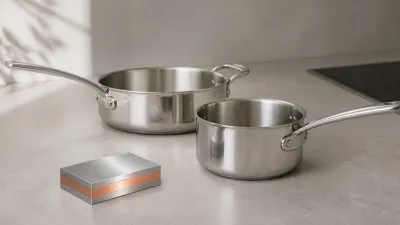
Stainless steel is valued as a durable cooking surface, but cookware makers usually pair it with a more conductive metal. For example, Tramontina describes its tri-ply construction as a stainless cooking surface, aluminum core, and magnetic stainless exterior bonded together.
For a buying comparison beyond the alloy label, see Tramontina Tri-Ply Clad versus All-Clad D3. It compares the exact sets’ construction, handles, care, and stated use limits.
That aluminum core spreads burner heat. Its thickness, coverage, and bond to the steel have far more influence on heating behavior than a nominal two-percentage-point difference in nickel at the cooking surface.
When comparing pans, look for these details:
- A disclosed aluminum or copper core
- Full cladding from base to rim, or a clearly described bonded base
- Total thickness or useful product dimensions
- A flat base that matches your burner
- Handles and weight that suit how you cook
Layer count alone is not enough either. A thick, well-designed three-layer pan may outperform a thin pan with more named layers. Without controlled measurements, the construction details support a buying comparison but not a claim that one pan heats faster.
Winner: Neither. Construction wins.
Does 18/10 work on induction?
An 18/10 or 18/8 cooking surface is usually austenitic. Austenitic stainless steel is generally nonmagnetic or only weakly magnetic, although cold working can change its magnetic response. That does not rule out induction-ready cookware.
Many clad pans add a ferritic stainless exterior that couples with an induction field. The grade stamped on the interior may therefore be different from the grade on the base. Our guide to stainless steel and magnetism explains why the answer varies, while the induction cookware guide shows how to check a finished pan.
Look for an induction-compatible mark or the manufacturer’s explicit compatibility statement. A magnet sticking firmly to the base is a useful screening check, but it does not tell you how evenly the full pan will heat.
Winner: Tie when the finished pan has a magnetic exterior or base.
What about 18/0 stainless steel?
An 18/0 label generally points to ferritic stainless steel with chromium but little or no nickel. BSSA associates this family with grade 430 and notes that it is magnetic, with lower corrosion resistance than 18/8 or 18/10 austenitic steel.
That does not make 18/0 useless. A cookware maker may use a magnetic 18/0 or 430 layer on the outside of a clad pan specifically for induction compatibility, while keeping an 18/8 or 18/10 surface against the food. Judge each layer by its job.
For an exposed cooking surface, 18/8 or 18/10 is usually the more reassuring specification. For an exterior induction layer, ferritic stainless steel can be exactly what the design needs.
Winner: 18/8 or 18/10 for a general-purpose cooking surface; 18/0 can win as the induction-facing layer.
What to inspect before buying
Start with the complete pan rather than its brightest label.
- Check whether the heat-conducting core covers only the base or extends up the sides.
- Confirm that the exact pan works on your cooktop.
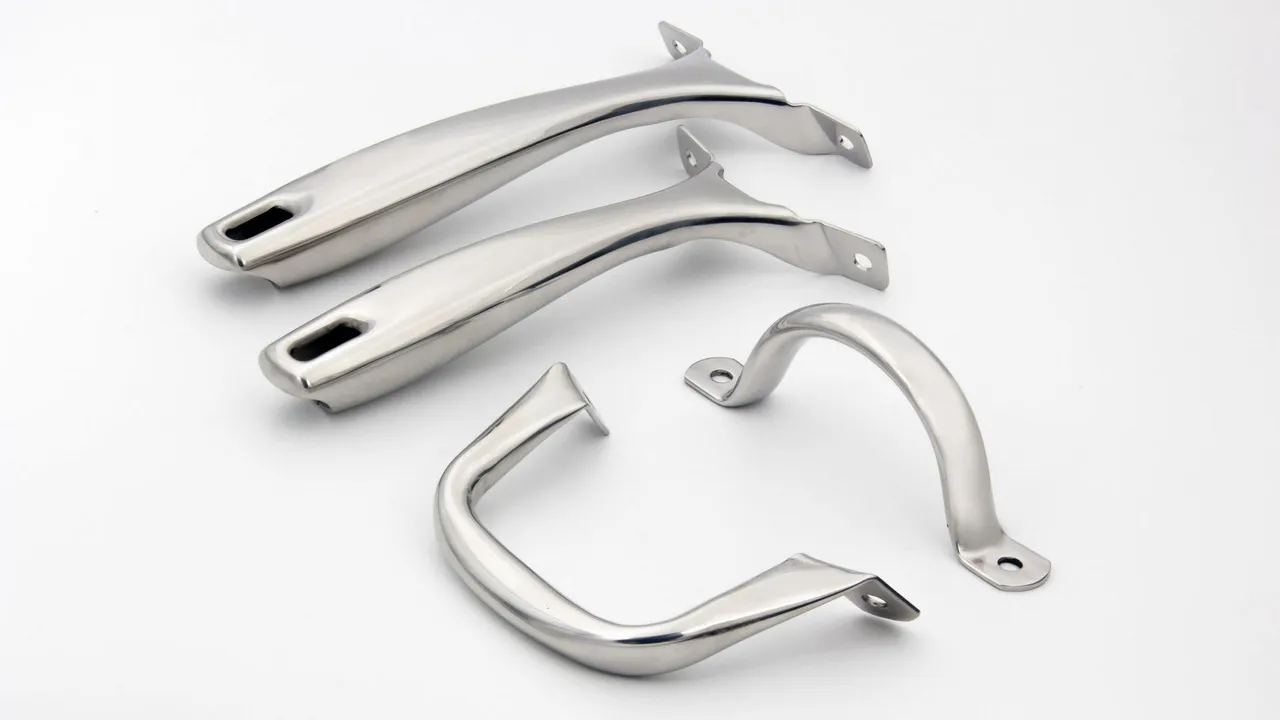
- Compare weight, handle shape, useful cooking diameter, lid inclusion, and oven limit.
- Read the care instructions and warranty exclusions.
- Treat 18/8 or 18/10 as one material detail, not a quality rank.
The best stainless steel cookware sets guide applies those broader checks to complete sets. If your concern is metal exposure rather than performance, read our evidence-based look at stainless steel cookware safety.
Final choice
Do not pay a large premium for 18/10 lettering alone. Both 18/10 and 18/8 can describe suitable, corrosion-resistant cookware surfaces, and both may fall within the 304 family.
When two pans are otherwise equal and their specifications are trustworthy, 18/10 is a reasonable tiebreaker. In every other case, prioritize the core, total construction, cooktop fit, shape, handling, and warranty. Those details tell you much more about how the cookware will work in your kitchen.
Our next grade guide compares 304 and 316 stainless steel for corrosion, fabrication, and use environments beyond cookware labels.
If nickel exposure is the concern, use the focused review of nickel migration from stainless cookware. Flatware shoppers should use the separate 18/0 versus 18/10 stainless steel comparison, where magnetism and corrosion resistance matter differently than they do in a clad pan.
For products marketed without nickel in the cooking alloy, see the nickel-free stainless cookware roundup and its limits on manufacturer-supplied composition claims.
Related guides
Continue with 201 Stainless Steel Food Safe?, 201 vs 304 Stainless Steel for Cookware.