Choose clad stainless steel for an all-purpose cooking surface that handles acidic food and firm cleaning. Choose aluminum when low weight, quick response, and lower cost matter, but identify whether the food touches bare aluminum, an anodized layer, or a coating.
The useful comparison is not simply aluminum versus steel. It separates bare aluminum, anodized aluminum, and aluminum sealed inside cladding because those constructions behave differently.
Aluminum vs stainless steel at a glance
| Decision | Aluminum cookware | Clad stainless cookware | Better choice |
|---|---|---|---|
| Heat spreading | Conductive metal body | Usually uses aluminum or copper inside | Depends on thickness |
| Food-contact surface | Bare, anodized, or coated | Stainless steel | Stainless for broad use |
| Weight | Usually lighter | Usually heavier | Aluminum |
| Acidic food | Bare aluminum needs restrictions | Suited to normal acidic cooking | Stainless steel |
| Induction | Needs a magnetic base | Needs a magnetic exterior | Check the product |
| Surface care | Depends on treatment or coating | Tolerates firmer cleaning | Stainless steel |
Construction matters more than the label
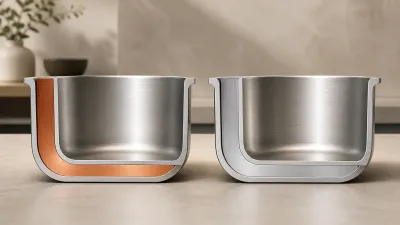
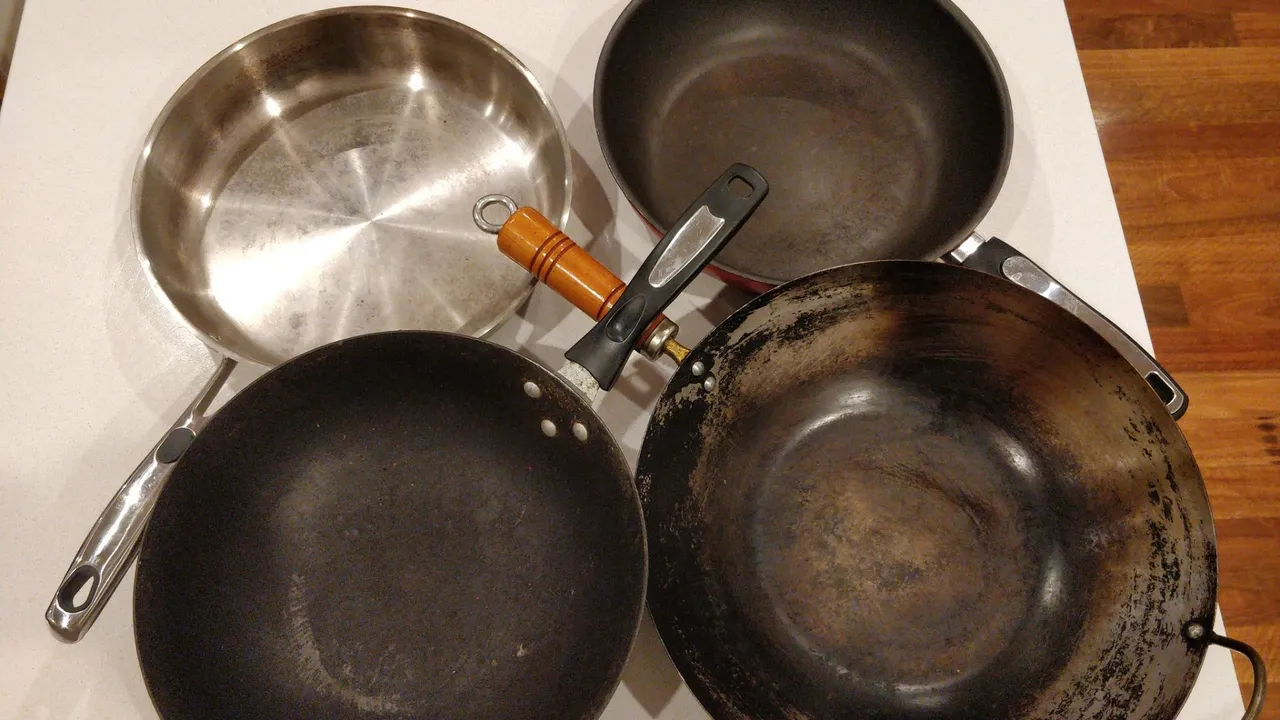
Bare aluminum is both the pan body and cooking surface. Anodizing electrochemically changes that surface into a harder oxide layer. Coated aluminum adds ceramic or PTFE above the metal. Clad stainless cookware uses stainless at the food-contact surface and often aluminum inside to move heat.
That last category is not aluminum-free. It is a deliberate combination: stainless supplies the durable surface while aluminum does thermal work out of sight. Our guide to fully clad construction explains where the bonded core extends, and 3-ply versus 5-ply cookware explains why layer count alone does not prove performance.
Winner: Clad stainless for the most versatile surface; no universal thermal winner without thickness and geometry.
Cooking and acidic food
Health Canada describes aluminum as lightweight, conductive, and fairly inexpensive. It also advises against cooking or storing acidic or salty food in bare aluminum for long periods, especially when a pan is worn or pitted. Those restrictions make bare aluminum less convenient for tomatoes, citrus, and reductions.
Stainless steel is more corrosion-resistant and broadly useful for acidic recipes. Its own metal migration varies by alloy and conditions, so food-grade stainless steel still requires a known product used as directed. Our cookware safety guide covers the evidence without promising zero migration.
Winner: Stainless steel for acidic and salty cooking.
Heat response, weight, and handling
Aluminum’s appeal is fast heat movement at low weight. Yet a thick cast-aluminum vessel and a thin stamped pan will not cook alike. Burner size, wall thickness, base flatness, and food load can outweigh the material name.
Clad stainless cookware can capture much of aluminum’s heat spreading because aluminum forms its core. The stainless layers add weight and can slow response, but also protect the core and permit a magnetic exterior for induction. Compare complete pans at the same diameter rather than isolated conductivity figures.
Winner: Aluminum for low weight; construction-specific for heat control.
Care and service life
Use mild detergent, soft tools, and hand washing for bare aluminum unless the maker says otherwise. Retire a badly pitted or unknown pan from food use. An anodized or coated surface has its own limits and should not be treated like bare aluminum.
Uncoated stainless tolerates more aggressive residue removal. It may stain or show scratches, but ordinary marks do not remove a functional coating. Learn when the distinction changes in our guide to ceramic-coated stainless steel.
Winner: Stainless steel for a forgiving long-term surface.
Which should you buy?
Choose clad stainless for a main cookware set, acidic sauces, browning, deglazing, and fewer surface restrictions. See our stainless cookware-set recommendations for examples that disclose their bonded construction.
Choose bare aluminum for lightweight, cost-conscious equipment when its care and food restrictions fit the job. Choose coated or anodized aluminum for the behavior of that specific surface, not because aluminum itself is nonstick. Our hard-anodized comparison makes that narrower decision.
For neighboring material choices, compare titanium-labeled cookware, copper and stainless, and enameled cast iron and stainless. Start at the stainless versus nonstick gateway when the cooking surface, rather than the structural metal, is your real concern.
Final verdict
Clad stainless steel is the better general-purpose choice because it combines a stable cooking surface with a conductive core. Aluminum remains valuable for light weight and quick response, but “aluminum cookware” is too broad to buy without identifying the surface that touches food.
This is a research-based comparison, not a controlled heat test. Sources were reviewed July 11, 2026.
Related guides
Continue with Stainless Steel Conduct Heat Well for Cookware?.
Sources
- Health Canada, The safe use of cookware and bakeware (retrieved 2026-07-11)
- All-Clad, D3 bonded stainless construction (retrieved 2026-07-11)