Choose stainless steel for long service life, high-heat browning, pan sauces, and a surface that can tolerate firm cleaning. Choose ceramic nonstick for eggs, pancakes, and other delicate foods when easy release matters more than keeping the same pan for decades.
Most kitchens benefit from stainless steel as the main set and one ceramic nonstick skillet as a specialist. “Ceramic cookware” here means metal cookware with a ceramic nonstick coating, not solid ceramic bakeware or enameled cast iron.
Ceramic vs stainless steel at a glance
| Decision | Ceramic nonstick | Stainless steel | Better choice |
|---|---|---|---|
| Food release | Easy when coating is in good condition | Depends on heat, fat, and timing | Ceramic |
| Browning and fond | Lower heat and gentle use are prudent | Strong browning and deglazing | Stainless steel |
| Surface life | Nonstick performance wears with use | Uncoated surface can last for many years | Stainless steel |
| Utensils | Wood, silicone, or nylon | Metal is often allowed | Stainless steel |
| Cleaning | Easy while release remains strong | Residue may need soaking or cleaner | Ceramic at first |
| Acidic food | Generally nonreactive when intact | Nonreactive for normal cooking | Tie |
| Best role | Eggs, crepes, delicate fish | Searing, sauces, sautéing, general cooking | Different jobs |
Food release and cooking technique
Ceramic nonstick wins the first and most obvious contest. A sound coating lets eggs, crepes, pancakes, and delicate fish release with less technique and often less added fat. That convenience is the reason to own it.
Stainless steel has no nonstick coating. The cook needs to preheat the pan, add fat, control the burner, and let browned proteins release when their crust has formed. Our guide to keeping food from sticking to stainless steel walks through that sequence.
Ceramic release is not permanent. Oils can carbonize on the surface, abrasion can roughen it, and repeated use can reduce the low-stick effect even when the pan still looks intact. GreenPan’s current care guidance recommends low to medium heat, non-metal utensils, gentle soap, and hand-washing to preserve performance.
Winner: Ceramic for easy release; stainless steel if you are willing to learn heat control.
Browning, searing, and pan sauces
Stainless steel is the stronger tool for deep browning. Proteins can form fond on the uncoated surface, then wine, stock, or water can dissolve those browned bits into a sauce. The pan also has no coating whose life depends on avoiding prolonged high heat.
Ceramic cookware can brown food, but aggressive preheating and repeated high-heat searing work against the care routine recommended by coating makers. A slick surface also produces less attached fond for a pan sauce. Use moderate heat and follow the exact product’s oven ceiling rather than relying on a generic claim about ceramic.
Stainless does not automatically heat more evenly. That depends on the core beneath the cooking surface. A quality clad stainless pan uses aluminum or copper to spread heat, while ceramic coatings can sit on aluminum, hard-anodized aluminum, or another base. Compare the complete construction.
Winner: Stainless steel.
Durability and replacement
An uncoated stainless cooking surface has the long-term advantage. Scratches and discoloration may change its appearance, but ordinary surface wear does not remove a nonstick function because there is no coating to lose. A well-made pan can remain useful through years of browning, deglazing, and cleaning.
Ceramic nonstick is a consumable surface. Care can extend its useful life, but no manufacturer instruction turns a coating into bare steel. Replace a pan if the coating chips, flakes, or no longer performs well enough for its specialist job. Do not try to restore it with permanent seasoning unless the manufacturer specifically directs that treatment.
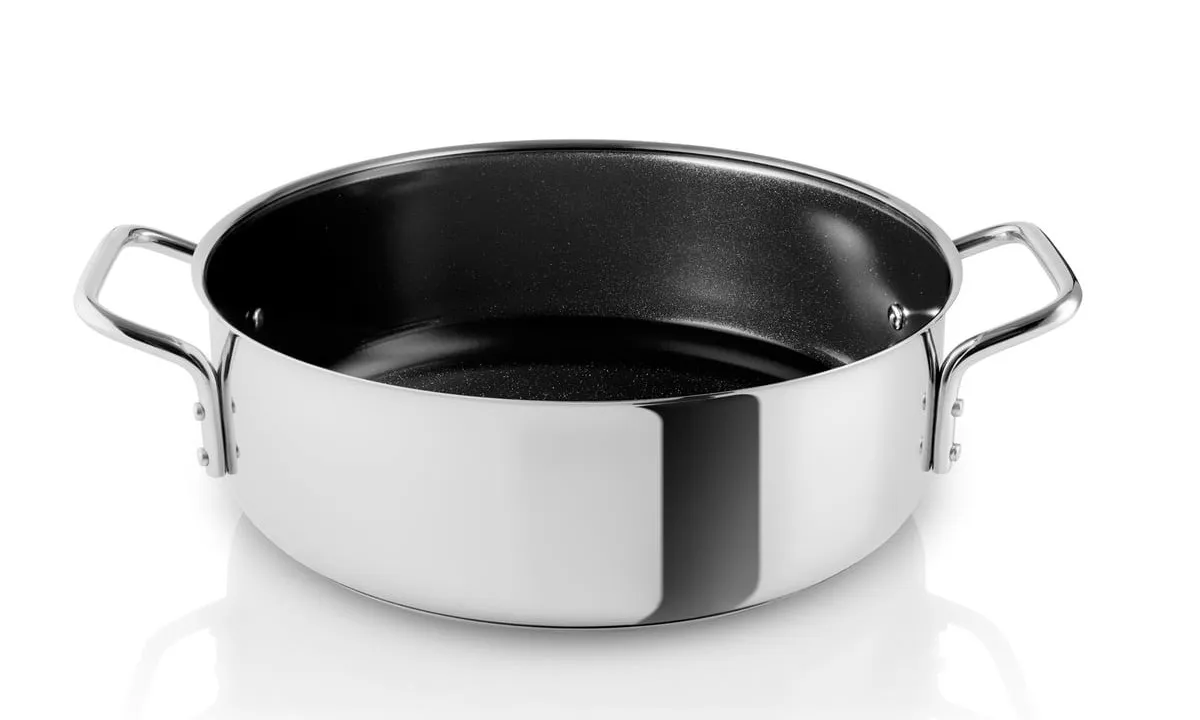
Our guide to ceramic-coated stainless steel explains the distinction between a pan’s structural metal and its cooking-surface coating.
Winner: Stainless steel.
Cleaning and care
Ceramic cookware is quick to clean while its release is strong. Let it cool, wash it with warm soapy water and a soft sponge, and avoid abrasive cleaners unless the maker permits them. Even when a label says dishwasher safe, hand-washing may better preserve the finish.
Stainless steel can demand more effort after searing. Soaking, simmering water in the pan, or using a cleaner made for stainless can remove stuck food and heat stains. In return, the surface is less delicate and does not require wood or silicone utensils in every product line. Check your manufacturer’s care instructions before using steel wool or an aggressive abrasive.
Neither pan should go straight from high heat into cold water. Sudden temperature change can warp the metal base or damage a coating.
Winner: Ceramic for easy daily cleanup; stainless steel for tolerance of deeper cleaning.
Safety and food compatibility
Modern ceramic nonstick is commonly marketed as made without PFAS, but “ceramic” is a broad description rather than a complete formulation. Check the exact maker’s disclosures, care instructions, and regional food-contact compliance. Do not assume that every ceramic-coated product has identical materials or temperature limits.
Stainless steel is nonreactive enough for normal tomato, wine, citrus, and vinegar cooking. It can release small amounts of metals, particularly with new cookware and long acidic cooks, so people with a medically diagnosed nickel sensitivity should discuss exposure with a clinician. Our stainless cookware safety guide reviews that evidence and its limits.
With either material, stop using cookware that is cracked, badly warped, or shedding its surface. Follow recall notices and the instructions supplied with the exact pan.
Winner: Tie for normal use when the cookware is intact and used as directed.
Which cookware should you buy?
Choose ceramic nonstick if you mainly want:
- Easy eggs, crepes, pancakes, or delicate fish
- A pan used at low to medium heat
- Simple cleanup and you accept eventual replacement
- A coating whose manufacturer discloses the chemistry you want
Choose stainless steel if you mainly want:
- Steaks, chops, sautéed vegetables, and browned fond
- Tomato sauces, wine reductions, and frequent deglazing
- A durable surface without a nonstick coating
- Cookware that can serve as the core of a long-term set
Do not buy a full ceramic set solely because one coated skillet handles eggs well. Pots used for boiling, steaming, and sauce work gain little from a nonstick surface, while coating care applies to every piece.
Final verdict
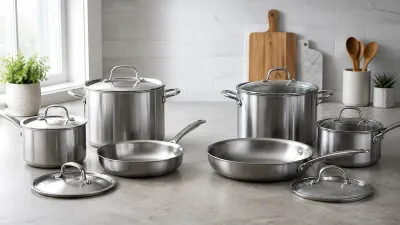
Stainless steel is the better foundation for most kitchens because it covers more techniques and has no nonstick layer to wear out. See our best stainless steel cookware sets for construction-focused choices.
Ceramic nonstick still earns a place as a supporting pan for delicate, low-to-medium-heat cooking. Buy only the sizes that need easy release, use gentle utensils, and regard reduced release as a sign that the pan may be nearing replacement.
This is a research-based material comparison, not a hands-on durability test. Manufacturer care and material guidance was reviewed July 11, 2026.