Choose hard-anodized cookware for easy release only after checking its cooking-surface coating. Choose clad stainless steel for browning, acidic sauces, firm utensils, and a food-contact surface that does not depend on a nonstick layer.
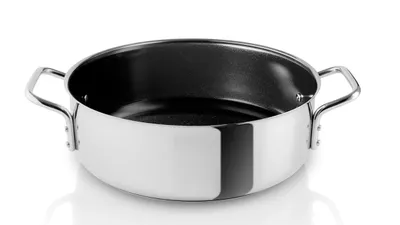
Hard anodizing changes aluminum’s surface into a harder oxide layer. It does not automatically make a pan nonstick. Many retail pans combine a hard-anodized aluminum body with PTFE or ceramic nonstick inside, so “hard-anodized” often describes the body beneath the cooking surface.
Hard-anodized vs stainless steel at a glance
| Decision | Hard-anodized cookware | Clad stainless cookware | Better choice |
|---|---|---|---|
| Food release | Depends on added coating | Needs heat, fat, and timing | Coated anodized |
| Browning and fond | Coating may limit heat and attachment | Strong | Stainless steel |
| Weight | Usually lighter | Usually heavier | Hard-anodized |
| Surface life | Anodized layer and coating need protection | No nonstick layer to exhaust | Stainless steel |
| Induction | Needs a magnetic plate or base | Often has magnetic exterior | Stainless steel |
| Cleaning | Easy while coating performs | More effort, firmer methods | Depends on priority |
What hard anodizing does
Anodizing is an electrochemical surface treatment for aluminum. Health Canada says anodized aluminum retains aluminum’s heat conduction while reducing aluminum transfer into food, particularly with acidic ingredients. Calphalon describes hard anodizing as a process that hardens the aluminum surface.
Neither statement tells you whether a pan has PTFE, ceramic nonstick, or exposed anodized aluminum at the food-contact surface. Read the complete material disclosure. Our aluminum versus stainless comparison separates bare, anodized, coated, and clad-core aluminum.
Winner: No winner until the cooking surface is identified.
Release, browning, and heat
A coated hard-anodized skillet releases eggs and pancakes easily while the coating is intact. It should be judged through the stainless versus nonstick gateway and the coating maker’s heat limits. Empty high-heat preheating can damage nonstick systems and create fumes.
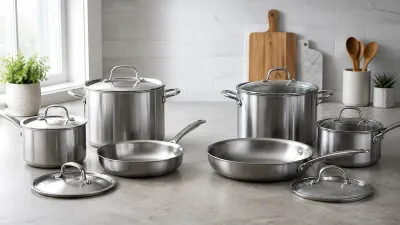
Stainless needs technique for release but excels at fond, deglazing, and pan sauces. Its aluminum core may spread heat just as the hard-anodized body does. The visible surface does not reveal the full thermal design; fully clad cookware supplies the construction vocabulary.
Winner: Coated hard-anodized for release; stainless steel for browning and deglazing.
Durability and care
Hard anodizing is tougher than untreated aluminum, but it is not indestructible. Health Canada advises against using scratched or worn anodized cookware and recommends mild detergent, soft tools, and following the manufacturer. If a separate nonstick coating sits above it, that coating’s wear limit arrives first.
Bare stainless can scratch and discolor without losing a nonstick function because it has none. It tolerates more forceful residue removal, although the maker may restrict steel wool on a polished finish. Our stainless cleaner recommendations cover appropriate methods.
Winner: Stainless steel for long surface life.
Acidic foods, induction, and safety
Sound anodized aluminum reduces transfer compared with bare aluminum, but damaged surfaces require attention. Coatings add their own chemistry and care requirements. Stainless suits tomatoes and wine, though people with diagnosed nickel allergy may need a clearly documented alternative. Food-grade stainless steel is still a finished-product question.
Aluminum is not magnetic. A hard-anodized pan needs a bonded magnetic base to work on induction. Many clad stainless pans use ferritic stainless outside for that purpose. Confirm the induction mark on either product.
Winner: Stainless steel for simpler acidic cooking and more common induction compatibility.
Final verdict
Choose hard-anodized cookware when you want a lightweight body and have confirmed that its exact cooking surface, heat limit, and expected replacement cycle suit you. Choose stainless as the durable main set for searing, sauces, and broad utensil freedom. Compare candidates in our best stainless cookware sets and read ceramic versus stainless if the anodized pan uses ceramic nonstick.
The rest of the cluster compares aluminum, titanium, copper, and enameled cast iron with stainless. Each page keeps structural metal separate from the surface that touches food.
This is a research-based comparison, not a hands-on coating-longevity test. Government and manufacturer guidance was reviewed July 11, 2026.
Sources
- Health Canada, The safe use of cookware and bakeware (retrieved 2026-07-11)
- Calphalon, What is hard-anodized aluminum? (retrieved 2026-07-11)
- All-Clad, HA1 hard-anodized and coated construction (retrieved 2026-07-11)