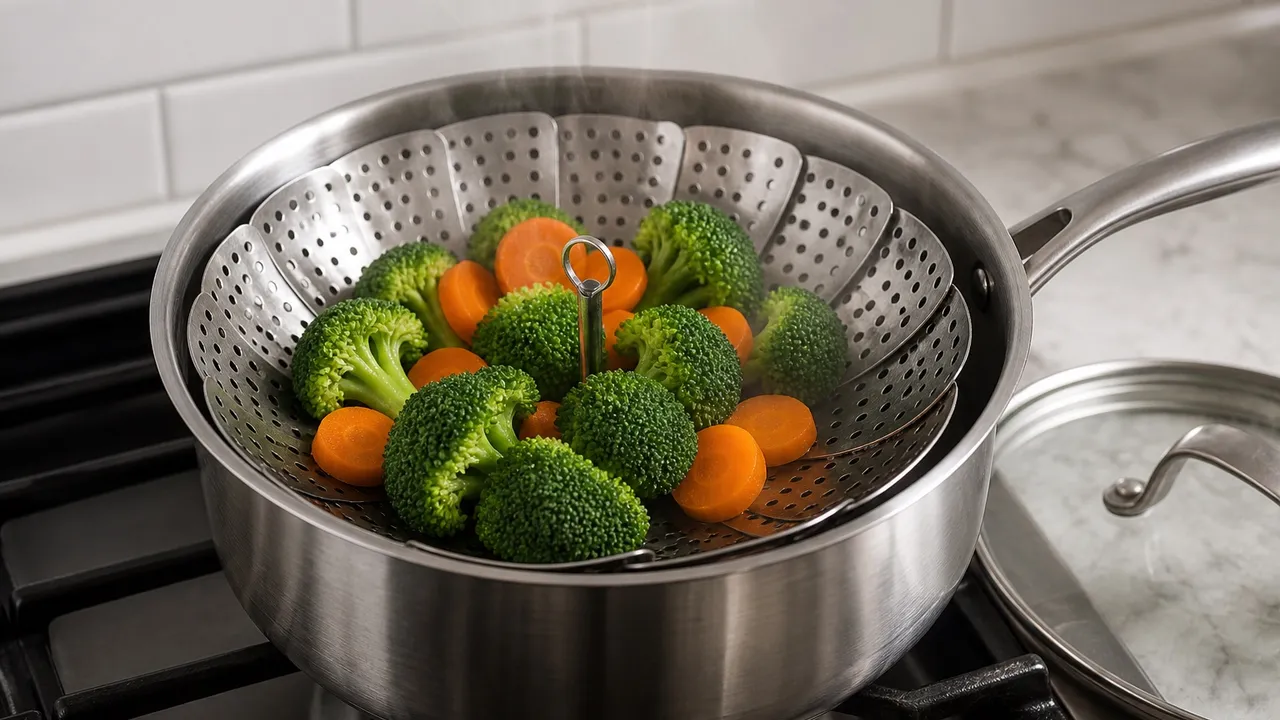
To use a steamer basket, add enough water to create steam without touching the food, bring the water to a simmer, set the basket in or over the pot, arrange the food in a loose layer, and cover with a tight-fitting lid. Check the water during longer cooks so the pot never runs dry.
The goal is steady steam, not a violent boil. Food should sit above the waterline and have enough open space for vapor to circulate.
What you need
- A saucepan, Dutch oven, or stockpot that fits the basket
- A stainless steel folding basket, fitted insert, or other heat-safe steamer
- A lid that covers the pot closely
- Water
- Heat-safe tongs or a fork
- Oven mitts or a dry towel
A folding basket adjusts to several pot diameters. A fitted insert is steadier and usually holds more food, but it only works with compatible cookware. If you are choosing a complete setup, our best stainless steel steamer pots guide compares compact, medium, and premium options.
How to use a steamer basket step by step
1. Choose a pot that fits
The basket should sit level without its sides collapsing or its feet sliding. A folding basket needs enough room to open but should not disappear so far into a wide pot that it becomes difficult to lift.
A 3- to 4-quart saucepan suits a small folding basket. A larger insert may need a Dutch oven or stockpot. Compare the best stainless steel saucepans if your current pot is too narrow.
2. Add water below the food
Start with roughly an inch of water, then fit the basket and check the clearance. The exact amount depends on the pot, basket feet, and cooking time. Water can touch the underside of the basket, but it should not cover the food.
Lift the empty basket out again before heating if adding food will be easier on the counter.
3. Bring the water to a simmer
Cover the pot and heat the water until it produces steady steam. A rolling boil wastes water and can splash liquid into the basket. Once steam is established, reduce the burner enough to maintain it.
4. Arrange food with space around it
Cut similar ingredients into similar sizes. Spread them loosely instead of packing the basket solid. Steam needs paths between pieces.
Put denser food in first when cooking ingredients with different timing. Carrots and potatoes need longer than broccoli florets or tender greens. Add delicate pieces later rather than letting them turn soft while the rest catches up.
5. Cover and limit peeking
Set the lid in place immediately. Every time you lift it, steam escapes and the cooking temperature drops. Use a glass lid if you want to monitor the basket without opening the pot.
Condensation collects on the underside of the lid. Tilt it away from your face and hands when opening so hot water does not run toward you.
6. Test the food and remove the basket
Check vegetables with a fork or knife. Stop when they reach the texture you want rather than relying only on a timer. Fish should turn opaque and flake at its thickest point; use a food thermometer whenever a safe internal temperature must be verified.
Turn off the burner before lifting a folding basket. Use its center ring with tongs or a heat-safe hook, keep your face out of the steam path, and move the basket to a plate or sink.
Approximate steaming times
These ranges are starting points for evenly cut food after steady steam begins:
| Food | Approximate time |
|---|---|
| Broccoli florets | 4 to 6 minutes |
| Green beans | 5 to 8 minutes |
| Carrot slices | 6 to 10 minutes |
| Small potato pieces | 12 to 18 minutes |
| Dumplings | Follow the recipe or package |
| Fish fillets | Depends strongly on thickness |
Pot temperature, food quantity, altitude, and piece size change the result. Check early and continue in short intervals.
How much water should be in the pot?
Use enough water to last through the expected cook while keeping it below the food. An inch is a useful starting point for a short vegetable steam, but a wide pot loses water faster and a longer cook needs more.
For longer steaming, keep a kettle of hot water nearby. Pour it carefully down the side of the pot so you do not cool the cooking chamber or splash the food. Never let a stainless steel pan boil dry because concentrated heat can discolor or warp the base. Our guide to why stainless steel pans warp explains the role of uneven heat.
Common steamer basket mistakes
Letting food sit in water
Food touching the water boils instead of steams. Reduce the water or use a basket with taller feet.
Crowding the basket
Packed food blocks circulation and cooks unevenly. Work in two batches or use a larger insert.
Starting with too little water
A dry pot can overheat quickly. Check the level before cooking and during any long steam.
Using an uncovered pot
Without a lid, most heat and moisture escape. A close fit is more important than a perfect seal.
Opening the lid toward your face
Steam can burn before the metal feels dangerously hot. Lift the far edge first and let the vapor escape away from you.
Using a basket with the wrong coating or feet
Some collapsible colanders and cooling racks are not made for stovetop heat. Confirm the material and intended use. Learn what food-grade stainless steel means when evaluating an unfamiliar insert.
For sink-side rinsing and draining rather than stovetop steaming, use the scheduled stainless steel colander guide to choose the capacity and hole pattern.
How to keep food from sticking
Brush a plain stainless steel basket lightly with oil when the recipe permits, or line it with perforated parchment, cabbage leaves, or lettuce leaves. Keep enough holes open for steam to pass. Dumplings and fish benefit most from a liner.
Let the basket cool, then soak it in warm soapy water before scrubbing. A small nylon brush helps clear perforations. Avoid steel wool on polished surfaces.
Steamer basket questions
Does a steamer basket go in the water?
The basket sits in or over the pot, but the food should remain above the waterline. A folding basket’s feet may touch the water. The perforated tray should not be submerged.
Should the water be boiling before food goes in?
Bring the water to a simmer first for predictable timing, then add the food and cover promptly. You can start some recipes cold, but their timing will differ.
Can you use a metal colander as a steamer basket?
Yes if it is entirely heat-safe, fits securely over the pot, and can be covered. Keep handles away from direct flame and make sure the colander cannot tip.
Can you steam food in a stockpot?
Yes. A stockpot works with a fitted insert or stable basket and is useful for large batches. See the best stainless steel stockpots if you also need a pot for pasta, soup, and broth.
Related guides
Continue with Stainless Steel Egg Poachers, Stainless Steel Pasta Pots, Stainless Steel Fondue Pots, Stainless Steel Asparagus Pots.
Continue with Stainless Steel Steam Juicers.