Vapor-seal cooking is a low-heat, covered-cookware method that uses a fitted lid to retain moisture released by food or added in a small amount. The term appears in cookware-maker instructions, especially for vessels designed so condensation gathers around the lid and rim.
It is not the same as pressure cooking, and the pan is not vacuum-sealed. Ordinary covered cookware should never be treated as a pressure vessel. Follow the instructions for the exact pan and lid because the maker’s heat settings, food preparation, and safety guidance define the method.
What the “seal” actually means
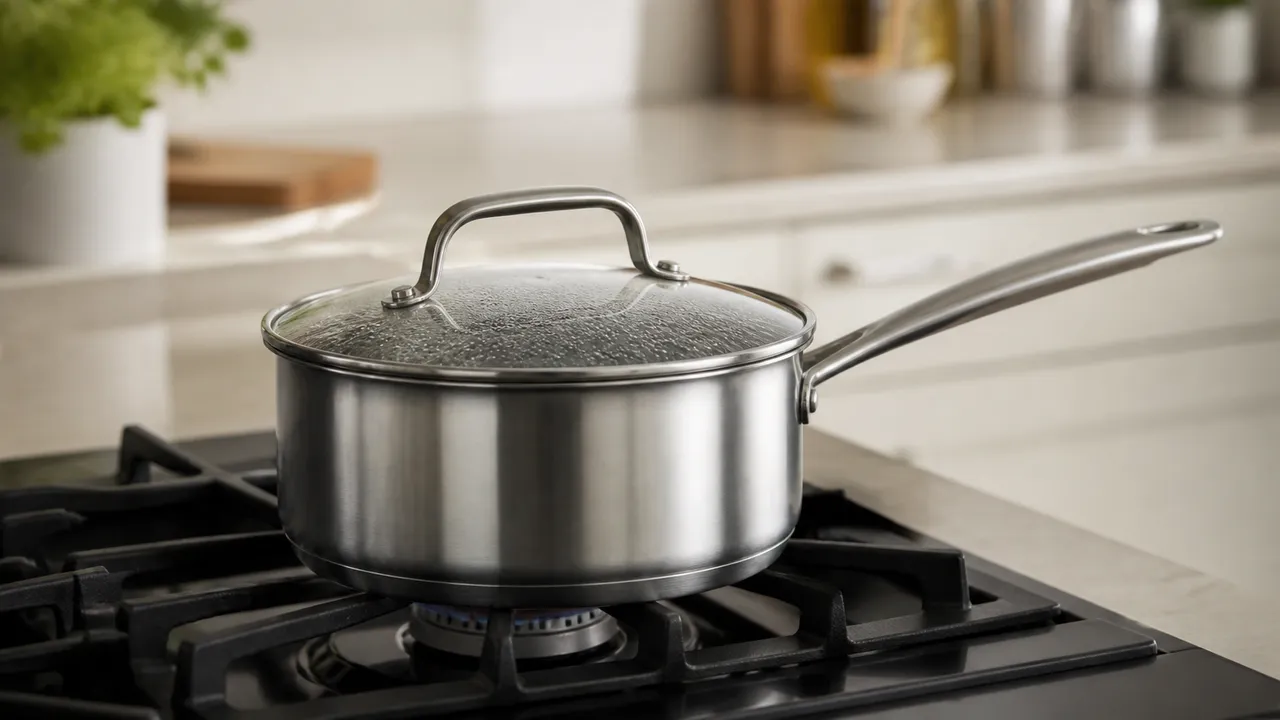
As food and liquid warm, water becomes vapor. Some vapor reaches the cooler lid, condenses, and returns to the pan. With a close-fitting lid and controlled heat, moisture around the rim can reduce the amount of vapor escaping.
The word “seal” can be misleading. The lid is not necessarily airtight, mechanically locked, or under a regulated pressure. It can still move, vent, or release vapor. Do not add clamps, weights, or improvised gaskets to make a household pan tighter.
Manufacturers may use different names for related methods, including vapor cooking or waterless cooking. Those labels do not prove that every covered pan behaves the same way. Lid geometry, rim condition, pan size, food moisture, burner response, and altitude can change what you observe.
The role of the pan, lid, and heat
Three parts work together:
- The food supplies moisture. Vegetables often release water as they cook. Drier ingredients may need added liquid according to the recipe and cookware instructions.
- The lid slows moisture loss. A fitted lid keeps more vapor and condensation near the food than an uncovered pan.
- Lower heat maintains the cook. Once the contents are hot, reducing the burner can limit vigorous boiling and excessive vapor loss.
This is why preheating guidance for open-pan searing should not be copied into a covered vapor method. Our guide to knowing when a stainless steel pan is ready applies to surface cooking, where temperature cues and added fat have a different role.
A cautious general workflow
Start with the cookware maker’s directions. Prepare the food to an even size and use the stated amount of liquid. Place the food in the recommended vessel, fit the correct lid, and use the specified initial heat.
Watch and listen for the cue described by the maker, which may be visible vapor, movement at the lid, or another sign that the contents are hot. Then reduce the heat as instructed. Do not keep increasing the burner to force a stronger response.
Avoid lifting the lid repeatedly. Each opening releases heat and moisture, changing the cooking time. When the stated time has passed, move the pan off the heat if instructed, open it away from your face, and check doneness with an appropriate food thermometer when food safety depends on internal temperature.
This general sequence is not a substitute for a recipe. Dense vegetables, grains, meat, and delicate fish have different moisture and doneness requirements.
How it differs from other methods
Pressure cooking
A pressure cooker has engineered locking, venting, and pressure-control systems. A vapor-seal pan does not become a pressure cooker because condensation forms at its rim. Never block a vent or restrain an ordinary lid.
Steaming
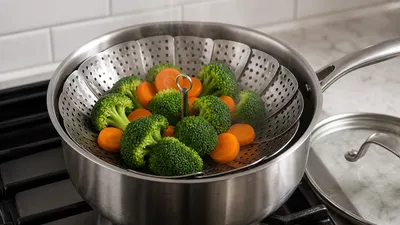
Traditional steaming often suspends food above boiling water. Vapor-seal cooking can place food directly in the vessel with less added liquid, depending on the maker’s recipe. Both methods use water vapor, but the arrangement and controls differ.
For a complete set built around the suspended-food method, compare stainless steel steamer pots by lower pot, insert, lid, and capacity.
Braising and simmering
A braise usually includes a defined amount of liquid and a longer cook. A simmer keeps liquid visibly active. Vapor-seal instructions often call for reducing heat once the covered vessel is hot, but the exact behavior is cookware-specific.
Sautéing
Sautéing is primarily open-pan cooking that encourages browning and evaporation. For that job, pan geometry matters; see our saucepan and sauté pan comparison. Covering a pan too early can soften a browned surface because retained moisture limits evaporation.
Common problems
Vapor escapes continuously
The heat may be too high, the lid may not be seated, or food may be caught on the rim. Reduce heat according to the instructions and make sure the correct lid is sitting evenly. Do not press down on a hot lid.
Food scorches
Possible causes include too little moisture, excessive heat, a pan that is too large for the food, or a burner with slow response. Remove the pan from heat. Do not pour cold water into a very hot, dry pan because rapid temperature change can distort cookware and create steam.
The lid seems stuck
Do not pry a hot lid with a knife or force the handle. Move the pan off heat and follow the maker’s release guidance. If there is no guidance or the vessel behaves unexpectedly, let it cool in a safe position and contact the manufacturer.
Food sticks to the cooking surface
The method does not eliminate every sticking mechanism. Protein, starch, surface condition, and heat still matter. Our guide to keeping stainless steel pans from sticking explains open-pan technique and cleanup without promising a nonstick surface.
Claims to treat carefully
Covered, lower-liquid cooking can reduce how much cooking liquid is discarded, but that does not establish a universal nutrient-retention percentage. Outcomes vary with the food, nutrient, time, temperature, cut size, and whether the liquid is consumed.
Likewise, the method does not make food safe at a lower final temperature. Use established time and temperature guidance for meat, poultry, seafood, leftovers, and other higher-risk foods.
Bottom line
Vapor-seal cooking is best understood as a controlled covered-cooking technique, not a special physical state. A fitted lid retains moisture, condensation returns to the pan, and lower heat continues the cook. The safe and repeatable version is the one described for your exact cookware, recipe, burner, and food.