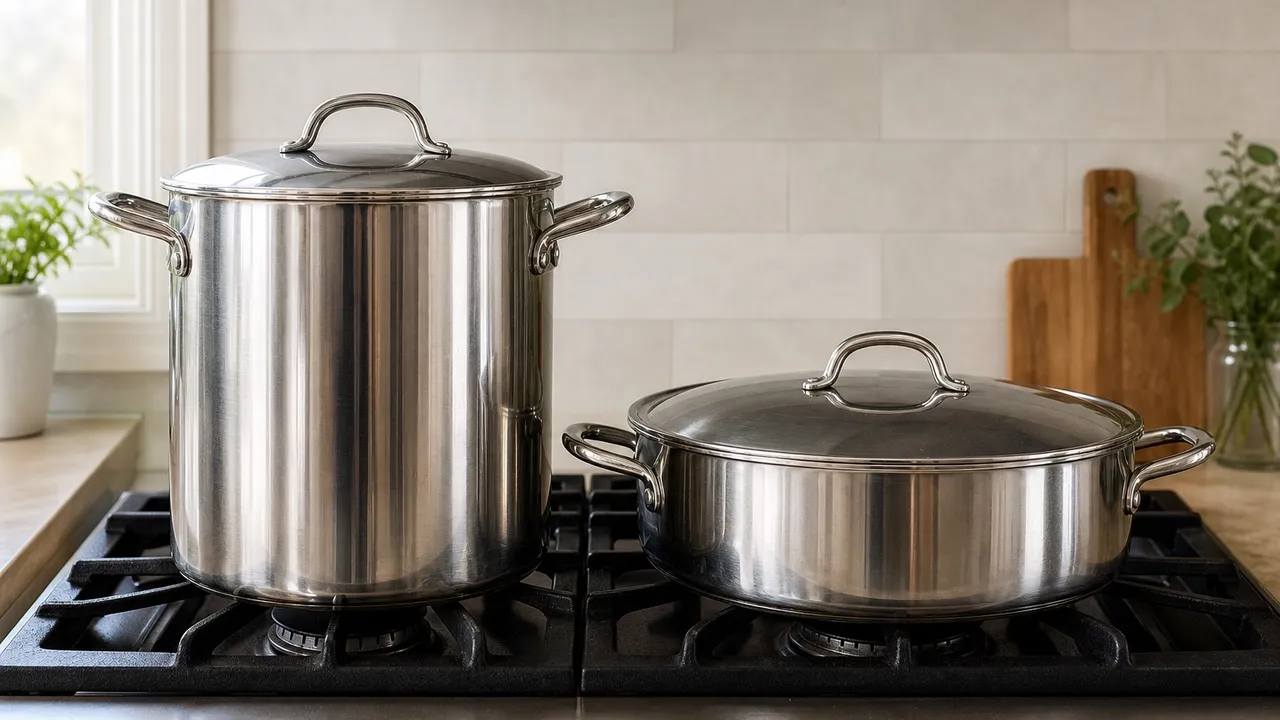
Choose a stockpot when you mainly boil pasta, make broth, steam large amounts of food, or cook liquid-heavy recipes in big batches. Choose a Dutch oven when you want to brown meat, braise slowly, bake bread, or move the same pot between the stovetop and oven.
The main difference is shape and mass. A stockpot is tall and relatively light, so it holds plenty of liquid without using much burner space. A Dutch oven is shorter, wider, and heavier, which improves browning and steadies the heat during long cooks.
Stockpot vs Dutch oven at a glance
| Feature | Stockpot | Dutch oven |
|---|---|---|
| Shape | Tall with straight sides | Wide with shorter sides |
| Typical material | Stainless steel or aluminum | Enameled cast iron, bare cast iron, or stainless steel |
| Best jobs | Pasta, broth, boiling, steaming, large soups | Braises, stews, searing, bread, oven cooking |
| Browning area | Limited | Broad |
| Heat retention | Moderate | High in cast iron; moderate in stainless steel |
| Weight | Usually lighter | Usually heavier |
| Oven use | Model-dependent | A core strength, subject to handle and lid limits |
What a stockpot does best
A stockpot puts capacity ahead of browning area. Its narrow base leaves more room for other cookware on the stove, while its tall walls slow evaporation and contain splashes. That geometry suits:
- boiling pasta, corn, or shellfish
- making chicken, vegetable, or bone stock
- cooking chili or soup for a crowd
- blanching vegetables
- steaming with a fitted insert
- canning, when the pot is large enough for the chosen method
Stainless steel is a practical stockpot material because it is durable, nonreactive, and easy to clean. Full cladding is helpful but not essential for a pot that mostly heats water. A thick bonded base can spread burner heat well at a lower weight and cost.
An 8-quart pot fits most households. Larger 12-quart and 16-quart models make sense for regular batch cooking, but they become heavy once filled. Our guide to the best stainless steel stockpots compares useful sizes and constructions, while the stockpot buying guide explains handles, lids, and base design.
What a Dutch oven does best
A Dutch oven trades some capacity for a broad cooking surface and more thermal mass. That lets you brown several pieces of meat without crowding, then add liquid and continue the cook at a low, steady temperature. It works especially well for:
- braised meat and poultry
- thick stews and chili
- no-knead bread
- deep frying
- pot roast
- baked beans and casseroles
- soups that begin with browned meat or vegetables
Enameled cast iron is the familiar choice. It retains heat well and its coating protects acidic foods from contact with bare iron. The tradeoffs are weight, slower response to burner changes, and the possibility of chipped enamel. A stainless steel Dutch oven is lighter and more responsive, especially when fully clad, but it does not hold heat as stubbornly as thick cast iron.
If material is the deciding factor, compare enameled cast iron with stainless steel cookware before choosing.
Can you use a stockpot instead of a Dutch oven?
You can substitute a stockpot for a Dutch oven in soups, stocks, pasta sauces, and other wet stovetop recipes. The result is most likely to suffer when the recipe depends on broad-surface browning, gentle oven heat, or a heavy lid that limits moisture loss.
For a braise, brown smaller batches so the tall pot does not trap enough steam to gray the meat. Check the pot’s oven rating before moving it off the burner. Stainless steel bodies are often oven-safe, but glass lids, silicone grips, and some knobs have lower limits. Our guide to whether stainless steel can go in the oven covers those checks.
Do not use a thin, very tall stockpot for bread unless its manufacturer specifically permits the temperature and the handles, lid, and pot all fit safely in the oven.
Can you use a Dutch oven instead of a stockpot?
A Dutch oven can handle soup, stock, and modest amounts of pasta, but its shorter walls and smaller capacity make it less efficient for large liquid batches. It may also take longer to bring a full pot of water to a boil because the vessel itself is heavy.
Use it when you need one pot to brown aromatics or meat before adding liquid. For plain boiling or a large batch of broth, the lighter stockpot is easier to fill, carry, drain, and wash.
Which size should you buy?
For most homes, an 8-quart stockpot and a 5- to 7-quart Dutch oven cover different enough jobs to justify owning both. If you are buying only one:
- Choose a 6- to 8-quart stockpot if pasta, broth, and large soups dominate your cooking.
- Choose a 5- to 6-quart Dutch oven if you roast, braise, bake bread, or cook for two to four people.
- Choose a lighter stainless steel Dutch oven if lifting cast iron is uncomfortable.
- Choose an enameled cast iron Dutch oven if steady heat and oven braising matter more than weight.
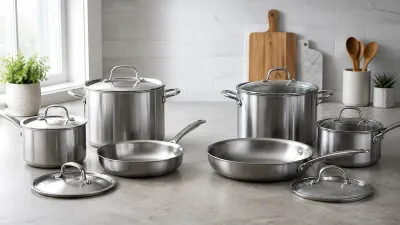
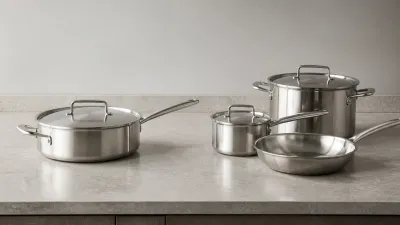
The right single pot follows your most frequent technique, not the longest list of possible uses. If you are equipping a kitchen from scratch, the best stainless steel cookware sets can be better value than collecting several overlapping vessels.
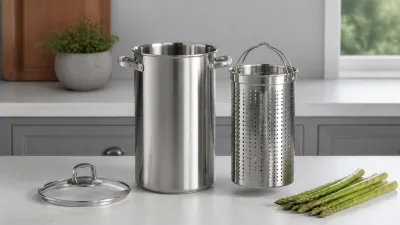
For occasional roasting, review what to use instead of a roasting pan. For steaming, start with the steamer basket setup before buying another full-size pot.
If your existing pot cannot accommodate the food and a suitable insert, compare stainless steel steamer-pot sets. Their matching inserts solve a different buying problem from choosing a stockpot by liquid capacity alone.
Stockpot and Dutch oven questions
Is a stockpot the same as a soup pot?
Not always. Retailers use both names loosely, but a stockpot is usually taller and larger. A soup pot may be shorter and wider, which gives it more room to sauté aromatics before liquid is added.
Why are Dutch ovens so heavy?
Traditional Dutch ovens are made from thick cast iron. The mass stores heat and reduces temperature swings, but it also makes a filled pot difficult to lift. Stainless steel models are usually lighter.
Can a stainless steel stockpot go under the broiler?
Only if the manufacturer rates the entire pot for broiler heat. Check the lid, handles, grips, and maximum temperature separately. Keep glass lids out from under a broiler unless their instructions explicitly allow it.
Related guides
Continue with Stainless Steel Braisers, Stainless Steel Saucier Pans, Stainless Steel Chef Pans.