Choose enameled cast iron for heat-holding braises, bread, stews, and serving from one substantial pot. Choose clad stainless steel for faster adjustments, lighter handling, searing followed by a pan sauce, and a broader range of vessel shapes.
Enameled cast iron is not the same as bare cast iron. Its glass-like enamel separates food from the iron, so it needs no seasoning and can handle acidic recipes, but the finish can chip from impact or thermal shock.
Enameled cast iron vs stainless steel at a glance
| Decision | Enameled cast iron | Clad stainless steel | Better choice |
|---|---|---|---|
| Heat retention | High mass holds heat | Varies by construction | Enameled cast iron |
| Response | Slow to change | Usually faster | Stainless steel |
| Weight | Heavy | Usually lighter | Stainless steel |
| Acidic food | Enamel permits it when sound | Well suited | Tie |
| Surface care | Protect enamel from impact and abrasion | Tolerates firmer tools | Stainless steel |
| Best role | Braises, bread, stews | Sautéing, sauces, daily cookware | Different jobs |
Heat behavior and cooking jobs
Cast iron’s mass changes temperature slowly. That steadiness helps a covered pot ride out oven cycling and recover during a long braise, but it also makes a burner adjustment slow to reach the food. Preheat gradually and avoid trying to force speed with maximum heat.
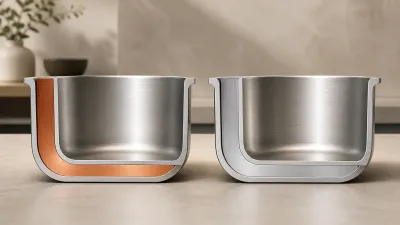
Clad stainless commonly bonds an aluminum or copper core between steel layers. It responds faster and comes in skillets, saucepans, sauté pans, and stockpots at manageable weights. Fully clad construction explains how those conductive layers extend through the sidewalls.
Winner: Enameled cast iron for steady heat; stainless steel for control and range.
Browning and food release
Both surfaces can brown meat. A light enamel interior makes fond visible, while stainless encourages the same brown-and-deglaze workflow at lower total weight. Neither is a conventional nonstick surface, so use fat, moderate preheating, and patience.
If easy eggs are the goal, this is the wrong comparison. Start with stainless versus nonstick cookware or the ceramic versus stainless guide. Ceramic nonstick is a coating on a metal pan; vitreous enamel is a different glass-like finish fused to cast iron.
Winner: Tie for browning; stainless for quicker stovetop handling.
Acids, safety, and enamel condition
Sound enamel permits tomatoes, wine, and citrus without exposing reactive iron. Stainless is also suited to normal acidic cooking. With either product, buy cookware intended for food contact and follow its temperature limits. Food-grade stainless steel explains why material names alone are not certifications.
Stop and consult the maker if enamel chips on the food-contact surface. Surface staining or metal-transfer marks are not necessarily chips. Le Creuset recommends soft nylon tools and warns against abrasive or metal cleaning tools that may scratch enamel.
Winner: Tie when both surfaces are sound.
Weight, care, and service life
Enameled cast iron is heavy before food is added. Large Dutch ovens often need two-handed lifting, especially from a low oven. Stainless is easier to toss, pour, and wash in larger sizes.
Let enamel cool before washing because cold water in a hot pot can cause thermal shock. Hand washing preserves its appearance even when a maker permits a dishwasher. Stainless can show heat tint and stuck residue, but it has no enamel layer to chip.
Winner: Stainless steel for easy ownership; enamel for a heat-holding heirloom vessel handled carefully.
Final verdict
These materials complement each other. Own enameled cast iron if slow braises, bread, and oven-to-table meals justify the weight. Build the rest of the kitchen around stainless if you want responsive saucepans and skillets. Our cast iron versus stainless comparison handles bare seasoned iron, and the best stainless cookware sets page covers broad stainless selection.
Continue with aluminum, titanium, copper, or hard-anodized cookware when weight, response, or coating behavior is the deciding trait.
This is a research-based material comparison, not a hands-on test. Manufacturer and government guidance was reviewed July 11, 2026.
Sources
- Le Creuset, care and cleaning for enameled cast iron (retrieved 2026-07-11)
- Health Canada, The safe use of cookware and bakeware (retrieved 2026-07-11)