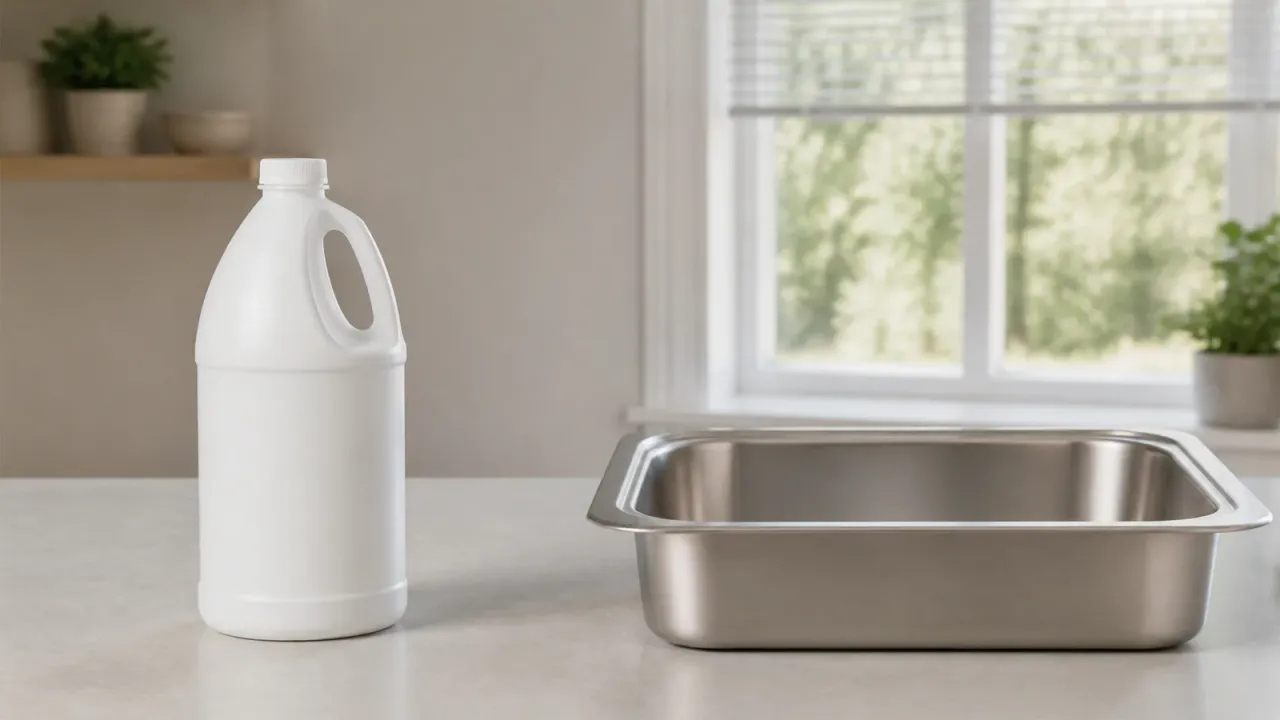
Broadly, avoid bleach on stainless steel. Use it only when the exact product maker gives a named bleach procedure for that exact item, and then follow both the product label and the maker’s instructions. Do not soak stainless steel, heat a bleach solution, or leave bleach residue on the surface. If a brief accidental contact occurs, it is not proof of catastrophic failure: stop the exposure, ventilate as the product label directs, rinse with plenty of clean water when the maker permits, dry, inspect, and contact the maker if you can see damage.
Never mix bleach with another product
Never mix household bleach with ammonia, vinegar or other acids, alcohol, or any other cleaner or disinfectant. The CDC’s bleach guidance says that mixing bleach or another disinfectant with a cleaner can release vapors that are very dangerous to breathe. The EPA gives the same warning: do not add bleach to other chemicals.
Poison Control explains that bleach mixed with an acid such as vinegar can form chlorine gas, while bleach mixed with ammonia can form chloramine gas. Alcohol is also another chemical or disinfectant, so it belongs on the no-mixing list. Do not try to neutralize a mixture, add another cleaner, or improvise a second chemical step. Keep products separate and use one product at a time according to its label and the maker’s care instructions.
If you smell strong fumes or have burning eyes, throat irritation, coughing, headache, dizziness, wheezing, chest pain, or trouble breathing, leave the area immediately and get fresh air. Do not go back in to clean up the mixture. In the United States, call Poison Control at 1-800-222-1222 for advice. The CDC chlorine chemical-emergency fact sheet says to get help right away by calling 911, going to a hospital when local officials say it is safe, or calling Poison Control. Poison Control’s chlorine-gas guidance provides the fresh-air and phone-support steps.
Why can bleach damage stainless steel?
Bleach contains hypochlorite, a chlorine compound that can attack stainless steel’s corrosion protection under the wrong conditions. Stainless steel normally relies on a very thin, chromium-rich passive film. World Stainless explains that the film forms naturally and can regenerate in oxygen, but stainless steel can still suffer localized pitting or crevice corrosion in chloride-bearing conditions.
The British Stainless Steel Association’s cleaning guidance identifies hypochlorite bleaches as chloride-containing solutions that can cause staining and pitting. It warns against concentrated bleach, long soaks, and bleach left on the surface, and stresses thorough rinsing when a maker-approved use exists. BSSA also reports that pitting has occurred after household bleach spills on 304 stainless steel sinks.
Risk depends on more than the word “stainless.” Concentration, exposure time, temperature, trapped residue, crevices, surface finish, alloy, and the condition of the item all matter. Repeated, concentrated, high-temperature, or chloride-rich exposure can raise the risk of localized corrosion. A single quick splash is a different situation from a spill left in a seam or an overnight soak, but no generic exposure time or grade label can guarantee a result.
What do stainless steel manufacturers say?
Many manufacturers tell customers to keep bleach away from their stainless products, and their instructions are more useful than a general claim about the alloy. For example, All-Clad’s cookware care page says not to use detergents containing bleach or peroxide on its stainless cookware. GE Appliances recommends mild soap and water for routine stainless appliance cleaning and says not to use bleach, ammonia, acids, abrasives, or commercial oven cleaners.
Sink finishes can have their own restrictions. Franke’s stainless sink guidance says not to use bleach, scourers, wire wool, or abrasive cleaners. It also warns that salt, vinegar, citric juice, mustard, and pickles left on the surface can cause corrosion. That is a useful reminder that “safer alternative” does not mean every household ingredient is safe for every finish.
Some commercial food or medical equipment may publish a carefully bounded hypochlorite procedure. That does not make household bleach a universal stainless cleaner. Follow the exact item manual, the exact bleach label, the surface compatibility statement, the required contact time, and the rinse instruction together. If any of those instructions are missing or conflict, stop and ask the maker.
Is a brief accidental contact dangerous?
A brief accidental contact does not prove that the stainless item has failed, but it is a reason to remove the chemical and inspect the surface. Treat the response as damage control, not as a way to make an unapproved bleach treatment safe.
- Move the bottle or item away from the exposure. If fumes are present, follow the emergency steps above before handling the steel.
- Do not add vinegar, ammonia, alcohol, detergent, or another cleaner to the surface. Do not attempt a neutralizing recipe.
- Rinse with plenty of clean water if the exact maker permits water rinsing for that item. Rinsing promptly can reduce remaining chemical, but it cannot reverse a pit that has already formed.
- Dry the surface fully, including rims, seams, handles, drain edges, and other places where liquid can sit.
- Inspect it in good light. Look for a new dull patch, unusual staining, roughness, pinholes, tiny cavities, rust-colored spots, or a change in a coating or finish.
Do not diagnose hidden corrosion from a photo. A picture cannot establish the alloy, the depth of a pit, damage inside a seam, or whether a food-contact surface remains suitable. If visible damage appears, the item is food-contact equipment, or the maker’s instructions are unclear, stop using it and contact the manufacturer with the model, product name, and what happened.
Is bleach the right way to disinfect stainless steel?
Disinfection is a separate job from ordinary cleaning, and bleach should not be the default stainless-steel cleaner. The CDC defines cleaning as water, soap, and scrubbing, which removes dirt and many germs. In most household situations, that is the appropriate first step.
If disinfection is actually needed, use an EPA-registered product whose label names the exact surface and use. The CDC’s home guidance says to clean first, follow the label, keep the surface wet for the stated contact time, and avoid mixing products. The EPA also says to choose a product approved for the surface and to look for a product that can be used on food-contact surfaces when food may touch the item.
For stainless cookware, a sink basin, a bottle, or another food-contact item, both the item maker and the disinfectant label need to permit the use. Follow any label-required rinse step before the item touches food or drink. Do not copy a bleach dilution, soak, or contact time from a different brand or from a general internet recipe. If the exact maker does not permit bleach, choose the maker-approved cleaner or a different disinfectant specifically labeled for that surface.
What is a safer routine for ordinary cleaning?
For ordinary residue, start with warm water, mild dish soap, a soft cloth or non-scratch sponge, a complete rinse, and thorough drying. That approach fits the conservative routine from GE Appliances and BSSA, but the exact manual still controls.
Identify the item before choosing anything stronger:
- Bare cookware stainless steel, a nonstick interior, an appliance exterior, and a sink finish may have different limits.
- Fingerprint-resistant, black, painted, plated, or other treated finishes may be damaged by a product that is acceptable on bare stainless steel.
- Food-contact surfaces need the cleaner, rinse, and drying method specified for that product. Do not assume the lid, gasket, handle, coating, or bonded core shares the steel body’s instructions.
- Vinegar, baking soda, citric acid, peroxide, abrasive powders, and specialty cleaners are not universal replacements for bleach. Use them only when the exact maker allows that product and method, and never combine them with bleach.
For cookware residue, the guide to how to clean stainless steel pans starts with diagnosis and the least-aggressive method. For surface-specific commercial products, see the stainless steel cleaner guide, then check the maker before using a recommendation on a coated appliance or food-contact surface.
Do cookware, sinks, appliances, and food-contact items differ?
They do. The same stainless label can describe products with different finishes, coatings, seams, seals, and intended uses.
| Item | Conservative default | Why the exact instructions matter |
|---|---|---|
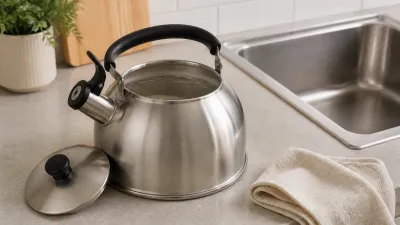
| Cookware and other food-contact items | Do not use bleach unless the maker names it. Clean with the approved mild method and rinse fully. | A pan may have a bare interior, a coating, bonded layers, rivets, or a lid and gasket with different limits. |
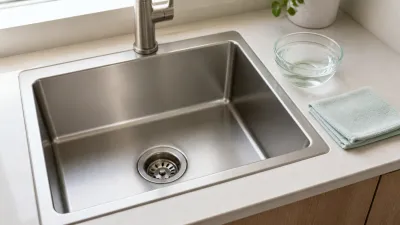
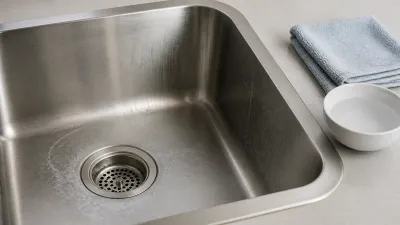
| Sink basins and drains | Avoid bleach by default. Rinse accidental contact if the maker permits, then dry the basin and crevices. | Finish, drain hardware, seams, and trapped residue can change corrosion risk. |
| Stainless appliances | Use the manual’s cleaner, often mild soap and water for routine soil. | Fingerprint-resistant and black stainless finishes may be coatings, and liquid can reach controls or trim. |
| Commercial or specialized equipment | Use only the named sanitation procedure. | Grade, temperature, chemical strength, contact time, and rinse requirements are application-specific. |
The article on whether stainless steel cookware is safe explains why the finished food-contact product and its care instructions matter more than a grade label alone. For bathroom fixtures and shower items, why stainless steel can rust in the shower covers moisture, chlorides, crevices, and contamination without treating stainless steel as rust-proof.
What visible damage means it is time to stop?
Stop using the item as normal and contact the maker when you see pits, pinholes, deep roughness, recurring rust-colored spots, a crack, a sharp edge, a leak, a warped shape, a separated layer, or a finish or coating that is lifting. On food-contact items, also stop when chemical residue remains after the maker-approved rinse or when you cannot verify what the surface is.
A stain may be cosmetic, but a cavity or rough pit is a change in the surface. Flaking, blistering, peeling, or an exposed unknown layer is not a cleaning problem. Do not sand, scour, scrape, or apply another chemical to hide it. Send the maker the model number, clear photos, the bleach product name, and the best account you can give of the contact. The maker can decide whether the item needs inspection or replacement; a photograph cannot rule out hidden crevice corrosion.
Frequently asked questions
Can I soak stainless steel in diluted bleach?
Not as a general cleaning method. BSSA specifically advises against long bleach soaks on stainless sinks and cookware. Only follow a soak if the exact product maker and the exact chemical label give that named procedure, including the required rinse and any other limits. Do not invent a concentration or contact time.
Will one splash of bleach ruin stainless steel?
Not necessarily. A single brief splash is not proof of catastrophic failure, especially if the chemical is removed promptly, but it can still leave staining or contribute to corrosion. Rinse with clean water when the maker permits, dry completely, inspect, and contact the maker if you see pits, roughness, coating damage, or recurring rust-colored marks.
Can I use bleach to disinfect a stainless steel pan or sink?
Only when the exact maker and the disinfectant label both permit that exact surface and use. Otherwise, clean with the maker-approved method or choose an EPA-registered product labeled for the surface. Do not use a household bleach recipe copied from another product or another type of stainless item.
Is vinegar safer than bleach for stainless steel?
Vinegar is not universally safe for stainless steel. Some makers allow a named vinegar method for a particular pan or finish, while others warn against acids or vinegar-based cleaners. Follow the exact maker, keep vinegar away from bleach, and never use the two together.
What should I do if bleach fumes or a mixed-cleaner exposure occurs?
Leave the area immediately and breathe fresh air. Do not return to clean the mixture or add another chemical. In the United States, call Poison Control at 1-800-222-1222 for guidance. For trouble breathing or severe symptoms, follow the CDC chlorine chemical-emergency fact sheet and call 911. Follow the Poison Control chlorine-gas guidance for fresh-air and exposure information.
Sources and method
This article was checked against current stainless-steel metallurgy, manufacturer care, and US chemical-safety guidance on August 21, 2026. It is research-based household guidance, not a hands-on corrosion test, a disinfection validation, or a diagnosis of an individual item. The exact product maker’s instructions control whenever they differ from this general answer.
- World Stainless, Corrosion properties (checked 2026-08-21)
- British Stainless Steel Association, Cleaning methods for stainless steel (checked 2026-08-21)
- British Stainless Steel Association, Selection of stainless steels for handling sodium hypochlorite (checked 2026-08-21)
- All-Clad, Use and Care Guide (checked 2026-08-21)
- GE Appliances, How to Clean Stainless Steel (checked 2026-08-21)
- Franke, How to Clean Stainless Steel Sinks (checked 2026-08-21)
- CDC, Cleaning and Disinfecting with Bleach (checked 2026-08-21)
- CDC, When and How to Clean and Disinfect Your Home (checked 2026-08-21)
- EPA, Flood Cleanup to Protect Indoor Air and Your Health (checked 2026-08-21)
- CDC, Chlorine Chemical Fact Sheet (checked 2026-08-21)
- Poison Control, Chlorine Gas: Get the Facts (checked 2026-08-21)