To cook with a stainless steel pan, preheat the dry pan over medium heat, add oil, add dry food, and leave it alone until it releases. Use medium heat for most jobs and save high heat for searing. The rest of this guide gives each job a short section and points to the full guide for it.
The five steps work for almost any food.
- Set the pan on a burner that matches its size and warm it gradually over medium heat.
- Check that the pan is ready, using the oil or an optional water drop.
- Add a thin, even film of oil.
- Add dry food and do not move it.
- Turn the food when it lifts with gentle pressure.
What do you need before you cook in stainless steel?
You need a pan with a flat base, a cooking fat, something dry to cook, and a wooden or silicone spoon or a thin spatula. Stainless steel is not a nonstick coating, so heat, fat and patience do the work that a coating would do.
A skillet around 10 or 12 inches covers most weeknight cooking. Pat meat, fish and vegetables dry before they go in, because surface water cools the pan and makes steam instead of a crust.
How do you preheat a stainless steel pan?
Warm the empty pan over medium heat and let the whole base heat evenly before you add anything. All-Clad advises preheating gradually over medium heat instead of starting on high, which also helps the pan stay flat over the years.
The water test is a common way to read the surface. Flick a few drops of water into the dry pan. If they gather into beads that glide around instead of spreading flat or boiling away, the pan is hot enough for most jobs. ZWILLING includes this test in its instructions, and it still starts with slow heating over medium heat. Wipe or evaporate every drop before adding oil. Our guide to knowing when the pan is ready covers what the test can and cannot tell you.
What heat setting should you use?
Medium is the right default. It browns food without scorching the oil, and it leaves time to react. Use high heat only for a hard sear, and only for as long as the food needs.
Burners differ, and so do thin and heavy pans, so a setting is a starting point. Thin pans and strong induction elements respond fast. Heavy clad pans hold heat longer. Watch the oil and the food, and lower the burner as soon as the pan is hot enough. If the oil smokes, take the pan off the heat, let it cool, and start again with fresh oil.
How much oil or butter do you need?
Use enough oil to make a thin, continuous film over the cooking area. Tilt the pan to spread it. Bare patches invite sticking, and a deep pool is more than most recipes need.
Add the oil after the pan is warm and wait until it flows easily and shimmers. Neutral oils such as avocado, canola and grapeseed suit higher heat. Butter adds flavor, but its milk solids brown fast, so lower the heat or mix it with oil. You do not need to season a stainless steel pan the way you would cast iron. A fresh layer of fat at each use is the method. For more on this step and the next, see our guide to preventing sticking.
How do you sear meat and brown food?
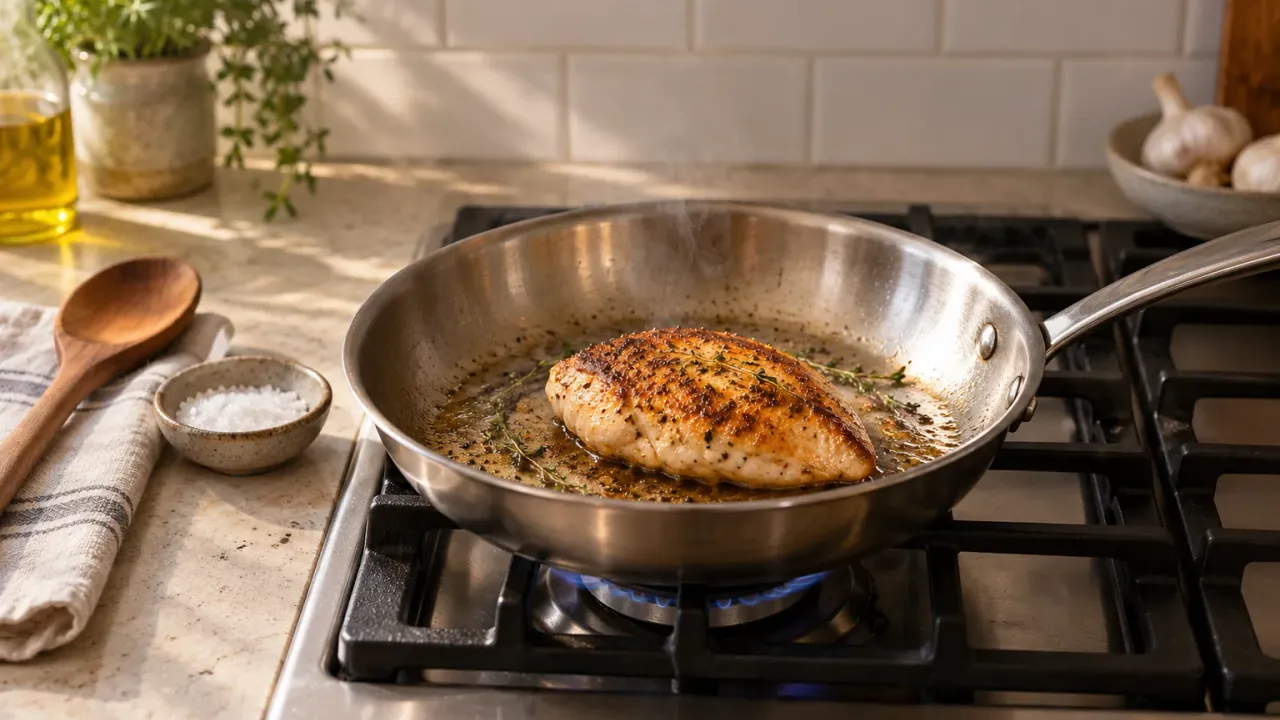
Dry the food, add it to hot oil, and leave it still until a crust forms. Browned food releases from stainless steel by itself, so a piece that resists a gentle lift needs more time, not more force.
Do not crowd the pan. Too much food at once drops the temperature and traps moisture, and the food steams. Cook in batches when you need to. Use a food thermometer to judge doneness, because color alone is a poor guide. The full method for a thick cut is in our guide to cooking steak in a stainless steel pan. Vegetables brown the same way, with a dry surface and room between the pieces.
Browning is not the goal for every cut. A brisket simmers for hours in a large pot, and our guide to cooking corned beef on the stove in a stainless steel pot covers that method.
How do you cook eggs, fish, bacon and rice without sticking?
Use moderate heat and a full film of fat for every one of these, and expect eggs and delicate fish to be the least forgiving. The reasons differ by food, so each has its own guide. For batter, see how to cook pancakes in a stainless steel pan.
- Eggs do best over medium-low heat with butter or oil. See how to cook eggs in stainless steel without sticking.
- Fish needs a dry surface and patience before the first lift. See how to cook fish in a stainless steel pan.
- Bacon works well from a cool pan that heats gradually while the fat renders. See how to cook bacon in a stainless steel pan.
- Rice cooks in a pot with a lid instead of a hot dry pan. See how to cook rice in a stainless steel pot without sticking.
- Boiled eggs for a holiday go in a pot with water. See how to boil eggs for Easter in a stainless steel pot.
How do you deglaze and make a pan sauce?
Leave the browned bits in the pan after searing, pour in a splash of liquid, and scrape them loose as it simmers. Those bits are called fond, and they carry much of the flavor in a pan sauce. Stainless steel is a good pan for this because the bits stick enough to brown and then dissolve cleanly into the liquid.
Wine, stock, vinegar and water all work. Lower the heat before you add the liquid so it does not boil off at once. The full method is in our guide to deglazing a stainless steel pan.
How do you clean the pan after cooking?
Let the pan cool, then wash it with warm water, dish soap and a non-scratch sponge. Never put a very hot pan under cold water, because sudden cooling can warp the metal.
For stuck food, soak the pan in warm soapy water for about 15 minutes and loosen the food with a wooden spoon. All-Clad recommends soaking stuck food in hot water for 15 minutes and warns against steel wool and metal scouring pads. Our guide to cleaning stainless steel pans covers heat tint, white spots and oil film.
What should you not cook in stainless steel?
Almost nothing is off limits, and acidic foods such as tomatoes are fine. A few foods are harder, mainly delicate eggs and fish cooked with too little fat, pancakes and crepes, and sticky sugar mixtures. Our guide to what not to cook in stainless steel lists them and suggests a better approach for each.
If you want a pan built for this kind of cooking, compare the best stainless steel frying pans.
Frequently asked questions
Why does food stick to stainless steel?
Food sticks when it meets bare metal that is too cool, too dry or too crowded, or when you move it before a crust forms. Warm the pan gradually, coat it with oil, dry the food, and wait for it to release.
Do you need to season a stainless steel pan?
No. Stainless steel does not need a baked-on coating. Clean it, keep it dry, and add fresh oil each time you cook.
Is it okay to cook on high heat?
Yes, for a short sear, but medium works for most cooking. Very high heat can scorch oil and leave blue or rainbow heat tint on the pan. That tint is usually cosmetic, according to All-Clad, and it can be cleaned.
Can you use metal utensils?
Often yes, but check your maker’s instructions. All-Clad says metal utensils can leave superficial marks on its bonded stainless collections, and its care guidance suggests wooden or silicone tools for working stuck food loose.