Some stainless steel pans are dishwasher safe, but the label or care guide for the exact pan has the final say. Even when a manufacturer permits the dishwasher, hand washing may be its preferred method for protecting the finish and exposed edges.
Do not decide from the words “stainless steel” alone. A pan can also contain an aluminum or copper core, a bonded base, a coating, rivets, seals, or a lid made from another material.
How can you tell if your stainless steel pan is dishwasher safe?
Check the pan’s model-specific product page, manual, or care guide for the words “dishwasher safe.” If you cannot identify the model or find its instructions, hand wash it instead.
Use this quick check before loading the dishwasher:
- Find the brand and model number on the pan, packaging, receipt, or order history.
- Read the current care instructions for that exact model, including separate instructions for the lid.
- Look for exceptions involving coatings, exposed aluminum edges, removable handles, or detergent.
- Follow any loading and drying directions the manufacturer gives.
“Dishwasher safe” and “hand washing recommended” can appear on the same product page. Made In’s Stainless Clad frying-pan instructions, checked July 11, 2026, say the pan can go in a dishwasher but recommend hand washing. All-Clad’s current use and care guide, checked the same day, also says some dishwasher-safe cookware should be hand washed to keep it looking shiny.
Why isn’t every stainless steel pan treated the same way?
The visible stainless surface does not tell you everything about the pan. Its bonded layers, finish, handles, fasteners, lid, and exposed edges can set different care limits.
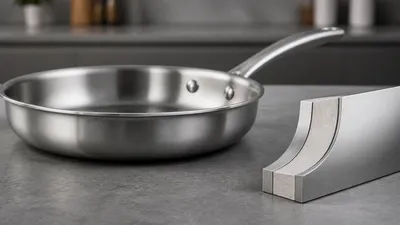
A fully clad pan usually contains a conductive metal between stainless layers from base to rim. A disc-bottom pan concentrates those layers in its base. Some bonded cookware leaves a thin edge of aluminum exposed. Dishwasher detergent can affect that exposed metal even when the stainless cooking surface remains sound.
Coated pans need another level of caution. High heat and aggressive detergent may shorten the useful life of a nonstick or decorative coating. Our guide to ceramic-coated stainless steel explains why a stainless body does not make every coating share the same care rules.
What can a dishwasher change?
A dishwasher can leave cosmetic changes, deposits, or corrosion on vulnerable parts even when a pan remains usable. The result depends on the detergent, water chemistry, cycle temperature, drying method, and construction of the cookware.
Possible changes include:
- water spots or mineral film after droplets dry;
- rainbow heat tint or other discoloration that was already developing from cooking;
- a duller exterior finish after repeated detergent exposure;
- darkening or corrosion at an exposed aluminum edge;
- damage to a coating, handle, or lid that has stricter instructions than the pan body.
Demeyere illustrates the difference between permission and preference. Its Industry 5 saucier, checked July 11, 2026, is listed as dishwasher safe. Yet the company’s warranty guidance strongly recommends hand washing because detergent can corrode parts and discoloration from dishwasher cleaning is not covered.
If dishwasher care affects your purchase, the Demeyere Industry 5 and All-Clad D3 comparison checks the instructions for two matched sauté pans alongside their handle designs.
Are any stainless steel pans clearly dishwasher safe?
Yes. Some manufacturers explicitly list specific stainless cookware as dishwasher safe. That claim applies to the named product, not every pan made from stainless steel.
For example, Tramontina lists its 10-piece Tri-Ply Clad set as dishwasher safe. Its product details also identify an aluminum core, glass lids, and the set’s specific oven limit. Those details show why the complete product specification matters more than the material label.
If clear covers are part of the buying decision, compare stainless steel cookware sets with glass lids by exact lid coverage and model-specific care.
If dishwasher cleanup is important when shopping, confirm the current care instructions before buying. Our stainless steel cookware-set guide compares construction and care details for specific sets.
How should you hand wash a stainless steel pan?
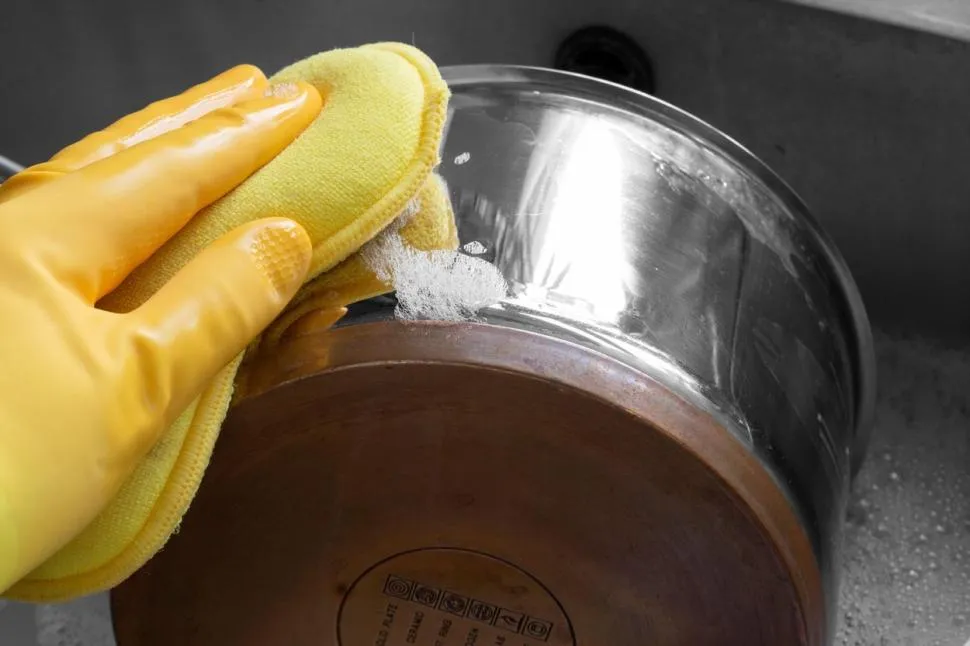
Let the pan cool, wash it with warm water and mild dish soap, and use a soft sponge or cloth unless its maker allows another method. Rinse it completely and dry it with a clean cloth to limit water spots.
For stuck food, soak the cooled pan in warm soapy water before using more force. Do not move straight to steel wool, bleach, oven cleaner, or a homemade acid treatment. Check the manufacturer’s instructions first. If the approved routine is not enough, match the problem to a suitable option in our guide to stainless steel cleaners.
How do you remove water spots or rainbow discoloration?
Start with the pan maker’s approved cleaning method because water spots and heat tint are different problems. Mineral spots may respond to gentle washing and drying, while rainbow coloring often comes from a thin oxide layer formed by heat.
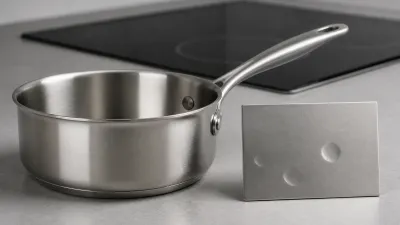
Neither appearance automatically proves that the pan is unsafe. Clean the pan as directed and inspect it for pitting, loose parts, peeling coatings, or a damaged bonded edge. Our guides explain why stainless steel can tarnish or discolor and how to restore its appearance without starting with harsh abrasives.
What should you do if the pan went through the dishwasher by mistake?
Let it cool, rinse away detergent residue, dry it, and inspect the full pan. One accidental cycle does not automatically ruin bare stainless cookware, but the product’s construction and the change you see determine the next step.
Stop using the pan and contact the manufacturer if a bonded edge has separated, a coating is peeling, a handle is loose, or corrosion has created pits in the cooking surface. For cosmetic spots or discoloration, use only the care method approved for that model. Do not sand or aggressively scour an unidentified finish.
Frequently asked questions
Can All-Clad stainless steel pans go in the dishwasher?
Some All-Clad cookware is labeled dishwasher safe, but its current care guidance recommends hand washing to preserve the finish. Check the instructions for the exact collection and model because nonstick pieces and other materials can have stricter limits.
Can dishwasher detergent damage stainless steel cookware?
It can affect finishes, deposits, exposed non-stainless edges, and other pan parts. The exact risk depends on the detergent and the cookware’s construction, so follow the product-specific care guide.
Is a dishwasher-safe pan better than a hand-wash-only pan?
Not necessarily. Dishwasher compatibility is a care feature, not a measure of cooking performance or durability. Construction, handle design, heat limits, and how the pan fits your cooking matter separately.
Is a stainless steel pan still safe after discoloring in the dishwasher?
Color alone cannot answer that question. Clean and inspect the pan as its maker directs. Stop using it and ask the manufacturer about pitting, peeling, separation, or loose parts. Our broader guide to stainless steel cookware safety covers the material and condition checks that matter.
If machine washing leaves residue that later burns during cooking, use a separate, label-compliant process for cleaning the burnt stainless steel pan.
For hand-washing and diagnosis, follow the general pan-cleaning method. Chalky residue after a wash may call for the separate guide to white mineral spots on stainless steel pans, not a more abrasive scrub.
Related guides
Continue with Dishwasher-Safe Stainless Steel Cookware.