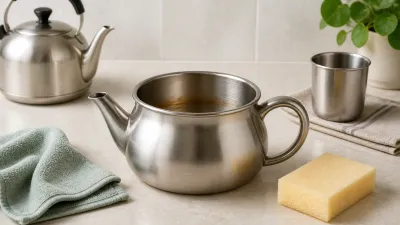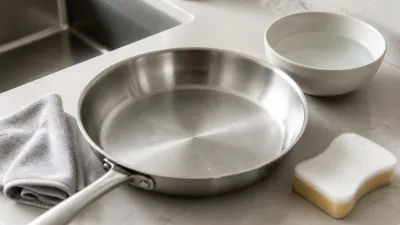
Clean a burnt stainless steel pan by letting it cool, soaking it in warm water and dish soap, then loosening the softened food with a non-scratch sponge or wooden utensil. If residue remains, use a baking soda paste or a cookware cleanser approved by the pan maker, following its label exactly. Start mild and escalate only when needed.
Do not plunge a hot pan into cold water. The sudden temperature change can warp cookware. Also, never mix cleaning products. Bleach combined with an acid or ammonia can release dangerous fumes.
What is the safest cleaning order?
The safest order is cool, soak, loosen, wash, inspect, then spot-treat. This least-aggressive-first approach gives water and detergent a chance to work before you reach for an abrasive cleaner.
- Move the pan off the burner and let it cool.
- Remove loose food with a wooden or silicone utensil.
- Add warm water and a small amount of dish soap.
- Soak for about 15 minutes.
- Loosen softened residue with a non-scratch sponge.
- Rinse and inspect the pan under good light.
- Treat only the remaining burnt areas with a maker-approved method.
All-Clad’s stainless cookware care guidance recommends a warm-water soak for stuck food and a baking soda paste for stubborn burnt areas. It also advises using a non-abrasive sponge. Your pan’s instructions take priority because finishes, coatings, handles, and construction differ.
How do you remove food that is still stuck after soaking?
Add warm water to cover the residue, then use a wooden spoon or spatula to press gently at the softened edges. Do not attack the surface with a knife, steel wool, or an aggressive metal scraper.
If plain soaking did not work, make a paste from baking soda and a little water. Apply it only to the burnt area, wait 5–10 minutes, then rub gently with a damp non-scratch sponge. Rinse the pan well and repeat once if the residue is clearly lifting.
Stop if the finish begins to change or the pan’s instructions prohibit the method. A silver-colored pan is not necessarily bare stainless steel. Nonstick coatings, decorative exteriors, and polished finishes can have different limits.
Should you boil water in a burnt pan?
Warm or simmering water can help soften firmly attached food, but only if the pan maker permits stovetop cleaning and the pan is still structurally sound. Add enough water to cover the residue before heating. Keep the pan attended, use moderate heat, and turn off the burner before the water evaporates.
Let the water cool to a safe handling temperature before scrubbing. Do not pour cold water into a scorching pan, and do not heat a commercial cleaner unless its label specifically tells you to do so.
For many spills, a passive warm-water soak is enough and is gentler than returning the pan to the burner. Use heat as a controlled second attempt, not the automatic first step.
Can you use Bar Keepers Friend on burnt stainless steel?
Bar Keepers Friend Cookware Cleanser can be used on compatible bare stainless cookware when its label and the cookware maker allow it. The current product directions call for wetting the surface, applying the powder, rubbing with a damp non-scratch sponge, and rinsing within one minute.
Short contact time matters. Do not leave the cleanser sitting on the pan, and rinse food-contact surfaces thoroughly. Its safety data says not to mix it with chlorine bleach. Wear the protective equipment named on the label and keep the work area ventilated.
Our comparison of the best stainless steel cleaners separates cookware cleansers from appliance polishes and sink products. A spray designed for fingerprints on a refrigerator is not a substitute for a cookware cleanser.
Can you use vinegar on a burnt pan?
Vinegar is better suited to mineral deposits and blue or rainbow discoloration than to a thick layer of carbonized food. Some stainless cookware makers approve a diluted vinegar treatment for those stains, but it should not be assumed safe for every finish.
Use vinegar only when your pan’s care guide allows it, and use it separately from other cleaning products. Poison Control advises never mixing household cleaners. In particular, mixing bleach with an acid such as vinegar can form chlorine gas, while mixing bleach with ammonia can form chloramine gas.
Rinse the pan before changing methods. Do not build a homemade mixture from several cleaners in the hope that it will work faster.
What tools should you avoid?
Avoid steel wool, knives, harsh metal scrapers, and any abrasive pad prohibited by the pan maker. These tools can leave deep scratches or alter a polished finish. Oven cleaner and general-purpose bleach are also poor default choices for food-contact cookware unless the exact cookware and cleaner labels explicitly authorize that use.
A wooden spatula, silicone utensil, soft cloth, or non-scratch sponge is a safer starting set. If the pan has a brushed grain, rub in the direction of that grain when the manufacturer recommends it.
Never work on a pan that is still hot enough to burn you. Gloves may protect against a cleaner, but they do not make hot metal safe to handle.
How do you tell burnt food from discoloration?
Burnt food usually feels raised, rough, or sticky and may flake when softened. Heat tint looks smooth and can appear gold, blue, or rainbow-colored. White chalky spots are often mineral deposits rather than food.
These marks need different treatment. The guide to why stainless steel tarnishes explains common color changes, while the restoration guide shows how to make stainless steel look new again without treating every mark as a burn.
Cosmetic discoloration does not always affect cooking performance. Once the raised residue is gone and the surface is clean, decide whether further polishing is worth the added abrasion.
How can you prevent the next burn?
Use moderate heat, keep the pan attended, and prepare ingredients before cooking begins. Oil that smokes and darkens is a warning that the pan is too hot. Sugary sauces, milk, and thick starches need frequent stirring and closer heat control.
Food that is stuck is not always burnt. Proteins can cling before their browned surface is ready to release. The guide to keeping stainless steel pans from sticking covers preheating, oil, moisture, and release timing.
After cooking, let the pan cool enough to handle and wash it before residue hardens. If you are considering a machine cycle instead, first check whether stainless steel pans are dishwasher safe for the exact cookware line.
When should you replace the pan instead of cleaning it?
Replace or have the pan assessed when the base is badly warped, the handle is loose and cannot be secured, bonded layers are separating, or a coating is peeling. Cleaning cannot correct a structural failure.
Normal staining and surface scratches are different from separation or instability. If the pan rocks on a flat cooktop or shows a gap between bonded layers, stop using it and contact the manufacturer. When in doubt, send the maker clear photos and the model information rather than guessing from appearance alone.
For an ordinary scorched stainless pan, patience is usually the right first tool. Cool it, soak it, loosen what you can without force, then use one compatible spot treatment at a time.