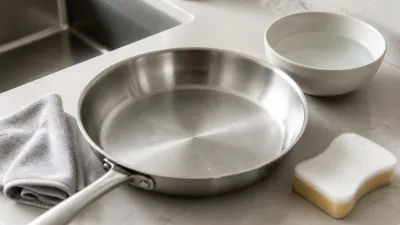
White spots on a stainless steel pan are usually mineral deposits left when water evaporates. Wash the cool pan first. If chalky dots or haze remain, use a diluted white-vinegar treatment only when the cookware maker permits it, then rinse and dry thoroughly. The spots are often cosmetic, but a rough pit that does not clean away needs a different assessment.
What causes white spots on stainless steel pans?
Tap water contains dissolved minerals. When droplets or cooking water evaporate, some of those minerals can remain as pale dots, rings, or haze. Hard water tends to leave more visible deposits. Salt can also leave residue when it is added before cooking water has dissolved it and reached a boil.
Mineral deposits sit on the surface. Pitting is a small cavity in the metal and will not wipe away. A smooth rainbow, blue, or gold color is heat tint, which is covered in the guide to rainbow stains on stainless steel pans.
Use the diagnosis guide for cleaning stainless steel pans when the mark is sticky, raised, black, or brown instead of chalky.
How do you remove white mineral spots?
- Let the pan cool and wash it with warm water and dish soap.
- Rinse and inspect the dry surface.
- If deposits remain, check the pan maker’s care instructions.
- When permitted, wipe the affected area with diluted white vinegar using a soft cloth or non-scratch sponge.
- Rinse thoroughly with clean water and towel-dry.
All-Clad’s stainless cookware care guidance recommends white vinegar for discoloration and hard-water spots. The exact finish still matters, so the maker’s instructions for your model take priority.
Use short contact and light pressure. Repeat after inspection instead of leaving an acidic solution on the pan for an extended period.
Can a stainless steel cleaner remove the spots?
A cookware cleanser may remove persistent deposits from compatible bare stainless steel, but it adds abrasion that a simple acidic rinse may avoid. Start mild. If you use a commercial product, select one labeled for cookware and follow its directions for contact time, ventilation, protective equipment, and rinsing.
Our guide to the best stainless steel cleaners distinguishes food-contact cookware cleansers from appliance sprays. Fingerprint polish and sink cleaner are not interchangeable with cookware products.
Never mix vinegar with bleach or another cleaner. Poison Control’s household-cleaner guidance warns that bleach combined with an acid can release chlorine gas. Rinse the pan before switching products.
Are white spots the same as pitting?
No. A mineral spot lies on the surface and often changes or disappears after a suitable cleaning treatment. A pit is a physical depression. Dry the pan and inspect it under side lighting. If a point catches a fingernail after the deposit is gone, it may be pitting rather than residue.
Do not keep abrading a cavity in an attempt to erase it. Photograph the area and ask the manufacturer to assess it, especially if the pan is new, the pitting is widespread, or a bonded layer appears exposed.
The guide to why stainless steel tarnishes explains other surface changes that can resemble corrosion without being the same condition.
How can you prevent new water spots?
Towel-dry the pan after washing rather than leaving droplets to evaporate. If your tap water leaves heavy deposits, a final rinse with filtered water may reduce them. Keep the dishwasher’s rinse-aid and water-hardness settings consistent with the appliance instructions.
Add salt to boiling water and stir until it dissolves instead of leaving crystals against a cool pan bottom. This does not guarantee that pitting will never occur, but it reduces concentrated contact while the crystals sit undissolved.
Before machine washing, check whether the exact stainless steel pan is dishwasher safe. Dishwasher compatibility depends on the whole product, including bonded metals, coatings, handles, and finishes.
How are white spots different from burnt oil?
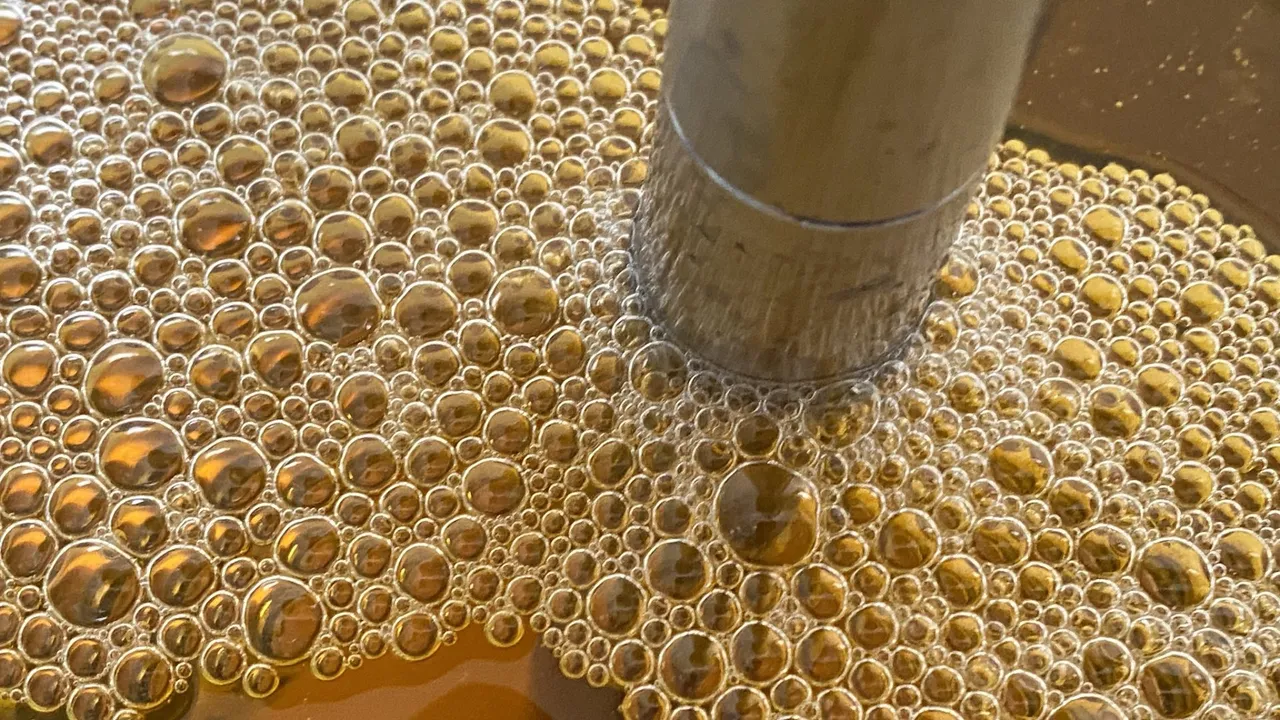
White mineral deposits tend to feel dry or chalky. Burnt oil is more often amber or brown and feels sticky or varnish-like. Dish soap removes loose grease but may not remove a hardened oil film.
Follow the separate method for removing burnt oil from stainless steel rather than adding vinegar to a greasy pan. Treating one diagnosed problem at a time keeps products from being mixed accidentally.
Frequently asked questions
Are white spots on a stainless steel pan harmful?
Ordinary hard-water deposits are usually a cleaning and appearance issue, but a photo cannot prove what an unknown mark contains. Wash and remove the deposit before cooking. Contact the maker if the surface is pitted, flaking, or changing beneath a coating.
Can lemon juice remove white spots?
Acid can dissolve some mineral deposits, but cookware instructions more commonly specify a diluted vinegar method. Use the treatment named by the manufacturer rather than substituting ingredients with unknown strength or leaving food acids on the surface.
Why do white spots return after every wash?
They can return when mineral-rich water dries on the pan. Towel-dry promptly, review dishwasher hardness settings, and consider a filtered final rinse. Recurrence does not mean the earlier cleaning failed if new droplets were allowed to evaporate.
Related guides
Continue with Descale a Stainless Steel Kettle, Remove Hard Water Stains From a Stainless Steel Sink, Clean a Stainless Steel Sink Without Scratching It, Remove Tea Stains From Stainless Steel.
Continue with Pitting in Stainless Steel Cookware?.