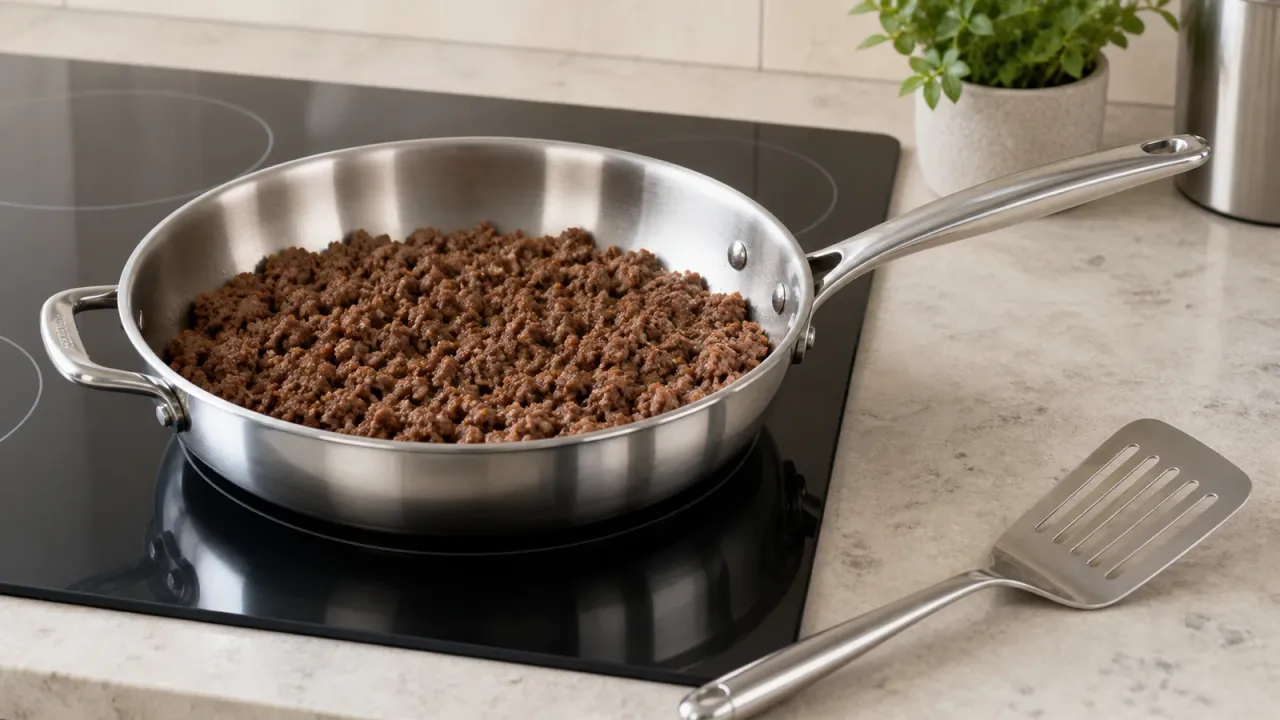
Yes, you can cook ground beef in a stainless steel pan. Use enough space to brown the meat instead of steam it, but treat browning as a cooking cue rather than a safety test. USDA and FoodSafety.gov guidance says ground meat should reach 160°F (71°C), measured with a food thermometer.
This is a research-based guide, not a hands-on test of one pan, burner, recipe, or cooking time. Your pan’s construction, burner, batch size, and the beef’s fat and moisture will change how quickly it cooks.
What is the safe way to cook ground beef in stainless steel?
The safe method is to keep the raw beef separate from ready-to-eat food, brown it with controlled heat, and verify 160°F (71°C) with a food thermometer before serving.
- Set up a clean plate or bowl for the cooked beef, a utensil for raw beef, and a food thermometer. Keep the raw package and its juices away from salad ingredients, bread, and other food that will not be cooked.
- Warm the clean, dry pan using the pan maker’s normal preheat guidance and a moderate setting appropriate to your stove. There is no universal burner number for every stainless pan. Add a thin film of cooking oil if the pan or the beef needs it, and do not let the oil smoke.
- Add the beef and spread it into a loose layer. If the pan is too full for the pieces to contact the surface, cook in batches rather than turning the burner to its highest setting.
- Let the underside brown briefly before moving the pieces. Then break the beef into smaller crumbles and continue cooking, stirring as needed to expose raw surfaces. Browned bits on the pan are useful fond, but they do not prove that the center of every piece has reached a safe temperature.
- Check the thickest pieces with a food thermometer. If the crumbles vary in size, take more than one reading. Continue cooking and check again if any representative thick piece is below 160°F (71°C).
- Move the cooked beef to the clean plate or bowl. Wash your hands, utensils, and work surface after they have touched the raw meat or its packaging.
The USDA Ground Beef and Food Safety guidance covers handwashing, separation, and the 160°F endpoint. The pan material changes the release technique, not the food-safety temperature.
How do you brown ground beef instead of steaming it?
To brown ground beef in stainless steel, give the pieces surface contact and open space, then wait for browning before repeatedly moving them.
Ground beef releases moisture as it warms. A crowded pan can collect that moisture around the meat, so the beef cooks in steam before the surface has a chance to brown. A wider pan or a smaller batch gives moisture somewhere to evaporate. If liquid has already pooled, keep cooking safely until the beef reaches its temperature endpoint, then adjust the batch size next time rather than reaching for maximum heat.
Use the pan’s behavior as your guide. The oil should spread into a thin film and warm without smoking. A sharp, aggressive sizzle or rapidly darkening oil is a reason to lower the heat or move the pan off the burner briefly. Stainless cookware varies in thickness and heat response, so a timed instruction such as “use setting seven for five minutes” cannot transfer reliably from one kitchen to another.
Avoid flattening every piece and scraping it loose as soon as it enters the pan. Larger pieces can develop a browned side before you break them up. If the beef is still raw and resisting, wait for more surface browning rather than forcing a utensil underneath. The general method for keeping food from sticking to stainless steel explains the same heat, fat, moisture, and release cues without promising a universal setting.
If you want to make a sauce from the browned residue, first confirm that the beef is cooked and transfer it to a clean container. Then use the pan maker’s care instructions and a suitable cooking liquid to loosen fond. Do not scrape hard at a damaged surface, and do not add water to a pan containing hot fat.
How can you tell when ground beef is safe to eat?
Use a food thermometer to verify 160°F (71°C); the beef’s color, crust, or ease of release cannot establish the safe endpoint.
The FoodSafety.gov safe-temperature chart lists 160°F (71°C) for ground meat and sausage and says to use a thermometer. USDA’s ground-beef color guidance also explains why color is unreliable. Ground beef can look brown before the interior reaches the target, and it can retain some pink at a safe temperature.
For loose crumbles, press the thermometer probe into the thickest piece you can find without touching the hot pan surface. Check another piece when sizes or browning vary. An instant-read thermometer needs a stable reading in the meat, not a glance at the outside or a measurement of the pan. If the reading is below 160°F (71°C), keep the beef on the heat and recheck.
Browning and doneness answer different questions. Browning tells you about surface color and moisture. The thermometer tells you whether the meat has reached the USDA minimum. A piece that releases easily may still need cooking, while a piece that clings may simply need more time for its surface to brown.
How should you handle raw ground beef and hot fat?
Keep raw beef, its juices, and anything that touched them away from cooked food, and handle rendered fat only after the heat is off and the pan is safe to move.
The USDA recommends washing hands with soap and water for at least 20 seconds before and after handling ground beef. Use a separate plate and utensil for the raw meat and the cooked meat, or wash them with hot, soapy water before reusing them. Clean the counter and any tool that touched the raw beef or package. The USDA washing guidance says not to rinse raw beef because splashing can spread bacteria around the kitchen.
To drain fat, turn off the burner and move the cooked beef with a clean slotted utensil if you need the pan to cool sooner. Do not carry a pan full of hot grease, pour hot grease into the sink, or add water to it. Let the fat cool, then use a heat-safe container or the disposal method required by your local waste guidance. Keep the pan stable while it cools, and clean it only when it is safe to handle.
What should you do when ground beef sticks to a stainless steel pan?
If ground beef sticks, check moisture, space, fat, and timing before scraping; sticking is a release problem, not a doneness test.
Use a clean pan and a thin, continuous film of oil when the beef or pan needs it. Give the pieces room, then leave them in place long enough to brown. Once a browned crust forms, a flexible spatula or wooden utensil can usually loosen the fond with controlled pressure. If a piece is still raw and firmly attached, wait rather than tearing it free.
A sticky brown film is different from a black, hardened layer of burnt oil. Let the pan cool before cleaning either one. The guide to removing burnt oil from stainless steel covers safer cleaning steps, while the stainless steel frying-pan guide explains what to check when choosing a pan for browning and other stovetop work.
The egg-specific stainless steel guide shows the same release timing in a more delicate food, but ground-beef safety still depends on the thermometer reading.
Do not assume that a pan’s ability to release browned beef proves that it is nonstick. Bare stainless steel can produce useful fond, but it still needs heat and fat control. If low-fat, easy release is your only priority, a different cooking surface may be more convenient for that job.
Frequently asked questions
Can stainless steel touch ground beef?
Yes, an intact stainless cooking surface made for food contact can be used for ground beef according to the maker’s instructions. Pan material does not replace the 160°F (71°C) ground-meat endpoint or clean separation between raw and cooked food.
Should you add oil before cooking ground beef?
Sometimes. Beef with more rendered fat may need little or no added oil, while lean beef or a dry pan may benefit from a thin film. Use enough to cover bare patches, keep it below its smoke point, and follow the pan and oil maker’s directions.
Can you judge ground-beef doneness by color?
No. Color varies and can change before or after the safe temperature is reached. Use a food thermometer in the thickest pieces and check 160°F (71°C), as USDA and FoodSafety.gov recommend.
Can you pour ground-beef grease down the sink?
Do not pour hot grease down the sink or add water to it. Turn off the heat, let the fat cool, and follow your local disposal guidance using a stable heat-safe container when appropriate.
What official guidance supports this method?
The temperature, color, handwashing, separation, and no-rinsing points in this guide come from current USDA and FoodSafety.gov consumer guidance.
- FoodSafety.gov, Cook to a Safe Minimum Internal Temperature (reviewed November 21, 2024)
- USDA FSIS, Ground Beef and Food Safety (accessed August 22, 2026)
- USDA FSIS, Color of Cooked Ground Beef as It Relates to Doneness (accessed August 22, 2026)
- USDA FSIS, Washing Food: Does It Promote Food Safety? (accessed August 22, 2026)