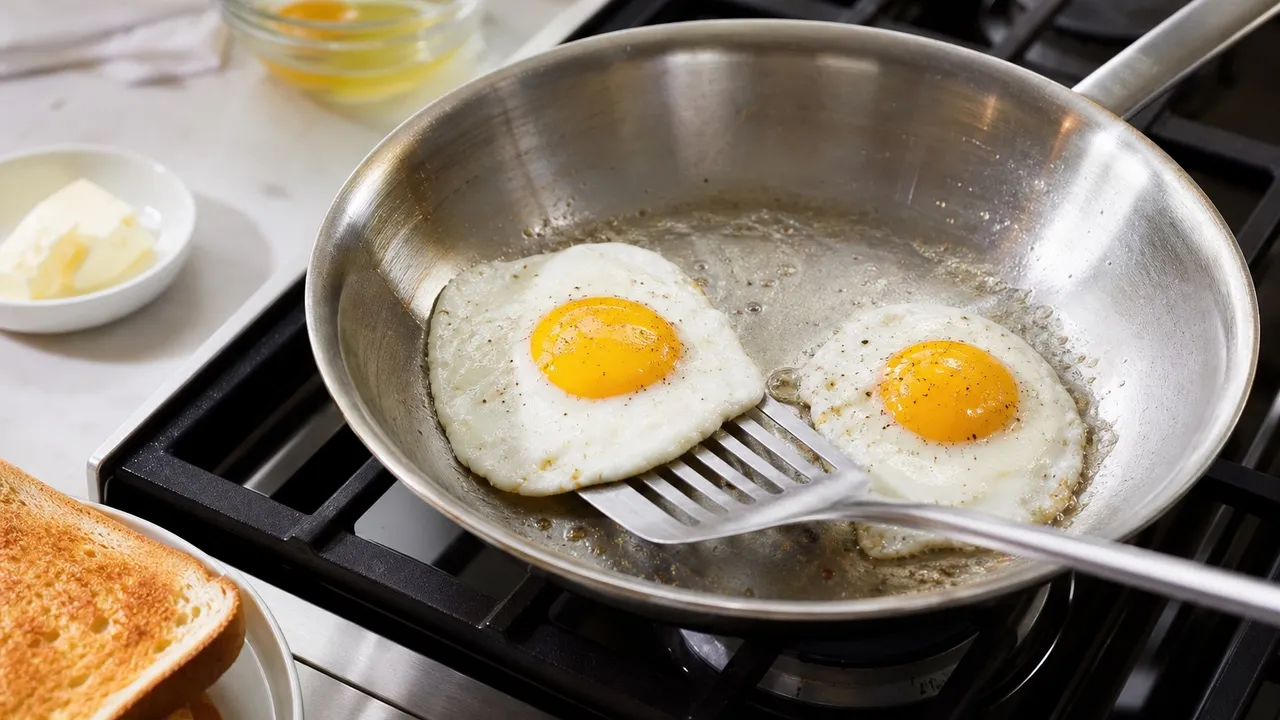
To cook eggs in stainless steel without sticking, start with a clean pan, preheat it gradually over medium-low heat, add enough butter or oil to cover the cooking area, lower the heat, and then add the eggs. Wait for the egg to set before trying to move it.
Butter is especially useful for beginners because its bubbling gives you a temperature signal. It should foam gently, not turn brown immediately.
The short method
- Let refrigerated eggs lose some of their chill while you gather equipment.
- Heat a clean 8- or 10-inch stainless steel skillet over medium-low heat for 2 to 3 minutes.
- Add butter and swirl it across the full cooking area.
- If the butter browns at once, lift the pan from the burner and let it cool briefly.
- Add the egg, then reduce the heat to low.
- Leave it alone until the white firms and releases with gentle spatula pressure.
- Cook to your preferred doneness while following safe egg-handling guidance.
Exact timing depends on the pan’s mass, burner, egg temperature, and cooking style. Use the behavior of the butter and egg rather than a universal timer.
Why eggs stick to stainless steel
Egg protein can settle into microscopic surface irregularities and bond as it sets. Three conditions make that worse:
- The pan is cool when the egg arrives.
- The cooking surface lacks a continuous film of fat.
- The heat is so high that the bottom seizes before the egg cooks evenly.
A clean, moderately preheated surface and enough fat reduce direct contact. Once the egg sets, it becomes easier to lift. This is the egg-specific version of the broader method for keeping food from sticking to stainless steel.
How to fry an egg in stainless steel
1. Choose the right pan size
An 8-inch skillet works for one or two eggs. A much larger pan leaves extra metal exposed, where the butter can burn before the egg covers it. Use a flat pan without burnt oil or rough carbon deposits.
2. Take the chill off the egg
A refrigerator-cold egg cools the pan more abruptly. Set it out only while you prepare the pan; do not leave raw eggs unrefrigerated for extended periods. Crack it into a small bowl so the shell stays away from the skillet and the egg can enter in one controlled motion.
3. Preheat gradually
Set the dry pan over medium-low heat for 2 to 3 minutes. Heavy fully clad cookware may need more time and a lower burner setting than a thin pan. Avoid maximum heat.
Internet advice often recommends a dramatic water-bead test. For eggs, that can take the pan hotter than necessary. Butter provides a more useful signal.
4. Add butter and read the foam
Add enough butter to coat the full area beneath the egg. It should melt and foam steadily. If it turns brown or smokes immediately, the surface is too hot. Remove the pan from the burner until the bubbling calms, then continue over lower heat.
Oil also works, but it gives fewer visible cues. Use an oil appropriate for the cooking temperature and do not heat it to smoking.
5. Add the egg and lower the heat
Slide the egg from the bowl into the fat. Reduce the burner to low. The white should sizzle softly, not snap and spit aggressively.
For a sunny-side egg, cover the pan briefly if the top needs to set before the bottom overbrowns. Condensed steam will cook the surface.
6. Wait for release
Do not force the spatula under a translucent white. Wait until the edge is opaque and firm, then test gently with a thin spatula. Add a small amount of butter at the edge if a dry area is resisting.
How to scramble eggs in stainless steel
Scrambled eggs need lower heat and more movement:
- Beat the eggs in a bowl before heating the pan.
- Preheat over medium-low, add butter, and reduce to low.
- Add the eggs when the butter foams gently.
- Let a thin layer set, then sweep it toward the center with a silicone or wooden spatula.
- Keep folding slowly rather than scraping furiously.
- Remove the pan just before the eggs reach your final texture; retained heat will continue cooking them.
If a thin film remains, soak the cooled pan in warm soapy water. Do not attack fresh residue with steel wool.
Common mistakes
Starting with a dirty pan
Polymerized oil and burnt protein create high spots that grab fresh egg. Clean the surface fully before cooking. The stainless steel pan cleaning guide helps distinguish ordinary residue from heat tint and mineral marks.
Using high heat
Eggs do not need searing heat. High heat burns butter, toughens the bottom, and creates a large temperature gap between the pan and cold egg.
Adding too little fat
A token drop of oil cannot cover a broad cooking area. Start with a visible continuous film, then reduce the amount over later attempts as you learn the pan.
Moving the egg immediately
Freshly added protein is at its stickiest. Wait for the structure to set and test for release instead of tearing it free.
Assuming seasoning will make stainless steel nonstick
Stainless cookware does not require the permanent seasoning layer used on bare cast iron or carbon steel. A temporary film of cooking fat helps, but baked-on oil can become a sticky cleaning problem. Read whether stainless steel pans need seasoning before deliberately polymerizing oil.
Egg safety still matters
Release and doneness are separate decisions. The FDA advises cooking eggs until the yolk and white are firm and using pasteurized eggs or egg products in recipes served raw or undercooked. People at higher risk from foodborne illness should follow current medical and food-safety advice rather than relying on appearance alone.
Wash hands, utensils, and work surfaces after contact with raw egg. Do not return a cooked egg to the unwashed bowl that held it raw.
When a different pan is the better tool
Use nonstick when you cook eggs daily with minimal fat and value predictable release above browning. Stainless steel is worthwhile when you want one uncoated pan for many jobs and are willing to practice temperature control.
The best stainless steel frying pans roundup compares exact models, while what not to cook in stainless steel explains when a specialist surface is more convenient.
Frequently asked questions
Should you use butter or oil for eggs in stainless steel?
Either works. Butter gives a clear heat cue through its foaming and adds flavor. Oil can tolerate different temperatures depending on type. Use enough to coat the cooking area and do not let either smoke.
What heat should you use for eggs in stainless steel?
Preheat over medium-low, then cook over low heat. Burner labels are not standardized, so reduce the setting if butter browns immediately or the egg spits aggressively.
Do eggs need to be room temperature?
No. Taking off some refrigerator chill reduces the temperature shock, but food safety matters more. Leave eggs out only briefly while preparing the pan.
Related guides
Continue with Cook Ground Beef in a Stainless Steel Pan?, Cook Fish in a Stainless Steel Pan Without Sticking.