You can cook rice in a stainless steel pot without excessive sticking, but there is no universal water ratio, burner setting, or timer that works for every rice type and pot. Follow the package or recipe for the rice you have, then control the variables stainless steel makes visible: rinse or soak only when appropriate, use a suitable pot and lid, reduce the heat when the boil is established, avoid unnecessary stirring, and let the covered rice rest before serving. If you will not eat it promptly, cool and store it as a perishable leftover rather than leaving it in the pot.
Why does rice stick to stainless steel?
Rice sticks when released starch and concentrated moisture form a film on the hot metal, or when the bottom dries out and the grains toast against the surface. Stainless steel is an uncoated cooking surface, so it does not promise the easy release of a nonstick coating. Rice type, surface starch, water amount, pot shape, burner size, heat control, stirring, and rest time all change the result.
Sticking is not automatically scorching. A thin soft layer that lifts after a warm soak is different from a dark, hard, bitter-smelling crust caused by an overheated or dry pan. The stainless steel sticking guide covers general release cues for foods cooked directly on the surface. Rice needs an additional focus on starch, moisture, and covered cooking.
Does rinsing rice keep it from sticking?
Rinsing can reduce loose surface starch for some rice, but it is not a universal requirement or a guarantee of separate grains. Use the package or recipe directions first. Some directions call for a thorough rinse, others call for no rinse, and some preparations depend on starch for a creamy or sticky texture.
The current RiceSelect cooking FAQ notes that stirring releases starch and that the right rice-to-water amount, simmer, saucepan size, and burner size all affect the result. Its current sushi-rice instructions provide one product-specific example that includes rinsing, draining, a covered simmer, and a rest. That example is not a rule for long-grain, brown, parboiled, wild, risotto, or every other rice.
If your directions call for rinsing, use a fine strainer or a bowl, rinse with cool water, and drain well. Water left clinging to the grains changes the liquid balance, so do not rinse and then blindly keep a ratio intended for unrinsed rice. If the recipe needs starch, skip the rinse when its instructions say to do so.
What water ratio should you use in a stainless steel pot?
Use the ratio printed on the package or specified by the recipe, rather than borrowing one number from another rice variety. Long-grain white rice, jasmine, basmati, brown rice, parboiled rice, wild rice, short-grain rice, and risotto-style rice absorb water differently. Rinsing, soaking, altitude, the pot’s lid, and the desired texture can change the amount of liquid and the cooking method.
Measure the rice and liquid consistently, and treat the package directions as a starting point for that product. Do not add water simply because the surface looks dry early in the process, and do not keep cooking because a different rice normally takes longer. Check the grains and the package cues at the stated stage, then adjust the next batch rather than turning one result into a universal formula.
How should you choose the pot and lid?
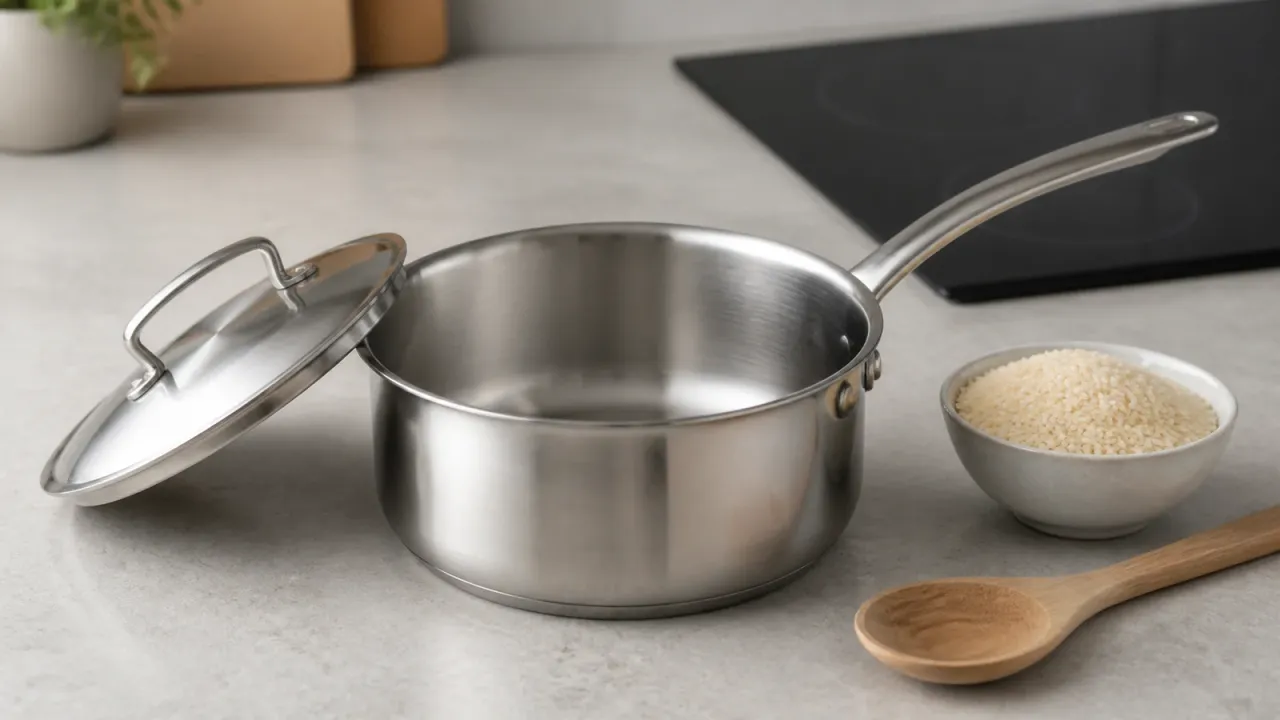
Choose a clean, stable pot with enough room for the rice and liquid to expand, a flat base that matches the burner reasonably well, and a lid that fits the vessel. A heavy or layered base can moderate heat changes, but construction alone cannot compensate for the wrong ratio, a poor lid fit, or an unattended high burner.
Avoid a pot so small that the liquid foams against the lid, or so wide that a shallow layer dries before the grains finish. The useful size depends on the batch and rice directions. The lid should stay in place without forcing you to lift it repeatedly to check progress. If your cookware maker limits empty preheating, dishwasher use, or particular utensils, follow those instructions for the exact pot.
For a larger batch, do not assume that multiplying the ingredients and cooking time will produce the same result. The depth of rice, lid seal, burner footprint, and evaporation all change with vessel size. A stockpot may be useful for a large, liquid-heavy method, while a saucepan may suit a covered absorption method. The stainless steel stockpot guide explains the separate capacity and construction tradeoffs.
If you prefer an appliance to a stovetop absorption method, compare rice cookers with stainless steel inner pots by capacity, heating style, and documented pot material.
What is a qualified stainless-steel rice workflow?
A qualified workflow follows the rice’s own directions while using gradual heat and minimal disturbance. Treat the sequence below as a framework, not as a substitute for the package, recipe, or cookware maker.
- Read the package or recipe. Identify the rice variety, whether it should be rinsed or soaked, its liquid guidance, and its stated cooking and resting cues.
- Prepare the rice as directed. If rinsing is required, drain it well. If soaking is part of the method, account for the water the grains absorb.
- Use the selected stainless pot and a fitting lid. Add the measured rice and liquid, along with salt or fat only when the recipe calls for them.
- Bring the mixture to a boil using the recipe’s heat guidance and stay nearby. A strong boil is not proof that the rice is ready, and high heat can drive off liquid too quickly.
- Once the directions call for simmering, reduce the heat enough to maintain the intended gentle simmer. The correct burner position depends on the stove, pot, lid, batch, and rice, so do not copy a fixed setting from another kitchen.
- Keep the lid on when the method calls for covered cooking. Lift it only when the directions tell you to check. Each opening changes the heat and moisture balance.
- Avoid stirring unless the recipe specifically requires it. Stirring can release starch into the liquid and can disturb grains as they hydrate. If the package calls for one stir at a particular point, follow that instruction rather than turning it into continuous scraping.
- Use the package or recipe’s doneness cue. If the liquid is gone but the grains are still hard, do not scrape the bottom or invent a rescue ratio. Turn down or remove the heat and use the maker’s or recipe author’s correction for that rice.
- Remove the covered pot from the heat when the directions say the cooking stage is complete. Let the rice rest for the stated period, if one is given, before fluffing. Resting lets moisture redistribute, but it cannot repair badly scorched rice.
- Fluff gently with a fork or rice paddle if the method calls for it. Lift and separate rather than digging forcefully into the bottom, then serve while the rice is intended to be hot.
The stainless steel pan readiness guide explains why water beads and oil cues are not precise thermometers. Those tests are not needed for a covered rice method and can encourage overheating or unnecessary evaporation.
Should you stir rice while it cooks?
Usually, no, unless the specific recipe or package says to stir. Repeated stirring moves hydrated grains against the metal and releases more starch into the cooking liquid, which can make the texture gummy and increase the film on the bottom. A covered absorption method is generally easier to manage when the grains are left alone after the boil-to-simmer transition.
Some preparations intentionally stir, such as risotto or another dish that uses released starch to thicken a liquid. That is a different cooking job. Do not apply a no-stir rule to every rice dish, and do not apply a risotto technique to a fluffy rice package.
How do you tell sticking from scorching?
Sticking is often a light, soft film or a layer of rice that releases after the pan cools and soaks. Scorching is more likely when the bottom is dark, hard, dry, sharply browned, or bitter-smelling. The boundary is not a laboratory diagnosis, but it helps choose a conservative response.
If the liquid is disappearing too quickly, the lid is rattling, or the bottom is browning before the directions indicate the rice is done, reduce or remove the heat and check the package method. Do not keep raising the burner to force a boil, and do not scrape a suspected scorched layer into the rest of the rice. Transfer the rice that is not stuck if you can do so without mixing in the bottom crust, then cool the pot before cleaning it.
If the rice is done but clings lightly to the bottom, let the covered pot rest as directed and use a gentle utensil when serving. A spoonful of water or oil is not a universal fix after the fact. The right correction depends on the rice, method, pot, and how far the bottom has dried.
Does oil prevent rice from sticking?
Oil or fat can change the surface and flavor, but it does not turn stainless steel into a nonstick pan or correct an unsuitable water balance. Add it only when the recipe or package calls for it. A small amount may be useful in a pilaf or sauté step, while a plain absorption method may not use any.
If you sauté dry rice before adding liquid, follow the recipe’s heat and stirring directions. Keep the grains moving only as much as that method requires, and add liquid carefully because hot fat and water can splatter. The stainless surface still needs enough liquid and controlled heat to finish the grains.
How should you clean rice from a stainless steel pot?
Let the pot cool enough to handle, cover the stuck rice with warm water, and let the softened starch release before using a non-scratch sponge or wooden utensil. Do not plunge a hot pot into cold water, scrape with a knife, or use steel wool unless the exact cookware maker permits it.
If a soft soak does not remove the film, use only a cleaner and method approved for the pot’s finish. Never mix cleaners. The burnt stainless steel pan cleaning guide separates a removable starch or food film from a structural defect and explains why a gentle first step is safer for the finish.
If the pan has a deep gouge, peeling coating, separated bonded layer, leak, or unstable base, stop treating it as a rice-sticking problem and ask the manufacturer about the exact cookware. Cleaning cannot repair a structural failure.
How should you cool and store leftover rice?
Cool leftover rice promptly and store it as a perishable food. If you will not eat it soon, divide it into shallow containers, refrigerate it within two hours of cooking, or within one hour when the surrounding temperature is above 90°F. Keep the refrigerator at 40°F or below and use refrigerated leftovers within three to four days, or freeze them for longer storage.
The USDA FSIS leftover guidance recommends shallow containers for faster, more even cooling and gives the two-hour, one-hour, and three-to-four-day limits. FoodSafety.gov specifically includes cooked rice among foods that should not remain at room temperature beyond those limits. The FDA’s Bacillus cereus guidance explains why improperly held cooked rice is a food-safety concern.
Do not leave the rice in a deep stainless pot on the counter to cool slowly. A large hot mass cools differently from a shallow portion. You can place hot food directly into the refrigerator when following USDA guidance, but dividing it into smaller shallow portions helps it cool more evenly. Reheat leftovers thoroughly before serving, following current food-safety guidance, and discard rice that has exceeded the time limits rather than relying on smell or appearance.
Frequently asked questions
Can you cook rice in any stainless steel pot?
Many stainless pots can cook rice, but the exact pot, lid, base, batch size, and rice method still matter. Use a stable vessel with enough room for expansion and follow the cookware maker’s care and heat guidance. Do not treat the material name as a guarantee of identical results.
Why does rice stick even when you follow the package?
The burner, lid fit, pot geometry, batch size, rinse or soak, and actual heat can differ from the conditions assumed by the directions. A simmer that is too strong can evaporate liquid early, while frequent lid lifting or stirring changes the starch and moisture balance. Adjust one variable on the next batch and keep the package method as the reference point.
Should you rinse brown rice or basmati rice?
Follow the product label or recipe. Rice varieties and preparations differ, and rinsing can change the liquid that reaches the pot. If the directions call for rinsing, drain it well. If the method needs surface starch, do not add a rinse just because the pot is stainless steel.
How long should rice rest after cooking?
Use the rest period printed on the package or recipe when one is provided. Resting time varies by rice, method, batch, and vessel, so an invented universal timer can leave one type underdone and another overcooked. Keep the lid on during the stated rest unless the directions say otherwise.
Can you leave cooked rice in the stainless steel pot overnight?
No. If the rice will not be eaten promptly, divide it into shallow containers and refrigerate it within the USDA time limits. Stainless steel does not make room-temperature storage safe, and smell or appearance cannot verify that rice held too long is safe.
Sources
- USDA FSIS, How do I handle leftovers safely? (retrieved 2026-08-22)
- FoodSafety.gov, Game day food safety tips (retrieved 2026-08-22)
- FDA, BAM Chapter 14: Bacillus cereus (retrieved 2026-08-22)
- RiceSelect, Frequently asked questions (retrieved 2026-08-22)
- RiceSelect, Sushi Rice cooking instructions (retrieved 2026-08-22)