Remove burnt oil from stainless steel by letting the pan cool, washing away loose grease, and treating the remaining sticky brown film with a cookware cleanser approved by the manufacturer. Use a damp non-scratch sponge and light pressure, then rinse thoroughly. Repeat a short treatment instead of reaching first for steel wool or a metal scraper.
This method is for polymerized oil, not a thick layer of charred food. If the residue is black, raised, and brittle, follow the guide to cleaning a burnt stainless steel pan first.
How can you tell burnt oil from burnt food?
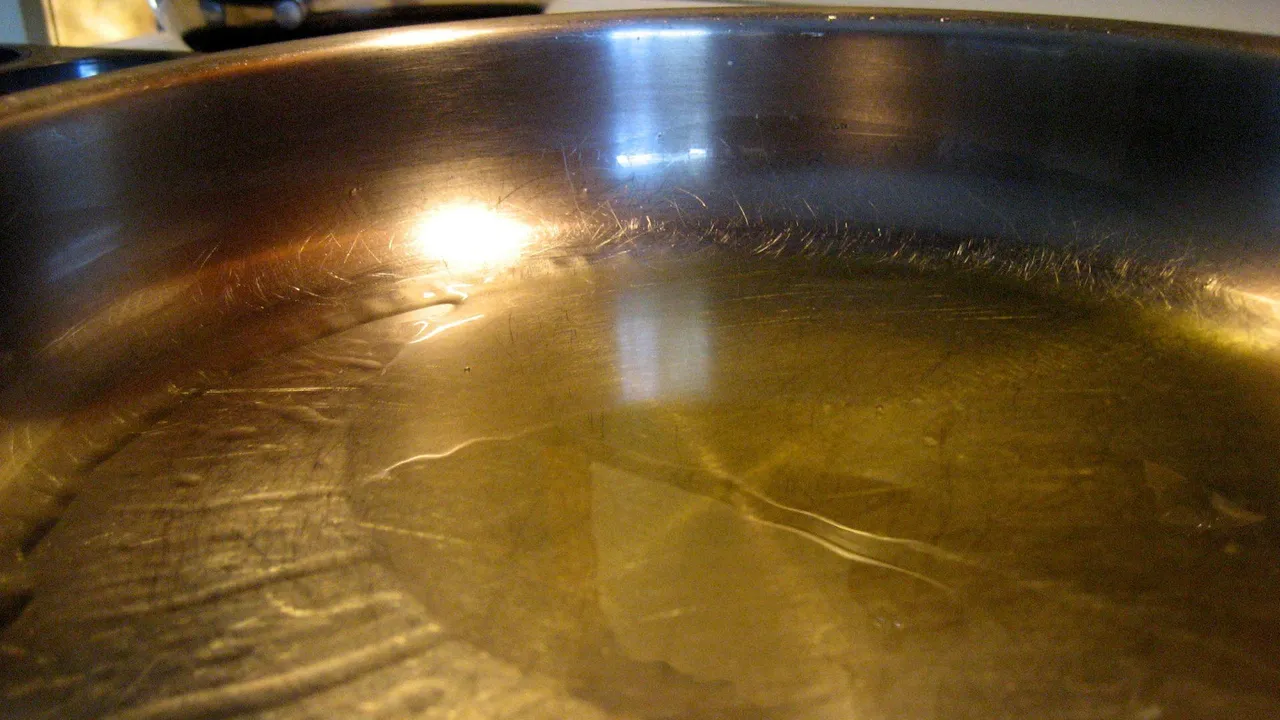
Burnt oil often appears amber, bronze, or brown and feels sticky, slick, or varnish-like after ordinary washing. It may form small droplets around a pan’s upper wall or a thin film on the exterior. Burnt food is usually thicker, rougher, and more likely to soften or flake after soaking.
Smooth rainbow color is another issue. It is heat tint rather than a grease film. The guide to rainbow stains on stainless steel pans explains the gentler treatment that suits that color change.
Start with the diagnostic table in the complete stainless steel pan cleaning guide if the mark does not fit one category.
What is the least-aggressive removal method?
- Let the cookware cool fully.
- Wash it with warm water and dish soap to remove loose oil.
- Soak the affected area in warm soapy water for about 15 minutes.
- Wipe with a non-scratch sponge and rinse.
- Inspect the dry surface before escalating.
This first pass prevents loose grease from spreading while you work. Dish soap can remove fresh oil, but a hardened film may need an abrasive or acidic product specifically permitted for the cookware finish.
Do not plunge a hot pan into cold water. Sudden temperature change can warp cookware, and a warped base is not a cleaning problem.
Which cleanser can remove the remaining film?
Use a cleanser labeled for cookware and approved by the pan maker. For compatible bare stainless steel, Bar Keepers Friend Cookware Cleanser directions say to wet the surface, apply the powder, rub with a damp sponge, and rinse within one minute. The label and your cookware instructions control the method.
Work on a small area with light pressure. Rinse, dry, and inspect before repeating. Longer contact and harder scrubbing are not automatically more effective, and they can change a polished finish.
The stainless steel cleaner comparison separates cookware products from appliance polishes. Do not use a refrigerator polish, oven cleaner, or unlabeled homemade mixture on a food-contact surface.
Can baking soda remove burnt oil?
A wet baking soda paste can help with a light film when the cookware maker permits it. Apply the paste to a cool, wet surface and rub gently with a damp non-scratch sponge. Rinse well and inspect the pan after it dries.
Baking soda is mildly abrasive. It is not risk-free on mirror-polished exteriors, decorative finishes, or coated cookware. Test a hidden area when appearance matters, and stop if the finish becomes dull or scratched.
Should you use vinegar on burnt oil?
Vinegar is usually a better match for mineral spots and heat tint than for a sticky oil polymer. Wash the grease away first. If a white or rainbow mark remains, identify it separately rather than mixing vinegar into another cleaner.
The guide to white spots on stainless steel pans explains when a manufacturer-approved diluted-vinegar rinse may fit. Never combine vinegar with chlorine bleach. Poison Control warns against mixing household cleaners, including bleach with acids or ammonia.
What tools should you avoid?
Avoid knives, razor blades, harsh metal scrapers, and steel wool unless the cookware maker explicitly directs otherwise. They can leave deep scratches, alter a polished finish, or deposit ordinary steel particles on stainless steel.
Use a wooden or silicone utensil for softened deposits and a soft cloth or non-scratch sponge for cleanser. Rub in the direction of a visible brushed grain when the maker recommends it.
Cleaning will not fix a pan that rocks on a flat surface, has a loose handle, or shows separation between bonded layers. Stop using structurally damaged cookware and contact the manufacturer.
How can you prevent oil from burning onto stainless steel?
Use moderate heat and add oil only when you are ready to cook. If the oil smokes heavily or darkens, lower the heat and move the pan off the burner if it is safe to do so. Wipe splatter from a cool pan before the next heating cycle bakes it on.
Poor release can tempt cooks to use excess oil or extreme preheating. The guide to keeping food from sticking to stainless steel pans covers surface moisture, preheating, cooking fat, and release timing.
Frequently asked questions
Can you boil baking soda in a stainless steel pan?
Some cookware makers permit simmering water or a baking soda solution for stuck residue, but instructions vary. Keep the pan attended, use moderate heat, and never let it boil dry. A passive soak is the safer first attempt.
Is a brown oil stain dangerous?
A brown film is evidence that residue remains, not enough information to diagnose a health risk. Remove it before cooking again so it does not smoke, affect flavor, or hide surface damage. Contact the manufacturer if the mark is beneath a coating or between bonded layers. To rule out heat tint first, see why your stainless steel pan is turning brown.
Can you use an oven’s self-cleaning cycle on a stainless steel pan?
No, not unless the cookware manufacturer gives explicit instructions for that exact product. Self-cleaning cycles use extreme heat that can damage handles, coatings, finishes, and bonded construction.
Related guides
Continue with Cook Ground Beef in a Stainless Steel Pan?, Use Bar Keepers Friend on Stainless Steel?, Cook Bacon in a Stainless Steel Pan.