Remove a removable tea film from stainless steel by starting with warm water, mild dish soap, and a soft cloth or sponge. Rinse and dry the item, then identify the finish and the type of mark before using a stronger method. The World Stainless home-cleaning guide names washing soda as an option for tea residue, but it does not make one concentration, soak time, or product safe for every cup, kettle, pan, sink, or appliance.
This is a research-based household cleaning guide, not hands-on testing. The exact maker’s care instructions control whenever they differ from this conservative sequence.
What should you check before cleaning?
Check the exact item, model, finish, and care guide before choosing a soak, alkaline cleaner, acid, abrasive, dishwasher cycle, or disassembly step. A stainless steel label describes one material, not every surface, lining, coating, seal, or electrical part.
| Item | Check first | Cautious starting point |
|---|---|---|
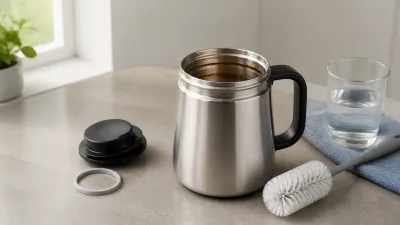
| Cup, bottle, or travel mug | Bare stainless interior, coating, gasket, lid channel, and dishwasher limits | Empty it, wash the accessible drink-contact surfaces with warm soapy water, and keep removable parts separate only when the maker permits removal |
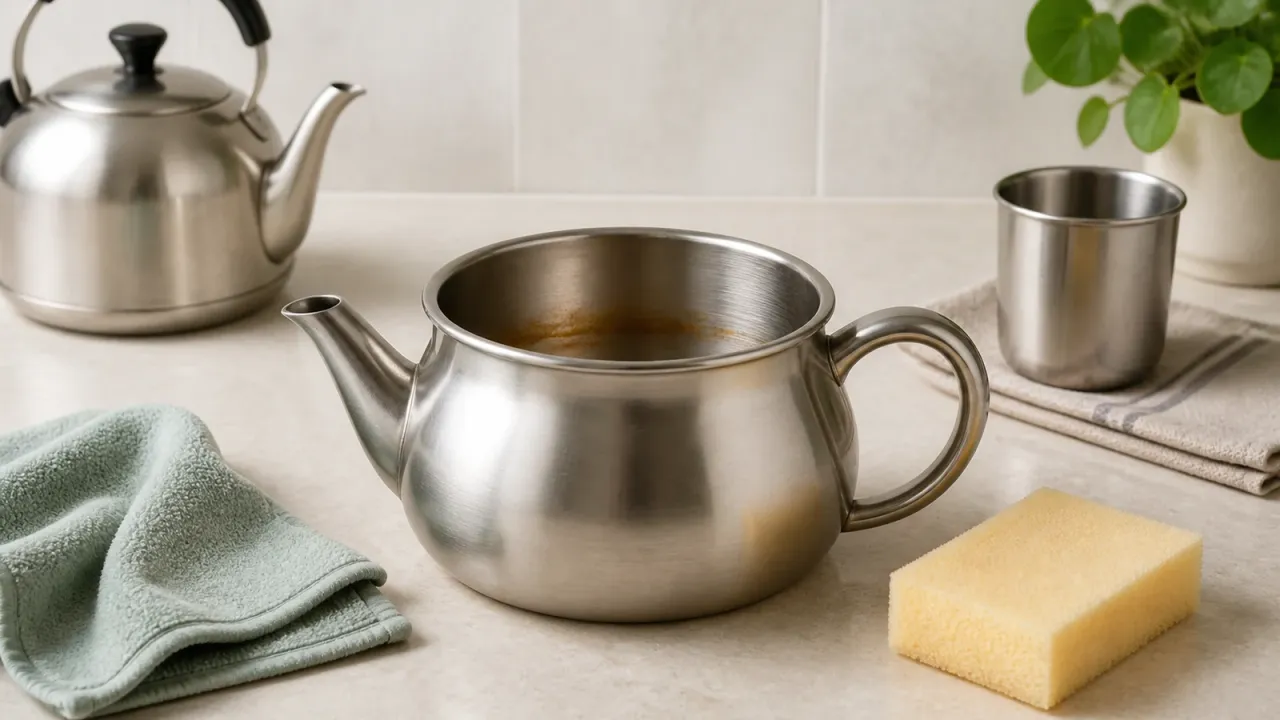
| Teapot or stovetop kettle | Interior finish, strainer, handle, lid, and whether the item can be immersed | Let it cool, wash the accessible steel gently, and keep any electrical base or cord away from water |
| Electric kettle | Exact model manual, heating plate, mesh filter, lid, and descaling instructions | Unplug it, cool it, and clean only the parts the manual identifies as washable; never immerse the base or power connection |
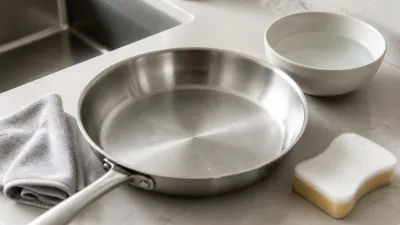
| Pan or pot | Bare stainless interior, nonstick lining, bonded layers, handles, and heat limits | Let it cool before a warm soapy wash; do not copy a cookware recipe onto a coated or unknown surface |
| Sink or appliance panel | Brushed, polished, fingerprint-resistant, black, painted, or other finish | Use the model’s finish-specific method, follow the visible grain only when directed, and keep cleaner away from gaskets, controls, and openings |
For example, YETI gives current, model-specific instructions for its Rambler drinkware, including a cleaning tablet option for stubborn coffee or tea stains and a thorough rinse. All-Clad gives its stainless cookware a warm-water and soap routine with non-abrasive tools. Whirlpool allows a warm, soapy wash along the grain on traditional appliance stainless but warns that vinegar-based cleaners, ammonia, abrasives, and oven cleaners can damage some fingerprint-resistant or black finishes. These examples show why a method for one item is not a universal permission for another.
Is it tea film, scale, rust, burnt residue, or finish damage?
Use color, location, texture, and history only as clues. A photograph or quick look cannot confirm the alloy, coating, corrosion depth, or residue, so use the mild method first and stop when the surface does not behave like a removable film.
| What you see | More consistent with | What to do next |
|---|---|---|
| Smooth tan or brown film near a liquid line, tea strainer, or cup interior | Tea or tannin residue | Wash gently, rinse, dry, and consider a maker-approved washing-soda method only if the surface and item allow it |
| White or gray chalky buildup, especially in a kettle or around a water line | Mineral scale rather than tea film | Check the exact kettle, sink, or appliance descaling instructions; do not use an acid by default |
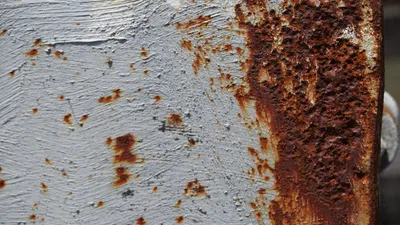
| Orange or brown roughness, pinpoint marks, or a mark beside another metal object | Transferred iron, rust staining, pitting, or another corrosion problem | Stop aggressive scrubbing and use the separate rust-removal guide or ask the maker when the surface is rough or pitted |
| Black or dark brown hard residue after heating | Burnt food or cooked-on residue | Cool the cookware first and follow its care guide; the burnt stainless steel pan guide covers that separate problem |
| Rainbow, dull, etched, scratched, peeling, or altered sheen | Heat tint, finish damage, coating damage, or physical wear | Stop escalating cleaners; more scrubbing cannot restore lost coating or metal |
| A mark that cannot be identified | Unknown residue, finish, or damage | Stay with mild soap and water, find the model instructions, and ask the maker before using an acid, alkali, or abrasive |
The phrase “tea staining” can also describe corrosion-related discoloration in the stainless steel industry, especially when grade, finish, environment, fabrication, or cleaning is unsuitable. World Stainless describes that use separately from ordinary tea residue. A smooth brown film from a drink is not proof of rust, and a rough brown mark is not proof that a tea cleaner will solve it.
What is the safest cleaning sequence?
Use a least-aggressive-first sequence: identify the surface, cool or unplug the item, wash with mild soap, rinse, dry, and inspect before escalating.
- Find the model and care guide. Look for terms such as bare stainless, polished, brushed, fingerprint-resistant, painted, powder-coated, lined, nonstick, or dishwasher safe. If the guide is missing, treat the finish and cleaner permissions as unknown.
- Empty the vessel and let hot cookware, a teapot, or a kettle cool. Unplug an electric kettle or appliance before cleaning. Never immerse a power base, cord, plug, control panel, vent, or sealed vacuum wall.
- Rinse away loose tea. Use warm water and a small amount of mild dish soap on a soft cloth, soft sponge, or maker-approved soft brush. Reach the lip, threads, strainer, and other accessible areas without forcing a gasket or valve.
- Wipe gently. On a brushed sink or appliance panel, follow the grain when the maker directs it. On a polished, coated, or grain-free finish, follow the exact care guide instead of guessing a direction. Do not use a knife, wire brush, ordinary steel wool, or hard scouring powder.
- Rinse with clear water. Remove soap and loosened residue from rims, seams, crevices, and drink-contact areas. Do not leave cleaner trapped under a lid, gasket, rack, or accessory.
- Dry completely with a clean, soft cloth and inspect the dry surface in good light. If the brown film is gone, stop. If the mark remains, decide whether it is tea residue, scale, rust, burnt residue, or finish damage before selecting the next step.
For a sink or appliance, see our guide to cleaning stainless steel appliances when the mark is on an exterior panel. For a pan, the routine in how to clean stainless steel pans is a better boundary than a drinkware soak. Do not use an external surface polish inside a cup, kettle, or pan unless that exact product and maker approve the food-contact use.
When can washing soda help with tea residue?
Washing soda can be a bounded second step for an identified, compatible stainless surface when the maker or product directions allow it. The World Stainless guide identifies washing soda, also called sodium carbonate, for tea or tannin stains and says to immerse a teapot where practical or apply the solution with a cloth or sponge, followed by a clear-water rinse and drying.
Treat that guidance as a method category, not a universal recipe. Before using it:
- Confirm that the item is bare or otherwise approved for the product. Do not assume a coated mug, painted appliance, lined pan, gasket, lid, or filter has the same limit as an uncoated teapot.
- Follow the exact product label or maker instructions for concentration, temperature, contact time, ventilation, and protective equipment. This article does not invent a measurement or overnight soak.
- Apply it only to reachable surfaces. Do not pour an alkaline solution into an electric base, sealed insulation cavity, valve, or crevice that cannot be rinsed.
- Use a soft cloth or sponge, not a harder pad to force a result. Test an inconspicuous area first when the finish instructions permit testing.
- Rinse until no cleaner film or smell remains, then dry before judging the stain.
Washing soda is not the same as baking soda. Do not swap them into a maker’s instructions or combine either one with vinegar to create a foaming “recipe.” If an acid or alkaline cleaner has been used, remove it and rinse thoroughly before changing methods. Do not try to neutralize cleaners by adding another household chemical.
When is vinegar or another acid the wrong next step?
Vinegar, citric acid, and other acids are not a default treatment for a brown tea film. They are more commonly used for mineral scale, and only the exact maker can set the safe acid, finish, concentration, and contact time for a particular item.
The World Stainless guide separates limescale from tea deposits and discusses vinegar or diluted citric acid for scale. A Breville BKE830 kettle manual gives that model its own mineral-deposit procedure, warns against alkaline cleaning agents, and separately prohibits chemicals, steel wool, and abrasive cleaners on the kettle. A different kettle, coating, filter, or base may have different limits. Use the manual or a named descaler exactly as written, without copying its instructions to an unknown kettle.
Some appliance finishes are less tolerant. Whirlpool warns that vinegar-based and citrus-based cleaners can damage certain fingerprint-resistant and black stainless surfaces. Moen’s stainless sink guide gives a model-specific vinegar treatment for hard-water scale, with a short contact time, rinsing, and drying. That is evidence for Moen’s sink instructions, not a general license to soak a cup, kettle, pan, or appliance in vinegar.
Do not use an acid on an unidentified coating or lining. Do not leave it on the surface longer than the maker or label says. Do not mix it with bleach, ammonia, a descaler, an oven cleaner, or another product. Poison Control explains that bleach mixed with an acid can produce chlorine gas, while bleach and ammonia can produce chloramine gas. Use one product at a time and rinse fully before considering another approved method.
How should you treat a food-contact surface?
Treat the inside of a cup, bottle, teapot, kettle, pan, or other drink or food vessel as a food-contact surface, and use only a method the exact maker or product label permits for that use. After cleaning, rinse away every cleaner trace, allow the item to dry fully, and do not use it if a chemical smell, slick film, peeling lining, or unknown residue remains.
| Situation | Conservative boundary |
|---|---|
| Bare stainless interior with an identified tea film | Start with mild soap and water; use a maker-approved washing-soda method only when the item can be safely reached and rinsed |
| Coated, lined, painted, or unknown interior | Do not assume acid, alkali, abrasive, dishwasher, or soak permission; find the exact care guide first |
| Kettle with an electrical base or hidden filter | Keep liquid and cleaner out of the base and inaccessible passages; follow the model descaling and filter instructions |
| Sink or appliance exterior | Use the finish-specific surface cleaner, rinse where required, and keep decorative polish away from food-contact interiors, gaskets, and controls |
| Cleaner smell, residue, pitting, or peeling after rinsing | Do not serve food or drinks from the item until the maker provides a safe next step or the affected part is replaced |
World Stainless notes that decorative stainless pastes and creams are not for food-contact articles. A product sold as a stainless steel polish is therefore not automatically suitable for the inside of a cup or pan. If the care guide does not identify food-contact use, choose the mild wash and ask the maker rather than guessing.
What should you avoid when removing tea stains?
Avoid any shortcut that assumes every stainless surface has the same finish, cleaner tolerance, or ability to be rinsed. The most important limits are these:
- Do not begin with vinegar, citric acid, washing soda, baking soda, bleach, ammonia, oven cleaner, or a commercial polish just because the word stainless appears on the item.
- Do not mix cleaning products. In particular, never combine bleach with vinegar, another acid, ammonia, or a product whose ingredients you have not checked.
- Do not use ordinary steel wool, a carbon-steel brush, a wire brush, or a gritty powder. These can scratch stainless and leave iron contamination that resembles rust.
- Do not leave an acid, alkali, chloride product, or disinfectant sitting on the surface beyond its exact instructions. A longer contact time is not a safer or more effective test.
- Do not scrub across a brushed grain to make a mark disappear faster. On a polished or coated finish, do not invent a grain direction or use a pad that the maker does not name.
- Do not heat a cleaner, boil a solution, or soak an electrical appliance unless the exact manual directs that operation.
- Do not use a cleaner designed for an exterior appliance, sink, or decorative surface inside a food or drink vessel without explicit food-contact permission.
If you want to compare cleaner categories before checking a model manual, see our guide to the best stainless steel cleaners. It is a buying guide, not a substitute for the finish, food-contact, and exposure limits in the exact care instructions.
When should you stop cleaning and ask for help?
Stop before using a stronger cleaner when the mark is rough, pitted, peeling, etched, spreading, structurally damaged, or still unexplained after a mild wash. More scrubbing cannot restore missing metal, a damaged coating, a failed seal, or an inaccessible residue path.
Ask the maker or a qualified professional when you see:
- pinholes, deep grooves, flaking, sharp edges, exposed layers, or a cavity that catches a fingernail;
- a coating, lining, paint, or finish that is lifting, blistering, or changing color;
- rust-colored marks that return quickly or appear around a joint, rack, gasket, or another metal part;
- a chemical smell or slick film that remains after repeated clear-water rinsing;
- a vessel, kettle, or appliance whose interior or electrical parts cannot be cleaned and dried safely; or
- an item with no identifiable model, finish, or cleaner instructions when the mark requires more than soap and water.
Save the model number, finish description, care-guide link, and cleaner labels. A dry photograph can document change, but it cannot identify corrosion depth or certify a surface for food contact.
If the maker recommends replacement, our stainless steel tea kettle guide compares stovetop, pour-over, and electric formats while identifying documented non-steel parts.
Frequently asked questions
Will vinegar remove tea stains from every stainless steel item?
No. Vinegar may be part of a maker-approved scale treatment, but tea film, mineral scale, rust, and finish damage are different problems. Some appliance finishes prohibit vinegar-based cleaners, while a specific sink or kettle guide may allow an acid for scale. Do not use a universal vinegar concentration or contact time.
Can baking soda replace washing soda for tea residue?
Not automatically. World Stainless names washing soda, sodium carbonate, for tea or tannin residue, while baking soda is a different material with different cleaning strength. Follow the exact product and maker instructions instead of substituting one powder or mixing powders and acids.
Does a brown mark prove that stainless steel has rusted?
No. A smooth tan film near a tea line can be residue, while orange roughness, pitting, or a mark transferred from another metal needs a different assessment. The term “tea staining” can also refer to corrosion-related discoloration. Do not diagnose the cause from color alone.
Can I use bleach to disinfect a tea-stained cup or kettle?
Do not use bleach as a default stain remover or improvise a disinfection recipe for a food-contact item. Bleach can damage stainless steel, and mixing it with acids or ammonia can release dangerous gases. Follow the exact maker and product-label directions for any separate disinfection task, then rinse as directed.
Sources and method
This article was checked against current manufacturer and stainless steel care guidance on August 22, 2026. It is a conservative research synthesis, not a hands-on stain-removal test, a corrosion diagnosis, a disinfection protocol, or a promise that one cleaner works on every stainless surface.
- World Stainless, Frequently Asked Questions: Cleaning Stainless Steel in the Home
- World Stainless, Understanding Corrosion: Tea Staining
- YETI Rambler cleaning instructions
- All-Clad stainless steel cookware care
- Breville BKE830 kettle instruction manual
- Whirlpool stainless steel surface care
- Moen stainless steel sink care guide
- Poison Control household cleaner safety