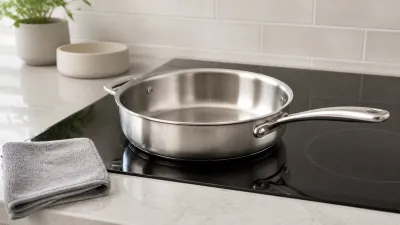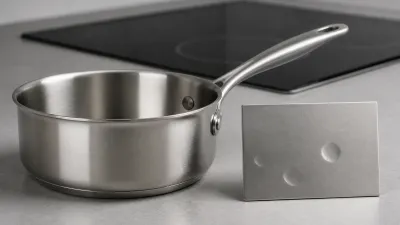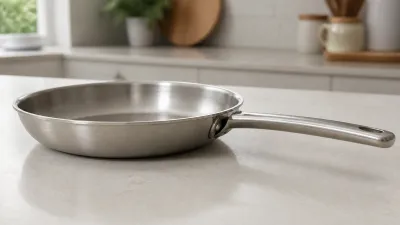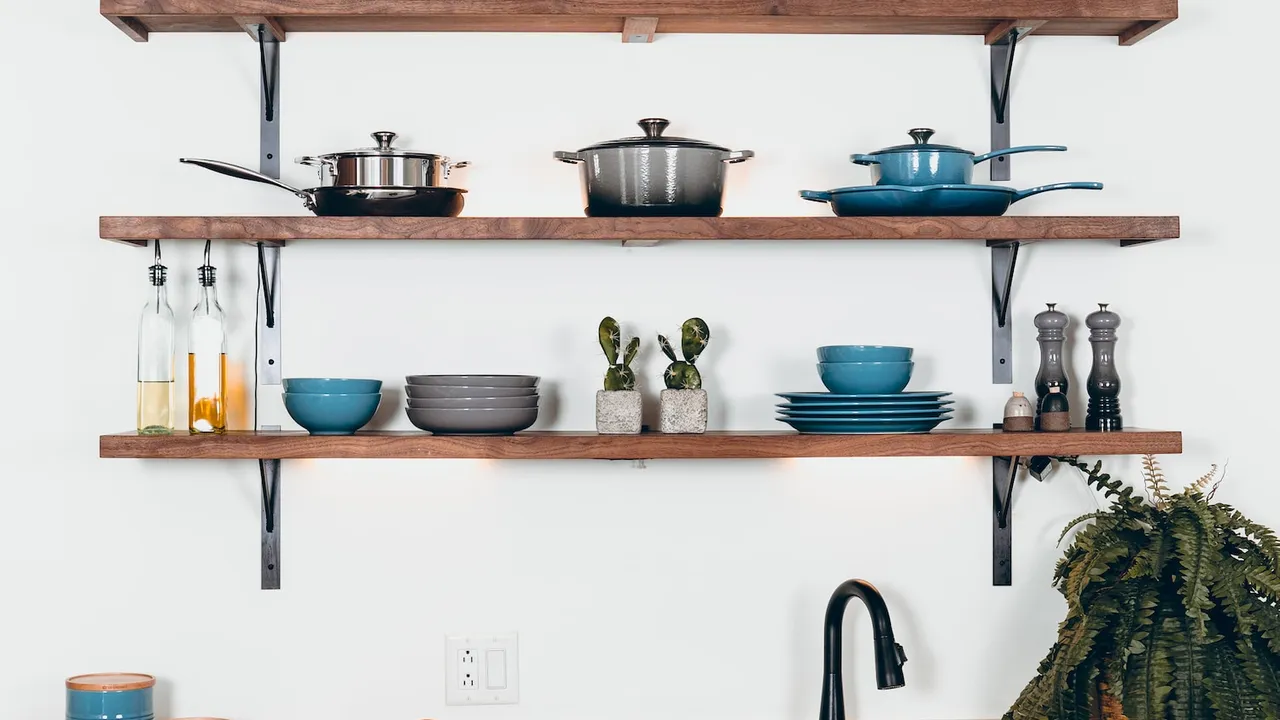
Store stainless steel pans only after they are clean and fully dry. Keep them in a stable cabinet, drawer, rack, or rated hanging system where handles do not carry stacked weight. Bare stainless cookware can usually be nested, but place a clean, dry separator between pieces when polished finishes, coated cookware, or glass lids could rub. Store clean, fully dry pans where their handles and stacked weight stay supported.
This topic remains useful because current manufacturer guidance from both Calphalon and All-Clad specifically recommends protection between stacked pans. The practical question is not whether stainless steel is fragile. It is how to prevent cosmetic wear, trapped moisture, unstable piles, and damage to other materials stored with it.
What should you do before storing a pan?
Let the pan cool before washing it. Clean away food and grease, rinse it, then dry the cooking surface, exterior, rim, rivets, and handle attachment. Trapped moisture can leave mineral spots and can affect nearby carbon steel, cast iron, or ordinary steel hardware.
Use the complete guide to cleaning stainless steel pans when a mark remains. Do not store a pan with sticky oil on its exterior because later heat can harden that film. The guide to cleaning the outside bottom of stainless steel pans separates grease from heat color.
Check that handles and lid knobs are tight according to the maker’s instructions. Storage should not hide a loose part that needs service.
Can you stack stainless steel pans?
Yes, bare stainless steel pans can usually be stacked if the stack is stable and the manufacturer does not prohibit nesting. Put the largest, heaviest piece at the bottom. Do not build a pile that tips when one pan is removed.
Place a clean, dry pan protector, cloth, or paper towel between pieces if one base could scratch a polished interior or contact a coating. Calphalon recommends a paper towel, napkin, or trivet as protection against unwanted scratches. A separator is especially important when stainless cookware shares a stack with nonstick, enamel, or glass.
Do not let a heavy base rest on the handle, lid knob, or rim of the pan below. A warped or rocking pan belongs outside the stack until the maker assesses it. Read why stainless steel pans warp before deciding whether a changed base is safe to keep.
Is hanging stainless steel cookware safe?
Hanging is suitable when the rack, hook, mounting hardware, and pan handle are rated for the load. Follow the rack maker’s installation limits and the cookware maker’s care instructions. Do not hang from a loose handle or from a lid loop unless it is designed for that purpose.
Leave enough clearance that people cannot strike a hot-looking pan at head height and that cookware does not swing into glass, walls, or other pans. A rack above a range can expose clean cookware to grease and steam, so inspect and wash it before use.
How should you store pan lids?
Store lids upright in a stable divider or flat where their rims and knobs are supported. Do not balance a glass lid on its knob or wedge it where side pressure can stress the rim. Keep each lid easy to identify so retrieving one does not require unloading an unstable stack.
If a lid nests inside a pan, use a dry separator when metal edges could rub the cooking surface. Leave airflow rather than sealing moisture inside a freshly washed vessel.
Where is the best place to store stainless steel pans?
Choose a dry location close enough to the cooking area for safe retrieval. Deep drawers with dividers make pieces accessible without lifting a full stack. Cabinets work when shelves support the total weight. Hanging systems save cabinet space when properly mounted.
Avoid a damp area beside a leaking sink, an unstable shelf, or any place where a child can pull down heavy cookware. Do not use an oven as permanent storage unless every item is removed before preheating. Handles, separators, and lids can have lower heat limits than a stainless pan body.
If storage scratches are already visible, why a stainless steel pan turns brown helps distinguish color from physical wear, while making stainless steel look new again sets reasonable expectations for cosmetic restoration.
Storage also starts with buying pieces that fit the available space. Compare dimensions and handle shapes in the guides to stainless steel cookware sets and stainless steel frying pans instead of relying only on nominal diameter.
Frequently asked questions
Do stainless steel pans need felt protectors?
Not always. Bare brushed stainless steel is durable, but a clean separator reduces cosmetic rubbing and protects polished, coated, glass, and enameled pieces in a mixed stack. Follow the care guide for the most delicate surface involved.
Should lids be left on pans in storage?
Only after both pieces are completely dry and the lid sits securely. Slight airflow helps prevent trapped moisture. Store glass lids so their rims and knobs do not carry an uneven load.
Can you store food in a stainless steel pan?
Storage advice for empty cookware is different from food storage. Ingredient acidity, time, refrigeration, the lid, and the exact vessel all matter. Move leftovers to a suitable food-storage container when the cookware maker does not specifically permit storage.