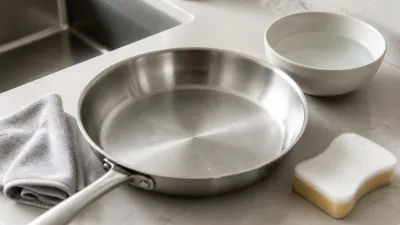
Rainbow stains on a stainless steel pan are usually heat tint, a thin surface color caused by heating. The smooth blue, gold, purple, or rainbow film is generally cosmetic. Wash the pan first, then use a diluted white-vinegar treatment if the cookware manufacturer permits it. Rinse thoroughly and dry.
Heat tint is not the same as burnt food, burnt oil, rust, or a peeling coating. Stop and contact the maker if the surface is rough, flaking, deeply pitted, or changing beneath a coating.
Why does stainless steel turn rainbow colors?
Stainless steel owes much of its corrosion resistance to a very thin chromium-rich oxide layer at the surface. Heating can change that layer’s thickness. Light reflecting from it can then produce blue, gold, purple, or rainbow colors.
The color often appears after a pan is heated empty or used at more heat than the food required. It can also become visible during ordinary use. Color alone does not show the exact temperature reached and should not be used as a thermometer.
The broad guide to why stainless steel tarnishes explains how heat tint differs from rust and other surface changes.
How do you remove rainbow stains from a stainless steel pan?
- Let the pan cool fully.
- Wash it with warm water, dish soap, and a non-scratch sponge.
- Rinse, dry, and inspect it in good light.
- Check the cookware maker’s care instructions.
- If allowed, wipe the tint with diluted white vinegar and a soft cloth.
- Rinse thoroughly and towel-dry.
All-Clad’s stainless cookware care guidance recommends white vinegar for discoloration. Use light pressure and short contact rather than soaking the pan in acid. Instructions for your exact finish take priority.
The main guide to cleaning stainless steel pans helps identify the residue before any treatment. That matters because an acidic wipe suited to tint will not remove a thick burnt-food layer.
Can a cookware cleanser remove heat tint?
A cookware-approved cleanser may remove persistent tint on compatible bare stainless steel, but it is a more abrasive option than a diluted-vinegar wipe. Use it only when the pan maker and cleanser label permit it. Follow the label’s directions for contact time, protective equipment, ventilation, and rinsing.
The stainless steel cleaner guide separates cookware cleansers from appliance polishes. Do not put a product intended only for a refrigerator exterior on a food-contact surface.
Never combine cleaners. Poison Control warns that mixing bleach with acids or ammonia can release dangerous gases. Rinse the pan completely before changing from one compatible method to another.
Are rainbow stains the same as burnt oil?
No. Heat tint is smooth and changes color with viewing angle. Burnt or polymerized oil is usually amber or brown and may feel sticky, slick, or varnish-like. Charred food is raised and rough. If you are not sure which one you have, compare them in why a stainless steel pan turns brown.
Use the focused guide to removing burnt oil from stainless steel for a greasy film. For thick charred residue, follow the steps for cleaning a burnt stainless steel pan.
White chalky dots point more often to water minerals. The guide to white spots on stainless steel pans explains how to distinguish deposits from physical pitting.
Do rainbow stains make a stainless steel pan unsafe?
Ordinary smooth heat tint is generally an appearance change, not evidence that a bare stainless steel pan has failed. Wash the pan before its next use and follow the manufacturer’s instructions. A visual description cannot rule on an unknown coating, exposed bonded layer, or structural defect.
Stop using the pan if a food-contact coating is peeling, bonded layers are separating, the base is badly warped, or the handle is unstable. Cleaning will not repair those failures.
How can you prevent rainbow discoloration?
Use the lowest heat that performs the cooking task and avoid leaving an empty pan unattended on a hot burner. Stainless cookware often retains and spreads more heat than a cook expects, especially when it has a thick conductive core.
Prepare ingredients before heating, add cooking fat at the appropriate point, and lower the burner if oil smokes. The guide to keeping stainless steel pans from sticking explains how controlled preheating and release timing work without relying on maximum heat.
Wash residue from a cool pan before reheating it. Repeatedly baking a thin oil layer can create a brown polymerized film that needs a different cleaning method.
Frequently asked questions
Will rainbow stains go away on their own?
They may become less noticeable with later washing, but there is no need to wait. If appearance matters, use the manufacturer-approved cleaning method. Leaving the tint alone is also reasonable when the surface is smooth, clean, and otherwise sound.
Can you prevent heat tint by adding cold water to a hot pan?
No. Sudden cooling can warp cookware and may create a burn hazard from steam. Let the pan cool naturally before washing it with warm water.
Does rainbow color prove that a pan overheated?
It shows that heating changed the visible surface film, but it does not reveal a precise temperature or prove structural damage. Inspect the full pan and follow its care guide. A rocking base, loose handle, or separated layer is more important than color alone.
Related guides
Continue with Use Bar Keepers Friend on Stainless Steel?.