A stainless steel bicycle brake cable is the better buy for most riders. Stainless inner cables resist rust and run smoother than galvanized ones, and polished “slick” stainless or polymer-coated inners cut friction further. Galvanized cable is fine on a budget bike that stays dry and gets regular lever and housing checks.
This page covers material choice only. It compares the four common inner cable materials, explains how brake and shift cables differ, and shows where the housing liner fits in. It is one part of our guide to stainless steel bike parts.
What are the inner cable materials?
Four materials cover nearly every inner cable on the shelf.
| Material | Rust resistance | Friction | Typical use |
|---|---|---|---|
| Galvanized steel | Good until the zinc wears off | Moderate | Budget and OEM cables |
| Stainless steel | High | Lower | Standard upgrade for brakes and shifters |
| Polished “slick” stainless | High | Lowest uncoated | Performance brake and shift cables |
| Polymer-coated | High with stainless core | Low | Smooth action, sold with matched housing |
Galvanized cable is carbon steel with a zinc layer. The zinc protects the wire until bending and rubbing wear it through at the lever, the stops, and the housing ends. Rust then starts at those points, and the cable gets stiff and gritty.
Stainless steel carries its corrosion resistance through the whole wire because it contains chromium, so a scratch does not open a path to bare steel. Our does stainless steel rust guide explains why.
Polished stainless goes a step further. Jagwire describes its Pro Polished line as uncoated stainless steel that gets extra processing to remove imperfections. Because nothing is bonded to the surface, the cable has no coating to flake off and works with performance housings and lubricants. Coated cables take the opposite route. A polymer layer lowers friction, but it can wear at the places where the cable bends hardest.
Should you pick stainless or galvanized?
Pick stainless if the bike gets rained on, locked up outdoors, or ridden through the year. Galvanized costs less and works well for a bike kept inside and ridden in dry weather. The price gap on a single cable is small compared with the labor to replace a seized one, so most riders should pay it.
Stainless is not immune to every problem. Dirt, water and grit inside the housing still slow a cable down, and a rusted ferrule or a kinked housing will bind no matter what the inner wire is made of. If your cables stiffen in cold weather, that is a separate issue with its own causes, and the sister site covers it in how to stop bike cables from freezing.
How do brake and shift cables differ?
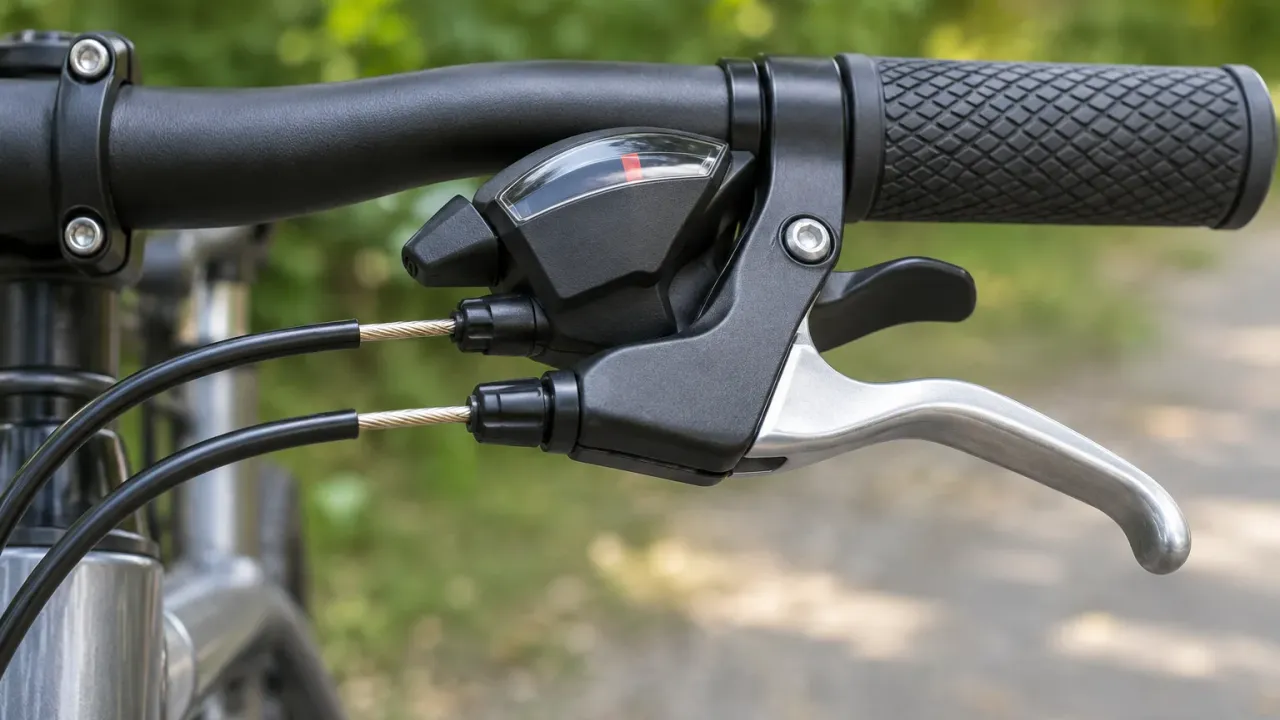
Brake and shift cables are not interchangeable. They differ in diameter, in head shape, and in the job they do.
- Brake inner cables are thicker, usually 1.5 to 1.6 mm, because they carry the full braking pull. Jagwire sells its Pro Polished brake cable in 1.5 mm, and Shimano brake inners are commonly listed at 1.6 mm.
- Shift inner cables are thinner, about 1.1 to 1.2 mm. Jagwire’s polished shift cable is listed at 1.1 mm.
- Head shapes vary by lever. Road brake levers, mountain brake levers and the shifters from Shimano, SRAM and Campagnolo do not all use the same head, so check your lever before you order.
- Some brake cables come double-ended, with a head on each end, so one cable fits more than one lever style. You cut off the end you do not need.
A shift cable is a precision part. Even small friction changes how crisply the derailleur moves, so smooth stainless matters most here. A brake cable carries more force, so wear and rust show up as a spongy or sticky lever.
What does the housing liner do?
The housing liner sets how well any inner cable slides. Most quality housing has a low-friction liner inside a flexible outer shell, and the cable runs against that liner for its whole length.
A smooth stainless or polished cable in a worn or dirty liner will still feel rough. A new cable in a good liner is where the gain shows up. Polymer-coated cables are usually sold paired with a matching liner, so follow the maker’s lubrication advice for that combination. Replace housing and inner cable together when you can, because a new inner in old housing rarely feels new.
Which cables are worth looking at?
These are examples of what you will find, not a ranking. We did not test them.
- Shimano stainless brake inners for road and mountain levers
- SRAM stainless shift inners
- Jagwire Pro Polished Slick Stainless brake and shift cables
- Origin8 stainless slick cables
Check the head type, diameter and length against your lever and frame before buying. Many riders also pair a stainless cable with stainless fixings, and our bike parts guide lists where stainless pays off elsewhere on a bike. Wheels come next, and the stainless steel bike spokes guide covers the other place where stainless is nearly standard.
For a quick look at which alloys sit behind the word “stainless”, see the stainless steel grades chart.