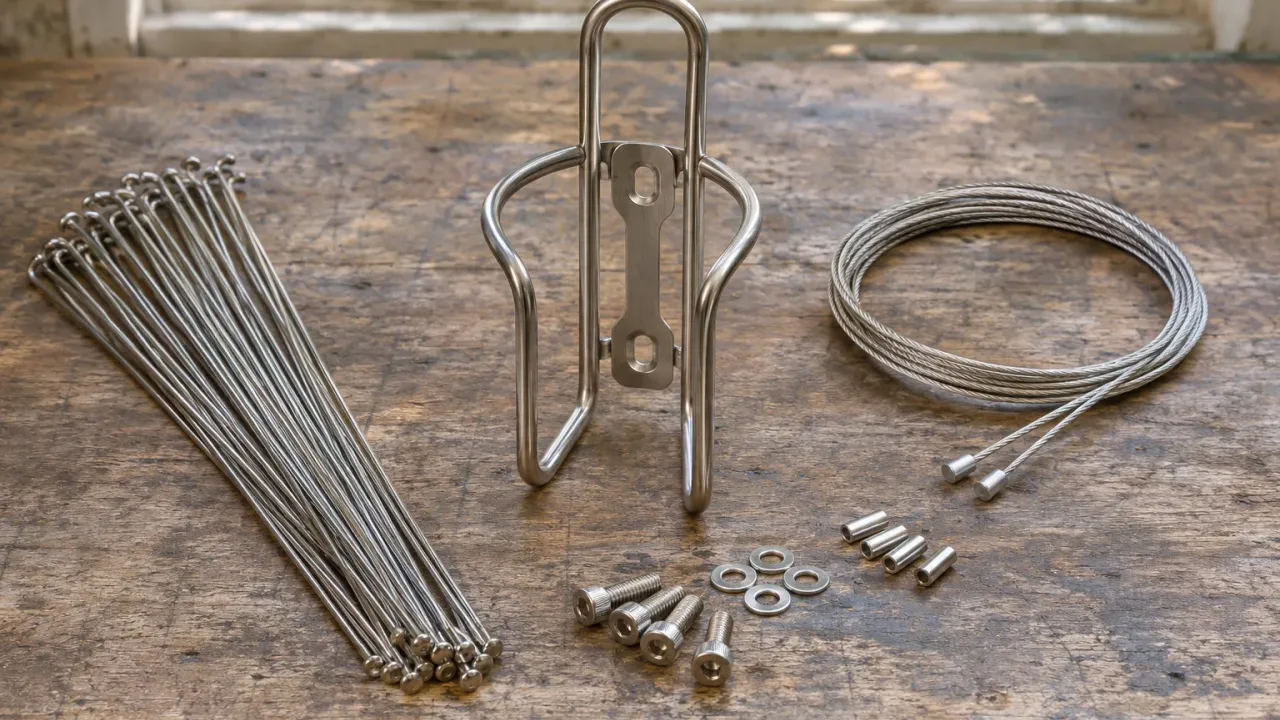
Stainless steel is worth buying for bike parts where rust is the way the part fails and a few extra grams do not matter. That covers spokes, cables, bottle cages, small bolts and hardware, and water bottles. It rarely pays off for chains, cassettes and cogs on geared bikes, or for most frames.
This page is a material guide, not a shopping list. It goes part by part and says what stainless buys you, what it costs you, and when to skip it. It is a research-based review of manufacturer and industry sources, not a hands-on test.
Which bike parts are worth buying in stainless steel?
| Part | Stainless worth it? | Reason |
|---|---|---|
| Spokes | Yes | Most quality spokes are already stainless |
| Cables | Yes | Inner wires rust in wet weather and stainless resists it |
| Bottle cages | Yes | Exposed to sweat, rain and road spray, and weight is minor |
| Bolts and hardware | Yes, with care | Cheap fix for rusty bolt heads, but watch contact with aluminum |
| Water bottles | Yes | Steel bottles do not rust through or hold flavors |
| Chains | Rarely | Wear and friction matter more than rust |
| Cassettes and cogs | Rarely | Hardened steel wears better |
| Frames | Sometimes | Good for corrosion, costly and heavy for most riders |
Spokes
Stainless is the default spoke material, so the question is usually which stainless spoke, not whether to buy one. DT Swiss makes its spokes from 18/10 stainless steel spoke wire, and Sapim describes its Aero spokes as high-tensile 18/8 stainless steel. Spokes sit in the weather all year, have thin sections, and a rusted spoke is a weak one, so corrosion resistance pays off here.
Plated or galvanized carbon-steel spokes still exist on budget wheels. They are cheaper and fine for a bike that lives indoors, but they are the spokes that show rust at the nipple first. Our guide to stainless steel bike spokes covers gauge, butting, and nipple choices.
Cables
Stainless inner wires are worth buying for brake and shift cables, because a cable end sits inside housing where water collects and rust is hard to see. Shimano sells stainless (SUS) brake inner cables for both road and mountain levers, and retailers list them as resistant to rust from moisture, mud and washing.
Friction is the other factor, since a polished or coated inner wire is made to glide better than a plain one. The full comparison is in our stainless steel bike cables page.
Water bottles
Stainless bottles suit a bike because they do not rust through and do not hold flavors. The catch is fit. A steel bottle is heavier and often wider than a plastic one, so it has to match the cage. Our roundup of the best stainless steel bike water bottles compares sizes and cage fit.
For general bottle questions, see our guide to the best stainless steel water bottles.
Bottle cages
A stainless cage is worth it if you want a cage that will not corrode or crack at the arms, and you do not mind a few extra grams. Cages are bent from wire or strip, so stainless holds its shape, takes repeated bottle changes, and does not pit from sweat and road salt. A racer counting grams might pick carbon or aluminum instead, but a commuter or touring rider rarely needs to. Our picks are in the best stainless steel bottle cages.
Bolts and small hardware
Stainless bolts are an easy upgrade for rusty bottle cage bolts, fender bolts, rack bolts and similar fittings. The usual choice is 304 (also called 18-8) for dry-ish places and 316 where salt is a factor. Our 304 vs 316 comparison explains the difference, and the grades chart shows where each fits.
Do not use stainless for everything. High-load bolts such as stem, handlebar and crank bolts have torque and strength specs set by the part maker, and the maker’s bolt is what to use. A stainless replacement is only right if it matches that spec.
Stainless bolts in aluminum
Stainless against aluminum can cause galvanic corrosion when moisture sits in the joint. The Specialty Steel Industry of North America says aluminum becomes anodic and corrodes faster when it is coupled to stainless in a damp setting, and it names electrical insulation and inert washers as the best fixes. Because bikes are mostly aluminum, the same advice applies to a stainless bolt in an aluminum frame, stem or seatpost clamp. A film of grease or anti-seize on the threads keeps water out of the joint. That last tip is our suggestion rather than a quote from that source.
Titanium or stainless bolts
Titanium bolts save grams and cost more. Stainless bolts resist rust just as well for most riding, so unless you are counting weight, stainless is the sensible value pick.
Chains
Stainless is rarely the right choice for a chain. A chain fails by wear, where pins and plates stretch, far more often than by rust. Hardened carbon and alloy steel resist that wear better, and most chains get a plating or coating for rust. If rust is the problem, the fix is keeping the chain clean and lubed. For salty winter conditions, see this winter bike chain care guide.
Stainless chains do exist, but they are a niche pick for bikes ridden in salt or kept outdoors. We do not tell most riders to pay extra for one.
Cassettes and cogs
Cogs and cassettes see the highest loads and the most wear on a geared bike. Makers use hardened steel because it holds its tooth shape. Some cogs and chainrings are made from martensitic stainless, a hardenable type, but a stainless label alone does not make a cog last longer. Match the material to the maker’s spec and to your chain.
Frames
Stainless frames resist corrosion and can be made with thin tubing that rides well, but they are expensive and often heavier than chromoly or titanium. Most riders do not need one. If you do want one, see our comparison of stainless steel, chromoly and titanium bike frames.
Racks, baskets and fenders
Stainless racks, baskets and fenders make sense on a bike that stays outdoors or gets ridden through winter. These parts are static and weight matters little, so corrosion resistance is the main thing. Fit is the usual issue, so check the mounting points on your frame first. If you are keeping plain steel parts from rusting instead, this guide to preventing bike rust in winter covers the habits.
Does stainless steel rust on a bike?
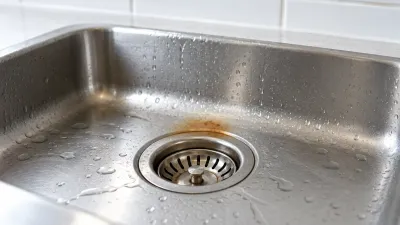
Yes, in some conditions. Stainless resists rust but does not make a part rust-proof, and salt, trapped water and tight gaps can still cause staining or pitting. Our guide on whether stainless steel rusts explains why, and crevice corrosion is the usual culprit in tight joints such as bolt threads and under washers.
One more point. Some stainless is magnetic, so a magnet does not tell you the part is not stainless. See is stainless steel magnetic for the details.
Summary
Buy stainless where parts are thin, wet and low in weight, such as spokes, cables, cages, bottles and small hardware. Skip it where wear or strength sets the limit, such as chains, cogs and structural fasteners. If you mix stainless with aluminum, use grease or anti-seize at the joint.