Yes, stainless steel can rust. It is rust-resistant, not rust-proof. Ordinary carbon steel rusts in damp air, while stainless steel normally stays clean because a thin, self-repairing surface layer protects the metal underneath. Salt, bleach, iron particles, tight crevices, scratches, and low-alloy grades can all break that layer down.
The short version for most households is that a rust-colored mark on stainless steel is often iron that landed on the surface, not the stainless itself failing. A rough, spreading, or returning mark is a different matter and deserves a closer look.
Short answer
Stainless steel rusts less than regular steel because it contains chromium, and it rusts more easily when its grade, its surroundings, or its care work against it.
- Good conditions (a clean, dry, well-rinsed surface of a suitable grade) keep stainless steel looking new for decades.
- Bad conditions (salt, chlorine bleach, trapped moisture, steel wool, a low grade) can produce rust-colored marks, pits, or stains.
- Many rust marks on stainless are surface contamination and wipe off. Some are real corrosion and do not.
Why does stainless steel resist rust?
Stainless steel resists rust because chromium in the alloy reacts with oxygen to form a very thin chromium-rich oxide film on the surface. Researchers describe this passive film as only a few nanometers thick, and it is not a paint or coating applied over the metal. Our guide to what stainless steel passivation means covers the film in more detail.
The film does two useful things. It slows the chemical reactions that turn iron into rust, and it repairs itself. When a clean spot is scratched, fresh chromium at the surface meets oxygen in the air and the film reforms. That repair is why a scratched stainless sink does not start rusting the next day.
The repair has limits. It needs a clean surface and a supply of oxygen. Chlorides, dirt, deposits, and tight spaces that starve the metal of air can stop the film from healing, and that is where rust starts.
What makes stainless steel rust?
Stainless steel rusts when something breaks the passive film faster than it can repair itself. Five causes account for most of what people see at home.
Chlorides and salt
Chlorides are the best-known enemy of the film. Table salt, road salt, sea air, pool chemicals, and many disinfectants carry them. Chlorides can break through the film at tiny points and start pitting corrosion, which leaves small cavities in the metal. A pit is metal loss, so cleaning removes the stain around it but cannot fill it in. Our article on what causes pitting in stainless steel cookware explains how salt, heat, and deposits combine.
Bleach
Household bleach contains hypochlorite, a chlorine compound that attacks the film. A short, rinsed contact may do no visible harm, but leaving bleach on stainless steel is a common way to cause pitting. See whether you can use bleach on stainless steel before you reach for it.
Free-iron contamination
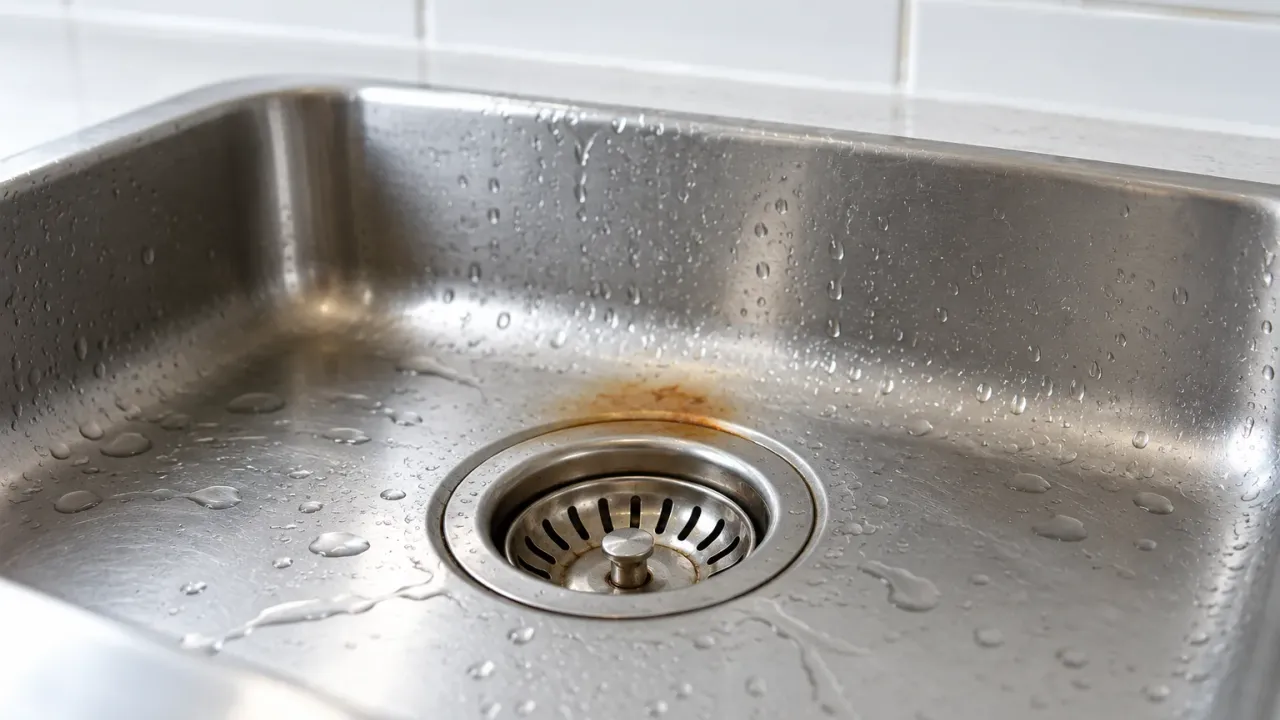
Free iron is loose iron or carbon-steel dust sitting on the surface of the stainless. It comes from steel wool, wire brushes, carbon-steel pans and knives, cast iron left wet on a sink, and grinding dust from nearby work. The free iron rusts, and the orange stain looks like the stainless is rusting. Often the stainless underneath is fine. The risk is that iron embedded in the surface can hold moisture against the film and start real corrosion, so remove the source and clean the spot early.
Crevices and trapped moisture
Where two surfaces meet closely, such as under a gasket, a washer, a rack foot, or a layer of residue, water gets in and oxygen does not. Without oxygen the film cannot repair itself, and chlorides can concentrate in the gap. The result is crevice corrosion, which can run hidden while the open surface looks fine. We explain the mechanism in what crevice corrosion is on stainless steel.
Lower-alloy grades
Stainless steel is a family of alloys, and they do not resist rust equally. The next section compares the common ones.
Which stainless steel grades rust least?
Grades with more corrosion-fighting alloying elements rust least, so 316 beats 304 in salty settings and both beat 430. The table summarizes the three grades you meet most often.
| Grade | Type | What sets it apart | Rust resistance in practice |
|---|---|---|---|
| 304 | Austenitic chromium-nickel | Common in sinks, cookware, and appliances | Very good indoors and in fresh water, more exposed to salt and chlorides |
| 316 | Austenitic chromium-nickel with molybdenum | Molybdenum improves resistance to pitting and crevice corrosion | Best of the three for coastal, pool, and chloride-heavy conditions |
| 430 | Ferritic chromium, little or no nickel | Magnetic and lower in cost | Fine in mild indoor use, more vulnerable to salt, acids, and persistent moisture |
Our 304 versus 316 comparison explains why molybdenum matters, and the 304 versus 430 comparison covers the ferritic option. A grade number is a good starting point, not a guarantee. Fabrication, surface finish, welds, and care change the result, and no grade is immune.
Is a rust mark surface rust or real corrosion?
A smooth orange or brown film that follows the shape of an object, or that wipes off, is usually surface contamination. A rough patch, tiny holes, a groove, or a mark that keeps coming back after cleaning points to real corrosion.
- Smooth film, often under a pan, rack, or tool, is most likely transferred iron.
- White or gray crust without orange color is more likely mineral scale or soap, not rust.
- Brown discoloration with no roughness, often in coastal or outdoor spots, is sometimes called tea staining. It is mostly a surface change and often cleans off, but it tells you chlorides are reaching the metal.
- Pinprick holes, flaking, or a rough spreading area suggests pitting or crevice corrosion.
A photograph cannot settle which one you have. If a smooth mark lifts with gentle cleaning, it was almost certainly on the surface. If it returns, treat it as a sign of an ongoing cause.
How do you prevent rust on stainless steel?
Keep the surface clean, rinsed, and dry, keep iron and chlorides off it, and match the grade to the setting.
- Rinse off salt, food residue, and cleaners, then dry the surface when it will stay wet otherwise.
- Keep carbon steel, cast iron, steel wool, and wire brushes away from stainless, and do not leave wet steel items resting on it.
- Avoid chlorine bleach and cleaners that list chloride or hydrochloric acid, and never mix cleaners.
- Clean regularly so deposits and film do not build a hidden crevice, using a method the maker permits. Our roundup of stainless steel cleaners lists options.
- Choose 316 or a higher-resistance grade for coastal, pool, and heavy-salt uses.
- Let air reach joints, gaskets, and the undersides of racks or mats so they can dry.
What should you do when stainless steel rusts?
Wash the spot with mild soap and water, remove the source of any iron, and use a maker-approved method if the mark stays. Stop scrubbing if the surface is rough or pitted.
Start gently, because abrasive pads and steel wool can scratch the finish and leave more iron behind. Our step-by-step guide on how to remove rust from stainless steel covers the sequence and the limits of each treatment, and it explains when to stop and ask the maker. A pit in food-contact cookware or a structural fitting is a product-condition question, not a stain.
Where does stainless steel rust most often?
It rusts most where water, chlorides, and iron meet, which is why sinks, showers, and cookware generate most of the questions.
- In showers and bathrooms, steam, soap, and cleaning products create damp, chloride-bearing conditions. See whether stainless steel rusts in the shower.
- In kitchen sinks, wet racks, steel wool, and standing residue cause most marks. Read why a stainless sink rusts.
- In cookware, salt added to cold water, long soaks, and bleach are the usual culprits, as the pitting guide above explains.
- For anything wet most of the time, is stainless steel waterproof explains why constant water, salt, and chlorine change the risk.
Frequently asked questions
Can stainless steel rust in water?
Yes, but fresh water alone rarely harms a clean stainless surface. Salt water, chlorinated water, and water standing in a crevice are the risky cases, because chlorides can break the passive film. Dry the item and rinse off salt when it will not be in use.
Does 304 stainless steel rust?
Yes. Grade 304 resists rust well indoors, but salt, bleach, iron contamination, and tight crevices can cause rust marks or pitting on it. Grade 316 resists chlorides better, although neither is immune.
Is rusty stainless steel safe?
It depends on what the mark is and where it sits. A small surface stain from transferred iron on a non-food surface is mostly cosmetic. A pitted, flaking, or hard-to-clean food-contact surface should go back to the maker for a decision before further use. Our guide on whether stainless steel cookware is safe explains why the finished product matters more than the label.
Does magnetic stainless steel rust more?
Not by itself. Magnetism comes from the crystal structure, not from corrosion resistance. Grade 430 is magnetic and generally less resistant than 304, but duplex stainless steel is magnetic and very corrosion-resistant, and 304 can become slightly magnetic after forming while resisting rust as before. Read why some stainless steel is magnetic for the details.
Sources and method
This is a research-based explainer, not a hands-on corrosion test. The passive-film and grade statements follow World Stainless corrosion guidance, the Australian Stainless Steel Development Association, and the British Stainless Steel Association on iron contamination, and they agree with the related guides linked above.