Stainless steel passivation is the natural formation of a very thin, chromium-rich passive film on a clean surface. In a manufacturing or repair specification, passivation can also mean a controlled chemical treatment that removes certain surface contaminants and promotes that film. It is not paint, a sealant, or a promise that an item cannot corrode.
The word matters because it is used for several different things. ASTM A380/A380M-25 says passivation can mean spontaneous formation of an inactive surface in an oxygen-containing environment, removal of exogenous iron, or a chemical treatment intended to enhance the passive film. The standard recommends defining which meaning a project requires.
What is the stainless steel passive film?
The stainless steel passive film is a very thin surface layer enriched in chromium compounds that slows the electrochemical reactions behind corrosion. Research describes stainless passive films as only a few nanometers thick and enriched in chromium oxide or chromium oxide-hydroxide species, not as a visible coating applied over the metal. See the open-access study in npj Materials Degradation.
Chromium in the alloy reacts preferentially at the surface when a clean area meets air or another oxygen-containing environment. The resulting chromium-rich oxide and hydroxide chemistry forms the passive state. The exact structure depends on the alloy, surface history, and environment, so a single formula or universal thickness does not describe every stainless surface.
When a small area is scratched or freshly machined, the film can reform if the surface is clean and the surroundings provide suitable oxygen and electrochemical conditions. That is why stainless steel is often described as self-passivating. The World Stainless corrosion guidance also makes the important companion point: grade and environment still control performance. Chlorides, deposits, tight crevices, contamination, heat, and surface damage can create conditions in which passivity breaks down.
Is natural passivity the same as chemical passivation?
Natural passivity and a specified chemical passivation treatment use the same basic idea, but they are not the same household task. A clean stainless surface normally develops its passive film without a special bath. A treatment is an extra, controlled process used when a drawing, purchase specification, fabrication history, or contamination risk calls for documented surface preparation.
ASTM A967/A967M-25 covers chemical passivation treatments for stainless steel parts. Its public scope describes nitric-acid, citric-acid, and electrochemical treatment options, along with thorough rinsing and lot-level tests. It also says the specification does not choose one grade, treatment, or acceptance criterion for every application. That is why a generic claim that a household item is “passivated” cannot be confirmed from its shine or a photograph.
How do passivation, cleaning, pickling, and electropolishing differ?
These terms describe different jobs. The short comparison is:
| Process | Main job | What it does not prove or repair |
|---|---|---|
| Natural passivity | Lets a clean stainless surface form a chromium-rich passive film in a suitable oxygen-containing environment | It does not make stainless steel corrosion-proof or remove an existing pit |
| Ordinary cleaning | Removes dirt, grease, soap film, food residue, deposits, and some loose contamination with an approved cleaner | It does not certify that embedded free iron is gone or restore a missing layer of metal |
| Pickling or descaling | Chemically removes scale and, in pickling, a thin metal layer such as a chromium-depleted layer beneath weld heat tint | It is not routine household cleaning and can change the surface or cause damage if uncontrolled |
| Chemical passivation | Treats a chemically clean surface to remove targeted contaminants such as free iron and accelerate passive-film formation | It does not fill pits, repair cracks, rebuild a coating, or approve a product for food contact |
| Electropolishing | Uses an electrochemical process to remove metal and can leave a smoother, brighter surface | It is not simply a synonym for chemical passivation and still needs a grade- and process-specific specification |
World Stainless and Euro Inox guidance separates cleaning, pickling, and passivation. ASSDA’s technical explanation also distinguishes electropolishing as a metal-removal process. The details vary by alloy, surface finish, contamination, and the service the part must withstand.
Why does free iron contamination matter?
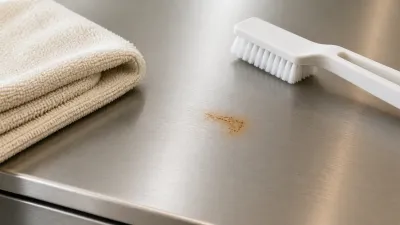
Free iron is iron or iron oxide transferred onto the stainless surface from carbon-steel tools, grinding debris, supports, fasteners, or mixed-metal handling. It can rust as a brown or orange mark even when the stainless substrate is still intact. The stain is real, but it is not automatically proof that the stainless itself has pitted.
The Nickel Institute’s cleaning and descaling guidance describes the need to remove free-iron contamination as well as oils, scale, and other residues. The World Stainless and Euro Inox guide notes that contamination from ordinary carbon steel is a common source of rust staining and that testing may be needed to distinguish surface iron from other problems.
Cleaning can be enough when the mark is loose soil or a superficial deposit on an intact, approved surface. It is a different situation when iron is embedded, a mark returns, or the surface is rough. A qualified fabricator or finishing service may specify decontamination, pickling, passivation, mechanical finishing, or another treatment after identifying the alloy and the actual defect.
When is ordinary household cleaning enough?
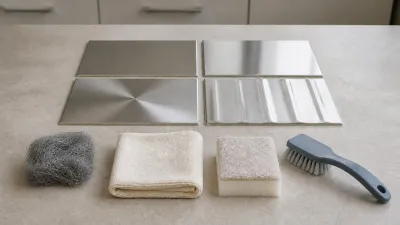
Ordinary cleaning is usually the right first step for an intact household item with fingerprints, soap film, mineral residue, food residue, or a light surface stain. Follow the item’s care instructions, use a cleaner and nonmetallic tool approved for its finish, rinse away residue, and dry the surface. The World Stainless cleaning guidance recommends starting with basic care and matching the method to the type of soil.
Cleaning helps by removing things that block contact between the surface and its environment. It can expose an intact stainless surface so natural passivity can develop again. It does not mean that you have performed an ASTM passivation treatment, and it does not establish the alloy or the condition of a hidden joint.
Do not use ordinary steel wool or a carbon-steel brush on stainless steel. Do not mix acids, bleach, ammonia, or other cleaners. Never treat a cleaner recipe from a different product category as a universal method for a coated appliance, plated part, food-contact item, gasket, or adhesive assembly. The maker’s instructions control.
For the larger exposure question, see our guide explaining that stainless steel is water-resistant rather than universally waterproof. If a rust-colored mark appeared after shower exposure, does stainless steel rust in the shower? covers deposits, chlorides, crevices, and transferred iron.
When will cleaning not solve the problem?
Cleaning cannot put metal back into a pit, close a crack, restore a separated bonded layer, or rebuild a damaged coating. It also cannot certify that a product is suitable for a particular food, temperature, pressure, chemical, or medical use.
Separate a cosmetic stain from a condition that needs inspection:
- A smooth rust-colored smear may be transferred iron or residue. It can sometimes be removed without changing an intact substrate.
- A rough cavity, repeated orange spot, or dark opening may indicate pitting or crevice corrosion. Scrubbing harder can hide the evidence without stopping the attack.
- A blue, straw, or dark weld area may be heat tint or scale. Pickling or another qualified surface treatment may be specified, but a household polish is not equivalent.
- A peeling film, crack, exposed bonded core, separated layer, or loose joint is a product condition, not a passivation problem.
Stop aggressive cleaning and ask the manufacturer or a qualified stainless specialist to inspect the item when pits, recurring rust, cracks, separated layers, or coating damage are present. For a food-contact item, follow the product’s warranty and replacement guidance. Our guide to stainless steel cookware safety explains why a grade label or clean appearance alone does not establish the safety of a finished pan.
Why does chemical passivation belong to a qualified process?
Chemical passivation belongs to a qualified process because the result depends on more than the name of the acid. The operator must match the chemistry, concentration, and process to the alloy, surface finish, contamination, geometry, temperature, exposure time, rinsing, any neutralization step, verification method, waste handling, and occupational controls.
Those variables are not interchangeable recipes. A treatment that is appropriate for one stainless grade or fabricated part can stain, etch, pit, or leave residue on another. ASTM A967/A967M-25 specifically says its choices and acceptance criteria are not a universal application recommendation. ASTM A380/A380M-25 calls out precautions for cleaning, rinsing, iron contamination, safety, and disposal.
Do not make a nitric, citric, hydrofluoric, or other acid bath at home. Do not use pickling paste as ordinary stainless cleaner. Do not mix acids with bleach, ammonia, or another cleaner. These treatments can injure people, damage an item, create hazardous residues, and cause corrosion if the surface contact and rinsing are wrong. A qualified facility can select a documented process and handle the required controls.
How is industrial passivation checked?
Industrial passivation is checked against a defined specification, not by appearance alone. ASTM A967 lists qualitative options such as water immersion, high humidity, salt spray, copper sulfate, potassium ferricyanide-nitric acid, damp cloth, and boiling-water immersion tests, along with a free-iron test. ASTM A380/A380M-25 also discusses visual, wipe, water-break, humidity, and other cleanliness checks.
The exact test, sample, acceptance limit, and lot requirement depend on the contract and application. A visual check can find obvious etching, pitting, frosting, scale, or residue, but it cannot prove every microscopic contaminant is gone. A test result can show that a defined process met a defined criterion; it does not turn an unknown consumer item into a certified food-contact or corrosion-proof product.
Does passivation make cookware or a household product food-safe?
No. Passivation can be one part of a controlled surface process, but it is not a food-contact certificate. Food-contact suitability depends on the complete product, the alloy and finish that touch food, coatings, bonded layers, seals, intended use, and the manufacturer’s documentation. A clean-looking surface or a treatment name is not enough.
Do not use a pitted pan, a peeling food-contact coating, a cracked vessel, or a product with a separating layer until the manufacturer gives a clear inspection or replacement decision. For the alloy question, our 304 versus 316 stainless steel guide explains how grade and chloride exposure affect corrosion resistance without treating either grade as a universal approval.
Frequently asked questions
Does every new stainless steel item need chemical passivation?
No. A clean stainless surface normally forms its passive film naturally in an oxygen-containing environment. Some machined, welded, contaminated, or tightly configured parts may receive a specified treatment because their fabrication history or service requires documented cleaning and corrosion performance.
Is passivation the same as cleaning stainless steel?
No. Cleaning removes soil, grease, residue, and deposits. Passivation is a defined natural or treatment-related surface condition. Cleaning may expose an intact surface so it can passivate naturally, but household cleaning is not proof that a chemical passivation specification was met.
Can passivation remove rust from stainless steel?
It depends on what the mark is. A treatment may remove free-iron contamination or other surface residues, while pickling may address weld heat tint and a chromium-depleted surface layer. Neither process fills pits, repairs cracks, restores a failed coating, or guarantees that an unknown product is sound.
Can I passivate stainless steel at home?
Do not attempt an acid passivation or pickling process at home. Use the manufacturer’s approved household cleaning method for ordinary residue. If an intact part has recurring contamination, pitting, heat tint, or a critical service requirement, ask a qualified stainless finisher or the manufacturer about the correct process.
Is passivated stainless steel corrosion-proof?
No. Passivation improves or preserves a surface condition under specified circumstances, but stainless steel can still pit, suffer crevice corrosion, or corrode when its grade, geometry, contaminants, chloride exposure, temperature, or maintenance are unsuitable. See World Stainless corrosion properties for the environmental limits.
Sources and method
Research and link checks completed August 21, 2026. This is a research-based material-science explainer, not a hands-on corrosion test or a chemical-treatment instruction. The draft uses public scope and abstract information from ASTM A967/A967M-25 and ASTM A380/A380M-25, technical guidance from World Stainless and Euro Inox, World Stainless corrosion properties, and the Nickel Institute cleaning and descaling publication. Film chemistry is cross-checked against the open-access npj Materials Degradation study. The process distinctions for electropolishing and household boundaries are cross-checked against ASSDA’s pickling and passivation guidance. No products, prices, affiliate claims, DIY acid recipes, or hands-on performance claims are included.