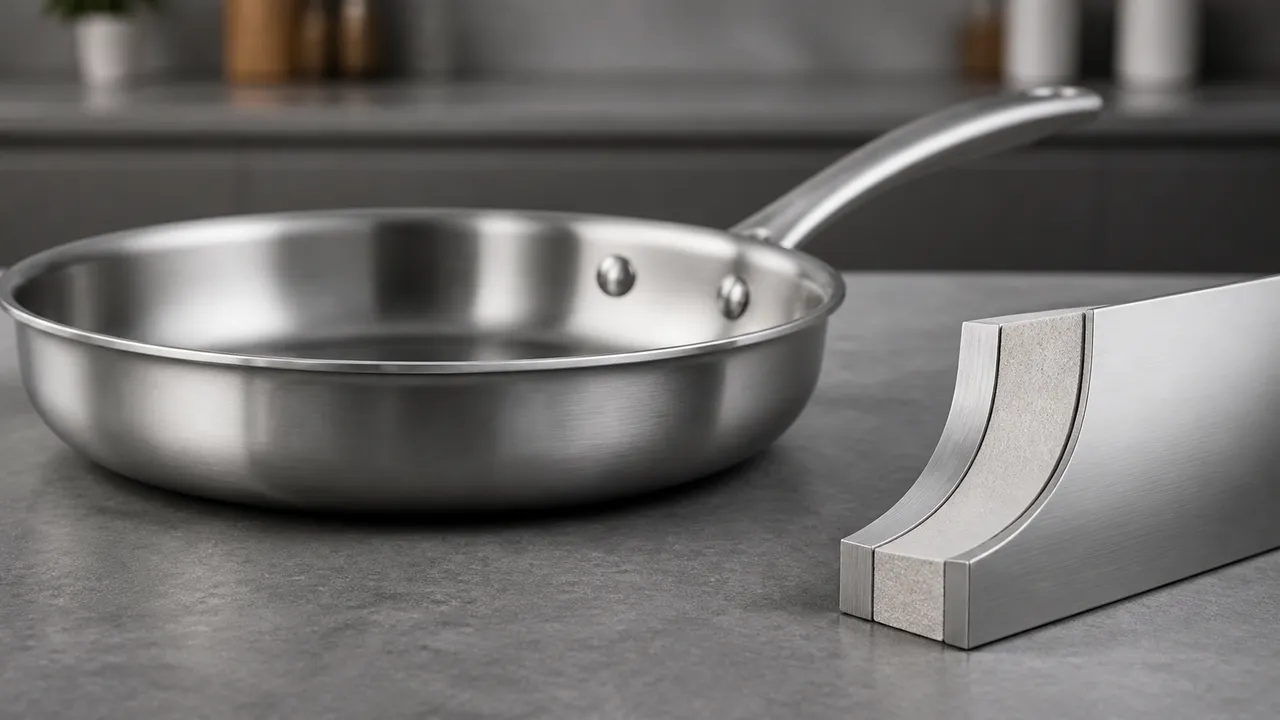
Stainless steel pans often have aluminum cores because the two metals do different jobs. Stainless steel provides a durable cooking surface and exterior, while aluminum spreads heat through the pan more readily. Bonding them creates cookware that can respond more evenly than a pan made from a thick layer of stainless steel alone.
The aluminum is normally enclosed within the pan or base. It is not the cooking surface in intact clad cookware. Construction varies, however, so an exact product diagram is more useful than a generic “tri-ply” label.
Why not make the whole pan from stainless steel?
Stainless steel is valued for corrosion resistance, strength, and a cooking surface that does not require a fragile applied nonstick coating. It is also a relatively poor conductor of heat compared with aluminum. A stainless-only pan can develop a larger temperature difference between the area over the burner and the outer cooking surface.
An aluminum layer helps move heat laterally. That does not guarantee perfectly even cooking. Core thickness, bonding quality, pan diameter, burner size, burner control, and food placement still matter. A small flame under a wide pan can leave the perimeter cooler even when the pan is clad.
The same combination also affects response. When heat is reduced, an appropriately designed conductive core can distribute that change through the cooking surface. A very thick pan may still hold substantial heat, which can be useful for searing but less forgiving for delicate sauces.
Fully clad and disc-base pans are different
In fully clad cookware, bonded layers extend through the bottom and sidewalls. A common layout is stainless steel on the inside, an aluminum core, and stainless steel on the outside. Some designs use more than three layers or combine multiple core materials.
In a disc-base pan, a conductive plate is bonded to the bottom of a stainless vessel. The base can spread heat across the floor while the sidewalls remain mostly stainless steel. This construction is common in stockpots and saucepans where sidewall heating may be less important than a stable base.
Neither approach is automatically superior for every task. Fully clad sides can help when food contacts the walls or a sauce reduces across a broad surface. A well-sized base disc can be efficient for boiling and may reduce weight or cost. Our guide to fully clad cookware explains how to identify the construction from product specifications.
Does the aluminum touch food?
In intact clad cookware, the interior stainless layer separates food from the aluminum core. At the rim, the layered edge may be visible, depending on how the pan is finished. Seeing a thin line at a designed edge does not by itself mean the cooking surface has failed.
Damage deserves a construction-specific assessment. Fine scratches in stainless are different from a split seam, a sharp lifted layer, swelling, or a worn area that exposes a different metal where food sits. If layers separate or a core appears exposed on the cooking surface, stop using the pan and ask the manufacturer whether it can be repaired or replaced.
Our guide to scratched stainless steel pans separates cosmetic marks from damage that needs closer inspection.
Why the exterior is often stainless too
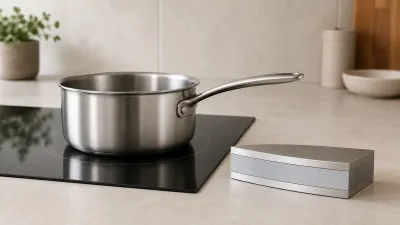
The outside layer protects the core and provides a durable surface for handling and cleaning. It can also support induction compatibility when the exterior alloy is magnetic. Not every stainless alloy responds strongly to a magnet, so a stainless exterior does not automatically mean the pan works on induction.
The exterior layer can discolor from high heat without exposing the core. Blue, bronze, or rainbow colors are usually thin surface oxides, while burned grease can form a brown or black deposit. These are different from blistering, a widening seam, or a base disc pulling away from the vessel.
What an aluminum core cannot fix
Cladding does not correct a poor match between pan and burner. The active burner should suit the base without sending flame around the sidewalls. It also does not prevent warping caused by severe overheating or rapid cooling.
The core does not make stainless steel nonstick. Food release still depends on food moisture, temperature, fat, timing, and surface condition. Nor does a higher layer count prove better performance. Five thin layers can be less useful than a simpler construction with a well-sized conductive core.
Marketing terms need context:
- Tri-ply usually means three bonded layers, but it does not state their thickness.
- Five-ply states a layer count, not the practical heat response.
- Encapsulated base usually points to a conductive disc, not clad sidewalls.
- Impact-bonded describes a manufacturing method for attaching a base; it does not identify every metal inside it.
How to compare construction before buying
Look for a cross-section or a written layer description from the manufacturer. Confirm whether cladding covers the whole vessel or only the base. Then compare pan weight, handle geometry, induction compatibility, oven limits, and warranty terms.
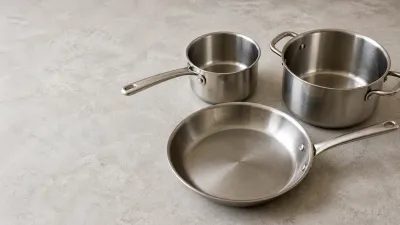
Choose based on the cooking job. A responsive fully clad skillet is useful for browning and pan sauces. A disc-base stockpot can make sense for boiling large volumes. A saucepan needs a stable base and controllable heat, while sidewall cladding may help with thick sauces.
Do not treat “aluminum core” as a defect or a complete quality signal. It is one design choice. Our stainless steel cookware set guide explains why useful sizes, lids, and construction disclosure matter more than a large piece count.
Care that protects bonded layers
Use moderate burner sizes and avoid leaving an empty pan over high heat. Let a hot pan cool before washing it or adding a large amount of cold water. Clean with tools appropriate for the stainless surface, not by grinding at the rim or seam.
After a hard drop or severe overheating event, inspect the base from the side. Look for rocking, a new gap, sharp metal, or a disc that no longer sits flush. Contact the maker if the construction has visibly changed.
Bottom line
The aluminum core is there to distribute heat; the stainless layers provide the working surfaces and structural protection. Fully clad and disc-base designs place that core differently, so read the exact construction description. In sound cookware, the aluminum core is not the food-contact surface. Separation, sharp distortion, or food-contact exposure is a reason to stop and seek manufacturer guidance.