Stainless steel cookware has no fixed lifespan. A sound pan may stay useful for many years, but construction, frequency of use, heat, thermal shock, cleaning, and damage history all change the answer. Replace a calendar promise with an inspection of the surface, base, welds or rivets, handle, and care history.
Fine utensil lines, heat tint, water spots, and a duller finish can be cosmetic. A crack, deep or widening pitting, sharp or residue-trapping damage, exposed inner layer, separated bond, unstable base, or loose attachment is a different decision. This is a research-based condition guide, not a hands-on inspection of your pan or a warranty decision for a particular brand.
What is the fastest way to judge whether a pan has useful life left?
The fastest check is to let the cookware cool, clean it, and inspect five things: the food-contact surface, the base, the welds or rivets, the handle, and the history of heat and cleaning.
| What you find | What it tells you | Next step |
|---|---|---|
| Fine marks, heat tint, or water spots on an intact surface | Usually an appearance issue | Follow the maker’s cleaning method and keep assessing the structure |
| Cooked-on film or mineral residue | A maintenance problem can hide the surface | Clean the cooled pan with the exact care guidance, then inspect again |
| Rocking, spinning, or a visible base gap | Possible distortion or a base problem | Stop using it if it is unstable and ask the manufacturer to assess it |
| A crack, sharp edge, deep or widening pit that remains after cleaning, exposed inner metal, or separated layer | Functional or food-contact damage | Stop use and request an authorized remedy or replace the piece |
| A handle, rivet, or weld that moves, rattles, or has a sharp break | The attachment is no longer something to treat as cosmetic | Do not carry hot food with it; contact the maker before attempting a repair |
This table is deliberately conservative. A visible mark cannot reveal every hidden layer or bond, and a manufacturer may classify the same symptom differently by model. The stainless steel cookware safety guide covers material and food-contact questions separately from this condition check.
What controls stainless steel cookware service life?
Construction and use history matter more than a promised number of years. A simple single-layer vessel, an impact-bonded base, and a fully clad pan do not have the same heat path or attachment points. Handles, lids, coatings, and exposed edges can also have different limits from the stainless body.
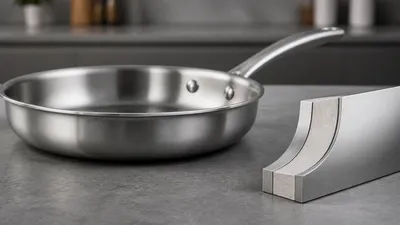
All-Clad describes two broad bonding approaches in its current cookware support guidance, fully bonded construction from rim to rim and bonding concentrated in the base. It says fully bonded cookware provides heat distribution and stability throughout the pan, while base bonding improves heat distribution on the cooking surface and helps protect against warping. Those are the manufacturer’s construction descriptions, not a controlled lifespan comparison.
Tramontina gives a similar model-specific distinction for its Signature tri-ply collection. Its fully clad pieces bond stainless steel and an aluminum core from base to rim, while tri-ply base cookware concentrates the layered base at the bottom. The layer layout can explain differences in heating and stability, but it cannot predict how an individual pan will age in a particular kitchen.
If you are choosing a replacement, our Tramontina Tri-Ply Clad versus All-Clad D3 comparison checks construction, care, handles, and use limits without treating either brand name as a lifespan guarantee.
Use frequency adds another variable. A pan used several times a day sees more heating, cooling, moving, and cleaning cycles than a pan used once a month. High heat, prolonged empty heating, a burner that concentrates heat on part of the base, a drop, and a hot pan plunged into cold water can all change the condition of the metal or its bonds. Those causes are not interchangeable, so record what happened rather than guessing from the color of the pan.
The complete product matters too. A pan body can be bare stainless while a lid, handle, seal, or interior coating has a separate care or temperature limit. Read the exact product page or care insert when the model is known. “Stainless steel” describes only part of many cookware products.
For the broader tradeoffs of an uncoated surface, heat distribution, weight, and upkeep, see the pros and cons of stainless steel cookware. This guide narrows that discussion to condition and replacement decisions.
How can you tell cosmetic wear from functional damage?
Cosmetic wear changes how a pan looks; functional damage changes its surface, stability, attachment, or ability to be used as designed.
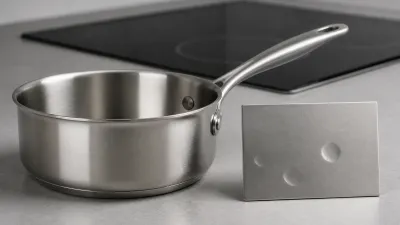
All-Clad’s current stainless steel care instructions say that heat can leave brown or blue stains, and that small white pits from adding salt before liquid boils can diminish the pan’s beauty without interfering with cooking performance. The same guide tells owners to let the pan cool before cleaning and to avoid steel wool, harsh detergents, bleach, and putting a hot pan under cold water. That guidance applies to the All-Clad stainless cookware covered by that page, not automatically to every brand. Its small-pit example does not prove that every crater or changing pit is cosmetic; depth, widening, residue trapping, and the maker’s product-specific advice still matter.
For a practical surface check, inspect the clean, dry pan in angled light:
- Fine gray utensil lines that do not catch a fingernail may be superficial surface marks. They are not a reason by themselves to assume the pan has reached the end of its useful life.
- Rainbow coloring, brown heat tint, fingerprints, and mineral spots are appearance changes. Use the maker’s approved cleaner before deciding that a stain is corrosion or significant pitting.
- A rough or widening crater, a hole that remains after deposits are removed, a crack, or a groove with a sharp raised edge deserves manufacturer assessment. Do not sand or grind it smooth.
- If another metal is visible on the food-contact side, or a bonded edge has opened, stop using the pan. The construction is no longer what the product was sold to provide.
Coated cookware needs its own decision. Do not apply advice about fine marks on bare stainless to a nonstick, ceramic, enamel, or decorative coating. If a coating is peeling, blistering, or exposing the layer beneath it, follow that product’s care and warranty instructions and ask the maker whether the piece should be replaced.
How should you check the base, welds, and handles?
Base stability and attachment security matter more than a polished finish when deciding whether cookware remains usable.
Inspect only when the pan is cool, dry, and empty. Wipe away residue under the base, then place it on a known-flat counter or a switched-off cooktop. Look for rocking, spinning, a gap under one edge, or a base that no longer sits as the maker’s instructions describe. Do not press hard, bend the pan, or try to make a suspected warp worse so you can see it more clearly.
All-Clad’s customer-service page says high heat, the wrong heat source, and sudden temperature changes can distort a pan. It also says not to use a pan that is uneven upon purchase and directs the owner to customer service. The site’s separate guide to why stainless steel pans warp explains how to distinguish residue and an intentional base contour from a pan that rocks or spins.
At the rim, handle junction, and underside, look for a visible crack, lifted edge, sharp burr, gap, or movement at a weld or rivet. A handle that moves or rattles is not an appearance issue, even when the pan body looks bright. Set the piece aside until the maker tells you whether it has an approved service or replacement path.
Do not use a hammer, press, torch, glue, weld, sandpaper, or power tool as a home repair. All-Clad’s limited warranty excludes damage from unauthorized modification or repair, and a repair that changes the food-contact surface or heat path needs a product-specific answer. The safe question is not whether a repair looks neat. It is whether the manufacturer or an authorized service channel accepts the work and preserves the product’s stated use limits.
When is repair reasonable, and when should you replace the pan?
Repair is reasonable only when the maker or an authorized service channel confirms that the problem can be corrected for that exact model.
Start with documentation rather than disassembly. Photograph the clean pan from several angles, the base and attachment points, the model stamp, and the defect. Note the date you noticed it, the heat source, any overheating or drop, cleaning method, and whether the pan was empty when it got hot. Keep proof of purchase if you have it. Those details help the manufacturer distinguish a possible construction defect from a use-related change.
Ask the maker these focused questions:
- Is the symptom expected for this model or a defect that needs service?
- Is an authorized repair or replacement part available for the body, base, handle, rivet, weld, lid, or coating?
- Does the proposed remedy preserve the food-contact surface and the product’s heat and cooktop limits?
- Should the pan remain out of service while the claim is reviewed?
All-Clad’s limited lifetime cookware warranty says its U.S. and Canada coverage addresses defects in material, construction, or workmanship under normal use and care, with repair or replacement as the remedy. It excludes normal wear, drops, thermal shock, improper use, scratches and stains, and certain warping or metal separation caused by high heat or prolonged empty heating. That is one manufacturer’s policy, not a universal entitlement.
Made In makes the same distinction in its current warranty policy: its Stainless Clad section covers manufacturing defects, while normal appearance changes and damage from excessive heat or thermal shock are excluded. The policy is evidence about that maker’s remedy boundary, not a service-life forecast for every stainless pan.
Replace or retire the cookware when the manufacturer says it is not serviceable, when a structural defect remains, or when you cannot use it without an unstable base or compromised attachment. A pan with fine marks can be kept if it is otherwise sound. A pan with a crack, exposed inner layer, separating bond, deep or widening pitting that remains after cleaning, sharp damaged edge, or loose handle should not be treated as a normal-wear problem.
How can care preserve useful life?
Care preserves useful life by reducing avoidable heat, shock, abrasion, and residue, but it cannot reverse a failed bond or cracked attachment.
Use the exact care guide first. As a general example, All-Clad’s stainless instructions call for low to moderate heat for most cooking, cooling before washing, warm soapy water, and a sponge or soft cloth. They advise against steel wool, harsh or chlorine-containing cleaners, and rapid cooling under cold water. Tramontina’s stainless cookware care guidance likewise tells owners to let the pan cool, use mild soap and a soft sponge, and avoid steel wool, bleach, and abrasive cleaners.
These are care instructions from named manufacturers, not a blanket rule that every stainless pan must be hand washed or never placed in a dishwasher. If the exact model permits a dishwasher, follow its loading, detergent, drying, and component instructions. If the model is unknown, hand washing with a mild cleaner and a soft tool is the lower-risk starting point until the maker’s guidance is found.
Store cookware so that heavy pieces do not rest on a handle, lid, or exposed rim. Do not cut food in the pan, scrape with a knife, or leave salt sitting undissolved on a dry surface. None of these habits guarantees a particular lifespan. They simply reduce damage that can be avoided during normal use.
Does a lifetime warranty mean stainless cookware lasts forever?
No. A lifetime warranty usually describes how a maker handles qualifying defects during a defined coverage period, not a promise that a pan will remain perfect or usable for every owner forever.
The All-Clad warranty uses “lifetime of the product” language for material, construction, and workmanship defects under normal use and care, then lists wear, stains, scratches, thermal shock, drops, high heat, and unauthorized repair among exclusions. Made In’s policy also separates manufacturing defects from normal wear and heat or shock damage. “Lifetime” therefore tells you to read the terms and preserve your model and purchase records. It does not turn the warranty into a year guarantee.
Warranty language also varies by brand, country, seller, product line, and original purchaser status. Check the current document for the exact pan rather than assuming the terms of one stainless collection apply to another. If the page is unavailable, contact the maker before modifying or discarding a questionable piece.
Frequently asked questions
Can scratches alone mean a stainless steel pan is finished?
No. Fine marks on an intact, uncoated stainless surface can be cosmetic. Clean the pan, inspect the mark in angled light, and ask the maker about any gouge, deep or widening pit, exposed inner layer, sharp edge, or separating rim.
Can I flatten a warped pan at home?
Do not try to flatten it with a hammer, press, heat, or rapid cooling. Let it cool, document the condition, and use the manufacturer’s service path. A pan that rocks or spins enough to be unstable should remain out of service while you wait for an answer.
Does dishwasher use automatically end a pan’s service life?
No. Dishwasher permission and preference vary by model, finish, exposed edges, handles, lids, and detergent. One cycle does not diagnose a pan. Follow the maker’s care instructions, then inspect for deep or widening pitting, separation, loose attachments, or changes that affect use.
Should I replace a pan that only looks dull?
Not solely because it looks dull. Discoloration, water spots, and superficial marks can be cleaned or accepted when the base is stable, the attachments are secure, and the food-contact surface is intact. Replace or seek service when the dull appearance comes with deep or widening pits, cracks, layer separation, or another functional change.
If your inspection says you need a new collection rather than one replacement piece, the best stainless steel cookware sets guide is the site’s separate buying resource. It is not a substitute for checking the exact construction, care limits, and warranty of any set you consider.
Sources and scope
- All-Clad Use and Care, accessed August 21, 2026. Current All-Clad stainless-use and cleaning instructions, including heat, cooling, cleaners, and surface appearance. Scope is the cookware covered by that page.
- All-Clad Customer Service and FAQ, accessed August 21, 2026. All-Clad’s descriptions of bonded versus base-only construction, uneven bases, and service routing. Scope is All-Clad support guidance.
- All-Clad Cookware Limited Lifetime Warranty, accessed August 21, 2026. U.S. and Canada limited-warranty terms and exclusions for qualifying All-Clad cookware. Scope is the named warranty and its conditions.
- Made In Warranty Policy, accessed August 21, 2026. Made In’s Stainless Clad distinction between manufacturing defects and normal wear, excessive heat, and thermal shock. Scope is Made In’s current policy.
- Tramontina Signature Tri-Ply Stainless Steel Collection, accessed August 21, 2026. Tramontina’s layer, fully clad, and tri-ply-base descriptions. Scope is the Signature collection and the maker’s terminology.
- Tramontina Stainless Steel Cookware, accessed August 21, 2026. Tramontina’s current general stainless-care guidance. Scope is the maker’s listed stainless cookware, not every stainless product.