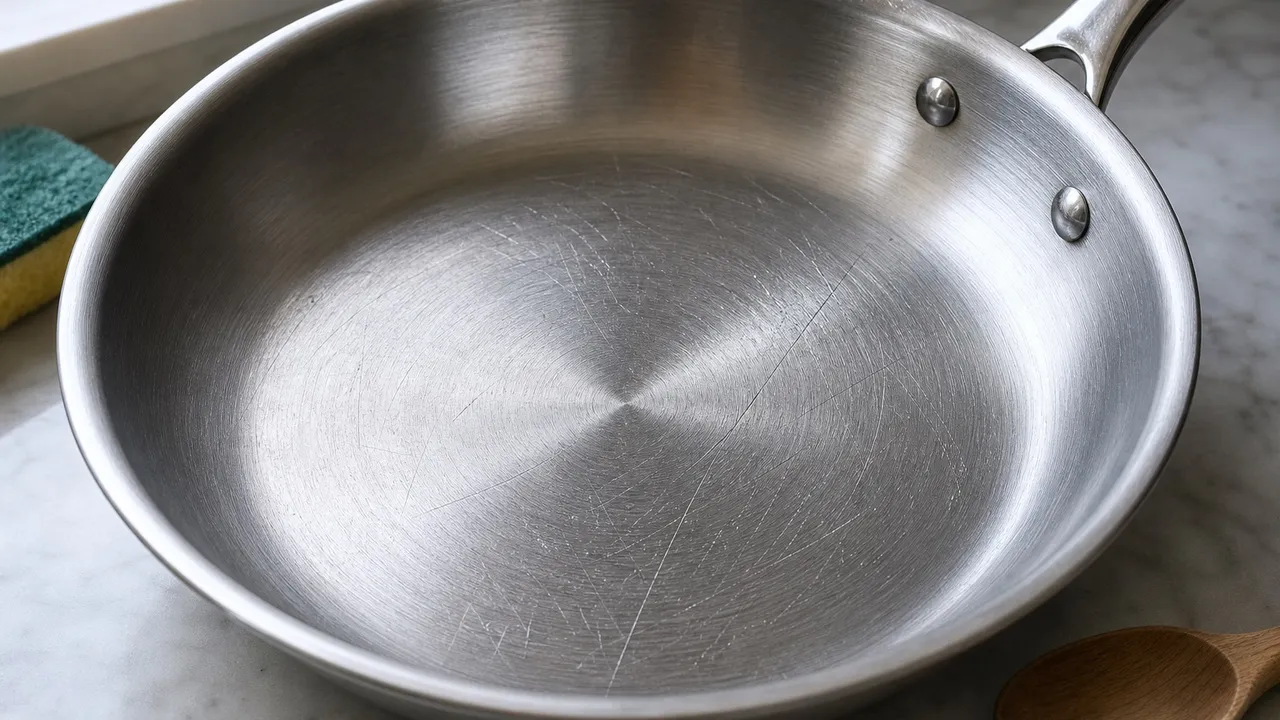
Light utensil scratches on an uncoated stainless steel cooking surface are usually cosmetic. Stainless steel has no nonstick coating to flake away, and its chromium-rich passive layer reforms when a clean surface is exposed to oxygen.
Stop using the pan until it is assessed when a mark is a deep gouge, active pitting, a crack, exposed internal core metal, a loose handle, or separating bonded layers. Those are structural or corrosion problems, not ordinary scratches.
Scratch or damage? A quick check
| What you see | Likely meaning | What to do |
|---|---|---|
| Fine gray utensil lines | Cosmetic surface marking | Clean normally and keep using if the maker agrees |
| Circular scrub marks | Abrasive finish damage | Switch to gentler cleaning |
| Rough dark pinholes | Possible pitting or trapped residue | Clean, inspect dry, and contact the maker if holes remain |
| A groove that catches a fingernail | Deep physical damage | Photograph it and ask the manufacturer to assess it |
| Silver skin worn through to another metal | Exposed internal layer | Stop using and seek replacement guidance |
| A gap or bubble at the rim/base | Bond failure or separation | Stop using immediately |
Why light scratches are different from a damaged coating
Uncoated stainless steel relies on the alloy itself, not a polymer coating, for its corrosion resistance. World Stainless explains that a thin chromium-rich passive layer reforms after the surface is scratched when oxygen is available.
That does not make every gouge irrelevant. A scratch can create a rougher place for residue to collect, and severe damage can expose a different layer in clad cookware. The useful question is what the mark penetrated and whether the pan remains intact.
Nonstick cookware is a separate case. A scratch through a coating changes the cooking surface and needs the coating manufacturer’s guidance. Do not apply advice about uncoated stainless steel to PTFE, ceramic nonstick, enamel, or another finish.
How to inspect a scratched pan
1. Let the pan cool
Do not run cold water over a hot pan. Sudden cooling can warp the base and create a second problem.
2. Wash away all residue
Use warm water, dish soap, and a non-scratch sponge. Soak cooked-on food rather than prying it off with a knife. The stainless steel pan cleaning guide gives separate methods for grease, burnt food, mineral spots, and heat tint.
3. Dry and inspect in angled light
Look across the surface rather than straight down. Fine lines that reflect light are usually different from pits with dark centers or gouges with raised edges.
Run a wooden toothpick or a fingernail lightly across a concerning mark. Do not press hard enough to deepen it. A line that catches noticeably deserves closer assessment.
4. Check the rim, walls, and base
Fully clad cookware sandwiches a conductive metal, often aluminum or copper, between stainless layers. Examine the rim and any bonded base for gaps, swelling, sharp edges, or visible separation. In fully clad cookware, those internal layers continue through the walls rather than stopping at a bonded base.
5. Document before altering
Photograph the clean dry pan, the mark, the model stamp, and the complete base. Save the receipt if available. Do not grind, sand, or polish a deep defect before contacting the manufacturer because that can remove useful warranty evidence.
When should you replace a scratched stainless steel pan?
Replace or professionally assess the pan when:
- The stainless cooking layer is worn through to a different metal.
- Bonded layers are separating at the rim or base.
- Pitting remains after deposits and residue are removed.
- A crack, sharp edge, or loose handle creates an injury risk.
- The base rocks or spins enough to be unstable.
- The manufacturer tells you the damage is outside safe use.
Health Canada’s cookware guidance recommends using cookware according to its intended use and manufacturer instructions. That is especially important when construction is unclear from appearance.
If replacement is needed, choose by vessel and task rather than buying a large set automatically. Compare the best stainless steel frying pans, saucepans, and cookware sets as separate decisions. The guide to aluminum cores in stainless pans explains why a visible second layer matters after deep damage.
Do scratches increase metal leaching?
Surface condition is one factor that can affect metal migration, but it is not possible to turn the appearance of one scratch into a personal exposure estimate. Alloy, acidity, salt, time, temperature, prior use, and corrosion condition also matter.
Our evidence review on nickel migration from stainless cookware explains what published studies measured and why the results are not a universal prediction. Anyone with a diagnosed nickel allergy or a medical concern should seek advice from a qualified clinician.
How to prevent avoidable scratches
- Use wood, silicone, nylon, or a gently handled metal utensil approved for the pan.
- Do not cut food inside the pan with a knife.
- Soak residue instead of using steel wool.
- Follow the maker’s cleaner and dishwasher guidance.
- Place protectors between stacked pieces.
- Keep salt from sitting undissolved on a dry or barely wet surface.
All-Clad says metal utensils can leave superficial marks on its bonded stainless collections without affecting performance, but it also advises against steel wool and aggressive scouring for care. Follow the instructions for your exact brand and finish.
Can scratches be polished out?
Fine cosmetic marks can sometimes be blended by a manufacturer-approved stainless cleaner, but a mirror finish may become uneven. Brushed finishes have a grain direction that crosswise scrubbing can permanently alter.
Do not use power tools or sandpaper on cookware. They can remove material, change the surface finish, expose internal layers, and complicate a warranty claim. A clean functional pan does not need to look new.
Frequently asked questions
Is it safe to use metal utensils on stainless steel pans?
Many uncoated stainless cookware makers allow metal utensils, though they can leave cosmetic marks. Check the exact product instructions and avoid chopping, gouging, or forceful scraping.
What does pitting look like on stainless steel?
Pitting appears as localized holes or craters rather than smooth reflective lines. Remove deposits, dry the pan, and ask the manufacturer to assess any holes that remain.
Can a scratched stainless steel pan expose aluminum?
A superficial mark does not. A deep gouge or separated rim in clad cookware could expose a conductive core. Stop using the pan if you can see another metal layer on the food-contact surface.
Should you throw away a pan with light scratches?
Not solely for fine cosmetic marks on an otherwise intact uncoated stainless surface. Clean and inspect it, then follow the manufacturer’s advice if the depth or construction is uncertain.
Related guides
Continue with Remove Scratches From a Stainless Steel Sink, Use Steel Wool on Stainless Steel?, Stainless Steel vs Silicone Kitchen Utensils, Stainless Steel Pans Scratch Glass Cooktops?.