Choose stainless steel for the most versatile, low-maintenance pan, especially if you cook acidic sauces or want to deglaze often. Choose carbon steel if you are willing to season and hand-dry it in exchange for a cooking surface that develops easier release with use.
Neither material wins every meal. Stainless is the safer first pan for most kitchens; carbon steel is the more specialized choice for high-heat browning, eggs, crepes, and quick stovetop cooking once its seasoning is established.
Carbon steel vs stainless steel at a glance
| Decision | Carbon steel | Stainless steel | Better choice |
|---|---|---|---|
| Surface | Reactive iron-carbon alloy | Corrosion-resistant steel alloy | Stainless for versatility |
| Food release | Seasoning can improve release | Technique and fat control sticking | Carbon steel after seasoning |
| Acidic food | Long cooks can strip seasoning | Suitable for tomatoes, wine, and citrus | Stainless steel |
| Daily care | Hand-wash, dry at once, oil lightly | Wash, dry, remove residue as needed | Stainless steel |
| Rust risk | Can rust if left wet | More corrosion resistant | Stainless steel |
| Heating | Often a single, relatively thin steel sheet | Varies widely; clad pans add aluminum or copper | Depends on the exact pan |
| Induction | Usually compatible | Compatible only with a magnetic base or exterior | Carbon steel is simpler to verify |
| Best uses | Eggs, crepes, searing, stir-frying | Sauces, pan sauces, acidic dishes, all-purpose cooking | Depends on the meal |
Construction and cooking surfaces
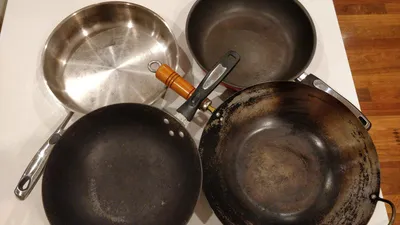
Carbon steel cookware is formed from an iron-rich steel sheet. Its cooking surface needs seasoning, a thin layer of polymerized oil that helps protect the metal and can improve food release. It has no synthetic nonstick coating to preserve, but the seasoning itself needs care.
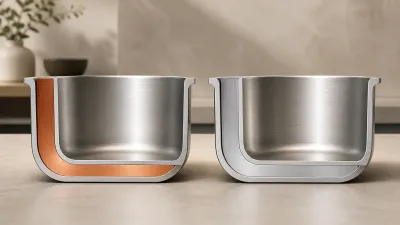
Stainless cookware is more varied. A bare stainless pan would spread heat poorly compared with aluminum or copper, so quality cookware commonly bonds stainless steel around a conductive core. Tramontina’s tri-ply explanation, for example, describes a stainless interior, aluminum core, and magnetic stainless exterior.
That difference prevents a universal heat-performance verdict. A thin carbon steel skillet, a thick carbon steel griddle, a fully clad stainless pan, and a disc-base stainless pot can all respond differently. Material names alone do not supply a fair heating comparison.
Winner: Stainless steel for construction choices; tie on performance without exact pan specifications.
Seasoning, sticking, and cooking technique
Carbon steel’s main appeal is the seasoned surface. Repeated thin layers of heated oil form a patina that makes eggs, crepes, and other delicate foods easier to release. It will not behave exactly like a new PTFE-coated pan, and early cooks may stick while the surface develops.
Stainless steel does not need seasoning. Food release depends on preheating, adding fat at the right time, controlling heat, and waiting for browned food to release naturally. Our guide to keeping stainless steel pans from sticking covers that technique, while the stainless seasoning guide explains why permanent seasoning is optional rather than required.
Carbon steel wins when the cook wants a maintained, low-stick patina. Stainless wins when the cook would rather adjust technique than protect seasoning.
Winner: Carbon steel for seasoned release; stainless steel for no seasoning routine.
Acidic foods and pan sauces
Stainless steel is the clear choice for tomato sauce, wine reductions, citrus, and vinegar-forward dishes. All-Clad describes stainless cookware as nonreactive with acidic ingredients, which also makes it useful for deglazing browned fond into a pan sauce.
Acid is harder on carbon steel seasoning. De Buyer tells carbon steel owners to avoid acidic foods because they can strip the seasoning. A quick splash of wine will not destroy the metal, but it may weaken a young patina, expose bare steel, or add a metallic taste. The pan can be reseasoned, but that is extra work.
Use stainless when a recipe simmers tomatoes, reduces wine, or holds a sharp sauce. Save a well-seasoned carbon steel pan for drier, shorter cooks.
Winner: Stainless steel.
Heat behavior and best uses
Both materials can brown food well. The meaningful difference is usually the finished pan’s mass and construction, not a blanket rule that one metal always heats faster or holds more heat.
Many carbon steel skillets are formed from one steel sheet and are easy to move compared with thick cast iron. Lodge says its spun and stamped carbon steel is thinner and heats and cools faster than its cast iron. That comparison does not automatically extend to every clad stainless pan.
Stainless cookware with an aluminum core can spread burner heat across the cooking surface and up the walls. Carbon steel can reward close burner control and direct high-heat work, but pan diameter, thickness, burner size, and food load shape the result.
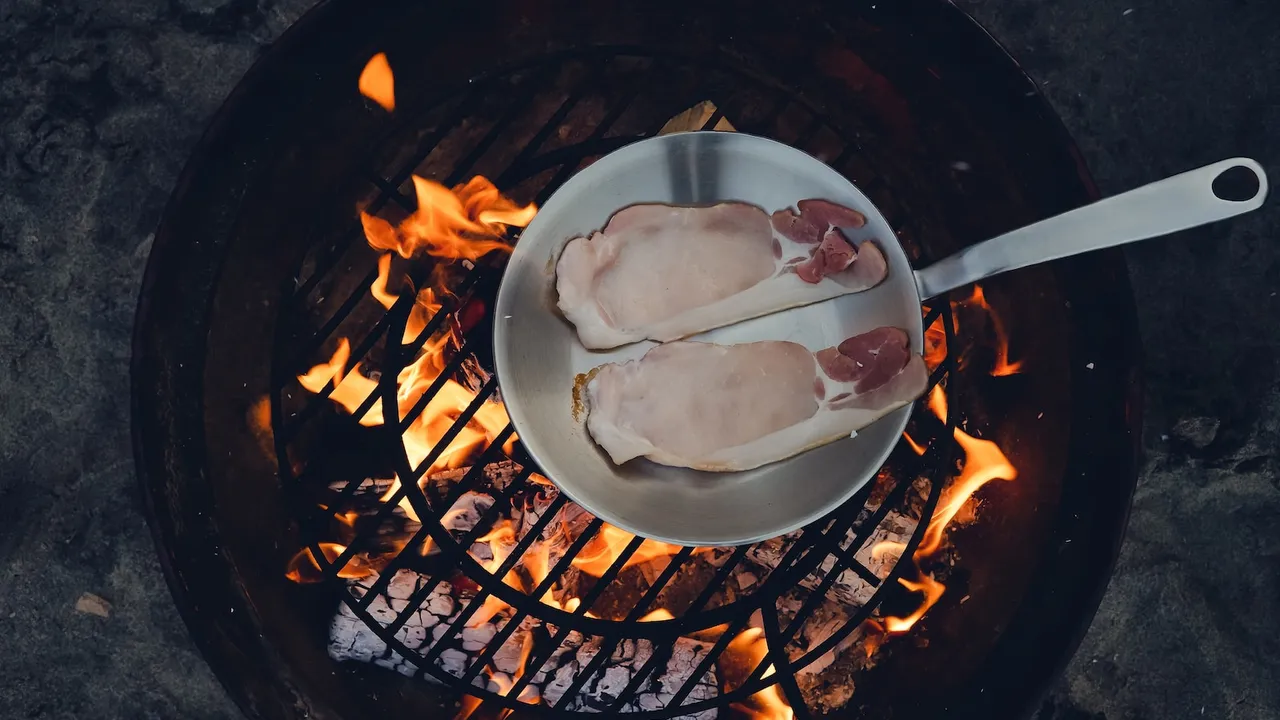
For steak, either pan can build a crust. Carbon steel is attractive for quick searing and tossing; stainless makes the browned fond easy to turn into a wine or cream sauce. For eggs and crepes, established carbon steel seasoning is helpful. For braises and saucy meals, stainless is less restrictive.
Winner: Carbon steel for maintained low-stick cooking; stainless steel for sauces and broader use.
Weight and handling
Carbon steel is often described as light because it weighs less than comparable cast iron. That does not mean it is always lighter than stainless cookware. A large, thick carbon steel skillet can be heavy, while a smaller clad stainless pan may be easier to lift.
Compare actual listed weights at the same diameter, and check whether a manufacturer’s figure includes a lid. Also consider the helper handle, main-handle angle, and total length. Those details influence control more than the material label.
If tossing vegetables or sliding omelets is central to your cooking, a thinner carbon steel pan may suit you. If you need a lid, tall sides, or a helper handle, stainless offers a wider range of vessel designs.
Winner: Depends on the exact pan.
Induction and oven use
Carbon steel is iron-rich and generally works on induction. Lodge rates its seasoned carbon steel for induction, ceramic, electric, gas, oven, grill, and campfire use.
Stainless steel compatibility depends on the exterior. Austenitic cooking-surface grades may not couple strongly with induction, but many clad pans add a magnetic ferritic stainless layer outside. Confirm the induction symbol or product specification instead of guessing from the words “stainless steel.” Our stainless induction guide explains the distinction.
Oven limits depend on the complete product, including handles, coatings, and lids. Carbon steel is not automatically safe at every temperature, and stainless lids can have a lower limit than their pans. Follow the exact manufacturer’s ceiling.
Winner: Carbon steel for straightforward induction compatibility; tie for oven use after checking the product.
Cleaning and long-term maintenance
Carbon steel asks for a consistent routine. Lodge recommends hand-washing, drying promptly, then applying a very light coat of oil. It warns that dishwasher cleaning removes seasoning and can lead to rust. Soaking a carbon steel pan is also a poor choice.
Stainless steel tolerates water and soap without losing a seasoned layer. Let it cool before washing to avoid thermal shock, then use warm water, mild dish soap, and a soft sponge. Stuck-on fond, heat tint, and mineral marks may need soaking or a suitable stainless cleaner, but the surface does not need oil after every wash.
Our overview of the pros and cons of stainless steel cookware puts that easier maintenance in the context of sticking and discoloration.
Winner: Stainless steel.
Which pan fits which food?
Choose carbon steel for:
- Eggs or crepes once the seasoning is smooth
- High-heat searing without an acidic pan sauce
- Stir-frying and quick vegetable cooking
- Cooks who enjoy maintaining a patina
Choose stainless steel for:
- Tomato, wine, citrus, and vinegar-based dishes
- Browning followed by deglazing
- Sauces, braises, and recipes with more liquid
- A first uncoated pan with fewer care rules
Both can sear meat and work on induction when the finished product is compatible. Neither is naturally effortless: carbon steel needs seasoning, while stainless needs good heat and fat control.
Stir-frying is also a vessel-shape decision. If you want bare stainless rather than seasoned carbon steel, compare the flat- and round-bottom stainless steel wok options by cooktop fit, lid, and construction.
The final verdict
Stainless steel is the better single-pan choice for most cooks. Its nonreactive surface, easier cleanup, and range of clad constructions cover more recipes with fewer maintenance rules. See our best stainless steel frying pans if that is the direction you choose, or compare broader options in the best stainless steel cookware sets.
Carbon steel is worth adding when you want a seasoned cooking surface and do not mind hand-washing, prompt drying, and occasional reseasoning. It complements stainless rather than replacing it: carbon steel handles your dry, high-heat, low-stick work, while stainless handles acids, sauces, and everyday versatility.
This is a research-based comparison, not a hands-on test. The recommendations use current manufacturer construction and care guidance retrieved July 11, 2026, and avoid claims that would require controlled side-by-side measurements.
The same task-first approach applies when comparing cast iron and stainless steel cookware.