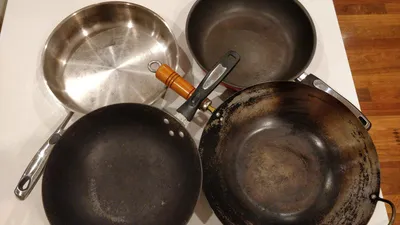
Choose stainless steel as the more versatile everyday pan for acidic foods, pan sauces, and easier maintenance. Choose cast iron for strong heat retention, oven-to-table cooking, and a seasoned surface that improves with regular use.
For many cooks, the best answer is one of each: a clad stainless skillet for sauces and general sautéing, plus a cast iron skillet for searing, frying, baking, and cooking over live fire.
Cast iron vs stainless steel at a glance
| Decision | Seasoned cast iron | Clad stainless steel | Better choice |
|---|---|---|---|
| Heat response | Slow to change, holds substantial heat | Usually faster to adjust | Depends on the task |
| Food release | Seasoning improves with use | Technique and fat control sticking | Cast iron when well seasoned |
| Acidic recipes | Long cooks can weaken seasoning | Suitable for tomato, wine, and citrus | Stainless steel |
| Weight | Usually heavy | Often lighter at the same size | Stainless steel |
| Maintenance | Wash, dry, oil, repair seasoning as needed | Wash and remove residue | Stainless steel |
| Oven and live fire | Excellent when handles permit | Oven capable, not usually intended for campfire use | Cast iron |
| Pan sauces | Works, with limits on long acidic contact | Excellent for fond and deglazing | Stainless steel |
| Longevity | Very long and restorable | Very long when well constructed | Tie |
This comparison concerns bare, seasoned cast iron. Enameled cast iron behaves differently because its glassy coating removes the seasoning routine and tolerates acidic food.
Heat retention and burner response
Cast iron’s mass is its cooking advantage. Once heated, a heavy skillet changes temperature slowly when cold food lands in it. That stability suits searing steaks, shallow frying, baking cornbread, and serving food that should stay warm.
The tradeoff is slower response. Lowering the burner does not cool a heavy cast iron pan at once, so a sauce or delicate ingredient can keep cooking. Preheating gradually also helps reduce hot spots and thermal stress.
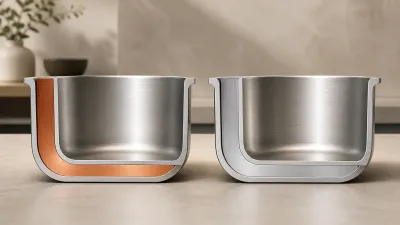
Quality stainless cookware usually bonds stainless around aluminum or copper. The conductive core spreads heat and responds more quickly to burner changes than a heavy cast iron skillet. Construction varies, though, so “stainless steel” alone cannot predict evenness or speed.
Winner: Cast iron for stored heat; clad stainless steel for control and response.
Searing, browning, and sauces
Both materials can produce a strong sear. Cast iron holds heat well through a cold steak or a batch of food, while stainless steel builds visible fond that is easy to monitor and dissolve into a pan sauce.
The recipe after the sear often decides the pan. If you will transfer it to the oven or keep frying at a steady temperature, cast iron is attractive. If you will lower the heat, sauté aromatics, add wine, and finish with butter, stainless gives finer control without concern about the acid affecting seasoning.
Neither pan creates a crust through material alone. Dry the food, leave room between pieces, preheat sensibly, use suitable fat, and wait before turning.
Winner: Tie for searing; stainless steel for pan sauces.
Seasoning and sticking
Cast iron seasoning is carbonized oil bonded to the surface. Lodge’s current care guide describes it as an easy-release layer that improves with use. A mature surface can handle eggs, cornbread, and other foods with less sticking, although it will not behave exactly like a new synthetic nonstick coating.
Stainless steel does not require permanent seasoning. Food release comes from preheating, oil, temperature control, and letting browned food release naturally. Read how to prevent sticking in stainless steel and whether stainless pans need seasoning for the practical technique.
Cast iron asks you to maintain its cooking surface. Stainless asks you to manage each cook. Pick the kind of attention you prefer.
Winner: Cast iron for a maintained easy-release surface; stainless steel for no seasoning routine.
Acidic foods
Stainless steel is the straightforward choice for tomato sauce, wine reductions, lemon, and vinegar. Its food-contact surface is designed to resist normal kitchen acids, and deglazing does not remove a seasoning layer.
Acid is more nuanced in cast iron than the common ban suggests. Lodge says a well-seasoned pan can handle brief acidic cooking, while long contact can affect flavor or strip seasoning. Its guidance suggests another vessel for an all-day acidic simmer and prompt cleanup after shorter cooks.
Enameled cast iron is the exception. Its porcelain surface tolerates acidic and alkaline ingredients, so it works well for chili, tomato braises, and long stews. It still requires care to prevent chipping and thermal shock.
Winner: Stainless steel for bare-metal cookware; tie between stainless and intact enameled cast iron.
Weight and handling
Cast iron is heavy. That weight helps stabilize it on the burner and contributes to heat retention, but it can make one-handed pouring, tossing vegetables, and sink cleanup difficult. Large Dutch ovens become much heavier when filled.
Clad stainless is often easier to lift at the same diameter, although thick premium pans and multi-piece vessels can still be substantial. Compare listed product weights, handle shape, helper handles, and balance rather than assuming every stainless pan is light.
Weight also matters on glass cooktops. Both materials can work when the appliance maker allows them, but lift cookware instead of sliding it to reduce the chance of scratching the surface.
Winner: Stainless steel.
Cleaning and rust prevention
Cast iron care is simple but strict. Wash the cooled pan, dry it fully, and wipe on a very thin coat of oil when needed. Lodge warns against the dishwasher because it can remove seasoning and encourage rust. Surface rust is usually repairable through cleaning and reseasoning.
Stainless steel can be washed with soap and water without an oil step. Stuck fond and heat tint may require soaking or a suitable cleaner, but the pan will not lose a seasoning layer. It is more corrosion resistant, not corrosion proof, so dry it and avoid prolonged contact with salty residue or chlorine bleach.
Our broader pros and cons of stainless steel cookware weighs that easier care against its learning curve for sticking.
Winner: Stainless steel for daily convenience; cast iron for repairability.
Cooktop and oven compatibility
Cast iron works on gas, electric, induction, grills, ovens, and campfires when the product has no heat-sensitive parts. Its iron-rich body couples readily with induction. Handles become hot, so use reliable protection.
Stainless cookware works on induction only when its base or exterior is magnetic. Many clad lines add ferritic stainless outside for that purpose. Check the finished pan’s marking rather than testing the food-contact layer alone. Our stainless induction guide explains why construction matters.
Oven ceilings depend on handles and lids as well as the pan body. A glass lid, silicone grip, or coated handle may set the limit.
Winner: Cast iron for universal heat-source flexibility; tie in an ordinary kitchen after checking specifications.
Which pan should you choose?
Choose cast iron if you often cook:
- Steaks, burgers, fried chicken, or cornbread
- Recipes that move from burner to oven
- Food outdoors over a grill or fire
- Meals that benefit from steady stored heat
Choose stainless steel if you often cook:
- Tomato, wine, citrus, or vinegar-based recipes
- Pan sauces after browning meat
- Sautéed vegetables that need quick heat changes
- Everyday meals where low maintenance matters
If you can own both, avoid duplicating every shape. One cast iron skillet and one clad stainless sauté pan or skillet cover most of their distinct strengths.
Final verdict
Stainless steel wins as the best first pan for most cooks. It handles more ingredients, responds more quickly when built around a conductive core, and needs no protective seasoning. Our best stainless steel frying pans guide compares current options.
Cast iron is the better specialist for heat retention, baking, frying, and live-fire cooking. Its weight and maintenance are real costs, but its seasoning can be renewed rather than discarded. Choose by the meals you cook, not by claims that either metal is always hotter, safer, or more durable.
This is a research-based comparison, not a controlled side-by-side test. Manufacturer care guidance was reviewed July 11, 2026.