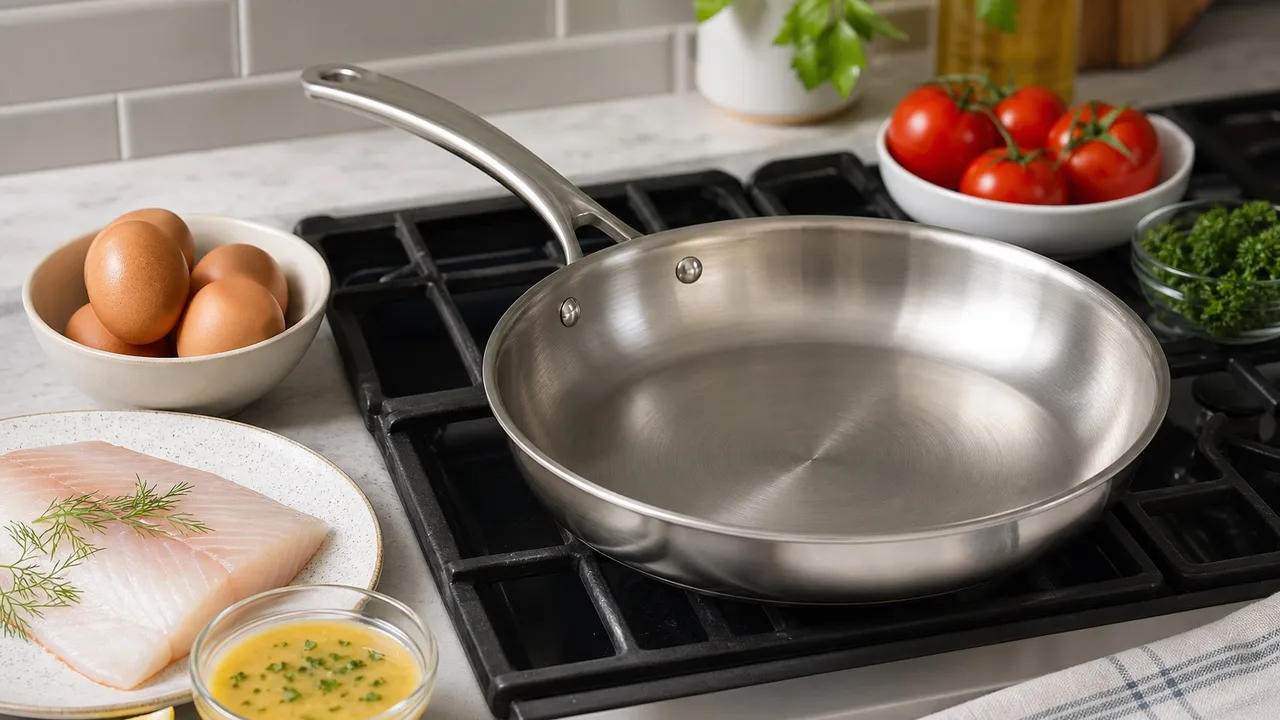
You can cook almost anything in stainless steel, including tomatoes and other acidic foods. The poor fits are delicate foods cooked with too little fat, very sticky sugar mixtures, and recipes that depend on easy release at low heat. Those foods are possible, but another surface may be more forgiving.
Avoid treating this as a safety blacklist. The main issue is technique and cleanup, not a universal rule that particular foods become unsafe in stainless steel.
Foods that are harder to cook in stainless steel
| Food or task | Why it is difficult | Better approach |
|---|---|---|
| Fried or scrambled eggs | Proteins bond to a cool, dry, or overheated surface | Preheat gently, add fat, or use a dedicated nonstick pan |
| Delicate fish | Thin flesh can tear before it releases | Dry the surface, use oil, and wait for natural release |
| Pancakes and crepes | Batter needs even low heat and clean release | Use moderate heat and enough fat, or a seasoned/nonstick surface |
| Caramel and sticky candy | Concentrated sugar adheres as it cools | Use a saucepan with enough volume and soak promptly |
| Very lean proteins | Little rendered fat reaches the contact surface | Add cooking fat and avoid moving the food too early |
Delicate eggs
Eggs expose every heat-control mistake. A pan that is too cool lets liquid protein settle into microscopic surface irregularities, while an overheated pan can set the bottom before the top is ready.
Stainless steel still works when the pan is clean, preheated over moderate heat, and coated with butter or oil before the egg goes in. Our egg-specific stainless steel method gives the full sequence. If eggs are a daily priority and you prefer very little fat, a small nonstick pan is the simpler tool.
Delicate skinless fish
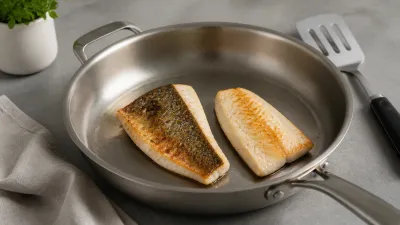
Thin fish fillets can tear when they are flipped before a browned crust releases. Pat the fish dry, preheat the pan, add oil, and leave the fillet alone until it loosens with gentle pressure. A flexible fish spatula helps.
Skin-on fish is often easier because the skin can crisp against the pan. For extremely delicate fillets, parchment, a nonstick pan, or an oven method may produce a cleaner result.
Pancakes and crepes
Broad batters punish hot spots and excess heat. Stainless steel can brown pancakes well, but the pan needs a stable moderate temperature and a thin, renewed film of fat between batches.
Crepes are less forgiving because they are thin and must release across a large area. If you make them frequently, a dedicated seasoned carbon-steel or nonstick pan may be easier to control. The stainless steel versus nonstick guide separates that surface decision from the metal underneath it.
Sticky sugar and candy
Caramel can be made in stainless steel, and the light interior makes color changes easy to see. The problem comes after cooking: concentrated sugar hardens as it cools and can form a tenacious layer.
Use a saucepan with enough headroom, control the heat, and keep children and bare skin away from hot syrup. Do not scrape cooled candy aggressively with a knife. Fill the cooled pan with warm water and let the sugar dissolve before ordinary washing.
Lean foods without enough cooking fat
Boneless skinless chicken, lean ground meat, and other low-fat foods can stick when the contact surface is dry. Add a suitable cooking fat after preheating and before the food. Dry the exterior of the food so surface moisture does not cool the pan.
Once protein meets hot metal, leave it in place long enough to brown. Food often releases more easily after a crust forms. The general guide to keeping stainless steel pans from sticking explains that sequence.
Foods you can cook in stainless steel
Tomatoes and acidic sauces
Stainless steel is commonly chosen for acidic foods because its chromium-rich passive surface is more corrosion-resistant than reactive bare iron or aluminum. Short, ordinary cooking in intact cookware is not the same as storing a salty acidic food in a damaged vessel for an extended period.
Research has measured nickel and chromium migration under some cooking conditions, but the amount varies with alloy, acidity, time, temperature, surface condition, and prior use. Read the evidence limits in our nickel migration guide and speak with a qualified clinician if you have a diagnosed metal allergy.
Wine and vinegar pan sauces
Deglazing with wine or vinegar is one of stainless steel’s strengths. The browned layer on the pan dissolves into the liquid and becomes part of the sauce. Use ventilation around alcohol and keep the pan within its manufacturer’s heat guidance.
High-heat searing
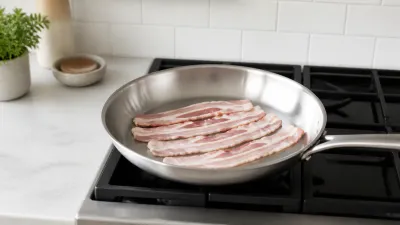
An uncoated stainless skillet can sear meat well when its handle, cladding, and other components are rated for the temperature. Preheat over moderate rather than maximum heat; a conductive clad pan rarely needs the burner turned all the way up.
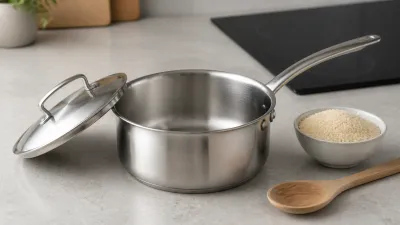
Boiling and steaming
Water-heavy cooking is straightforward in stainless steel. Leave expansion room, use dry mitts, and do not let the vessel boil dry. The steamer basket guide covers water level and steam handling.
When to choose another pan
Use another surface when easy release matters more than browning, the recipe calls for unusually little fat, or the food is too delicate to tolerate practice. A small nonstick skillet for eggs can complement rather than replace stainless cookware.
For a new stainless skillet, the best stainless steel frying pans roundup compares exact models. If you already own one, learn its response over medium heat before buying a replacement.
What cookware condition changes the answer?
Deep pitting, exposed internal layers, a loose handle, a rocking base, or a separating bonded base deserves a different decision from superficial scuffs. Stop using structurally damaged cookware and ask the manufacturer to assess the exact model. The scheduled guide to scratched stainless steel pan safety separates cosmetic marks from damage that needs inspection.
Frequently asked questions
Can you cook tomato sauce in stainless steel?
Yes. Intact stainless steel is widely used for tomato sauce and other acidic foods. Follow the cookware maker’s care guidance and move leftovers to an appropriate storage container after cooking.
Why do chefs cook with stainless steel if food sticks?
Stainless steel tolerates browning, forms fond for pan sauces, and lets the cook see color changes. Sticking becomes manageable with a clean surface, moderate preheating, cooking fat, and patience.
Should you avoid eggs in stainless steel?
No. Eggs require more heat and fat control than they do in a nonstick pan, but they can cook cleanly in stainless steel. Use another surface if low-fat easy release is the priority.
Related guides
Continue with Cook Steak in a Stainless Steel Pan, Boil Milk in Stainless Steel?.